Why Every Homeowner Needs to Think About Life Insurance

Life insurance for homeowners is one of the most important financial tools you can have when you carry a mortgage.
Here’s a quick summary of what you need to know:
- What it does: Pays a tax-free death benefit to your beneficiaries if you die, so they can cover mortgage payments or pay off the home entirely
- Best option for most homeowners: Term life insurance — it’s flexible, affordable, and can be matched to your mortgage term
- How much you need: Enough to cover your mortgage balance, property taxes, home maintenance, and income replacement
- Alternative option: Mortgage Protection Insurance (MPI) pays your lender directly, but offers less flexibility and decreasing coverage over time
- When to act: As soon as you take on a mortgage — rates are lower when you’re younger and healthier
Buying a home is likely the biggest financial commitment you’ll ever make. For most people, it also comes with the largest debt they’ll ever carry. If something unexpected happened to you, could your family afford to stay in that home?
That’s the question life insurance answers.
A mortgage doesn’t disappear when you do. Without a plan in place, your loved ones could be forced to sell the home — or struggle to keep up with payments — at an already devastating time.
The good news: the right life insurance policy can make sure that never happens.
I’m Shawn Beihl, and I’ve spent over 15 years helping families navigate specialty insurance — including life insurance for homeowners — so they get the right coverage without overpaying. In this guide, I’ll walk you through everything you need to know to protect your home and your family.
Why Life Insurance for Homeowners is a Critical Investment
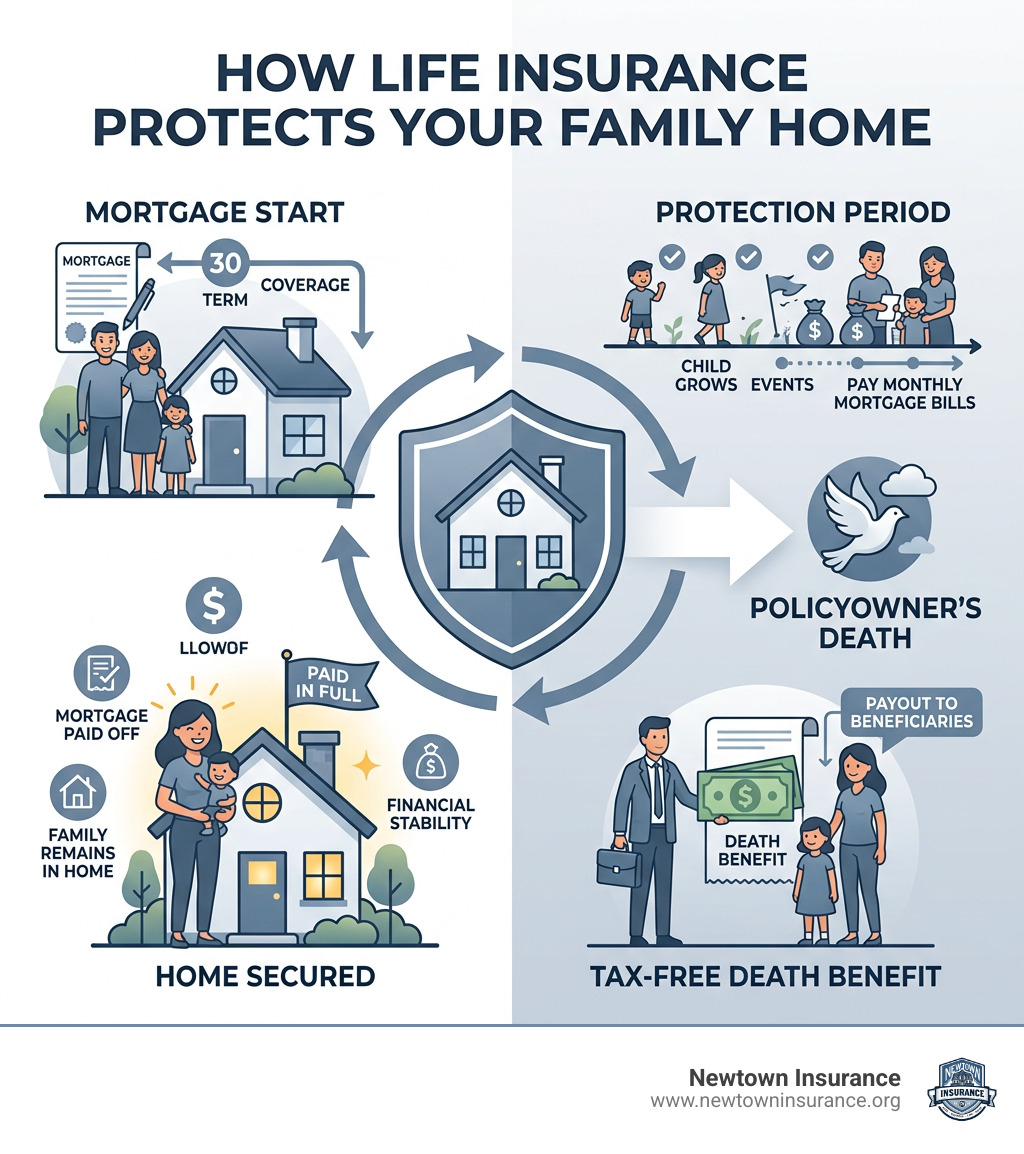
When we talk about life insurance for homeowners, we aren’t just talking about another monthly bill. We’re talking about the bedrock of your family’s financial stability. In the United States, 63% of homeowners have mortgages. For most of us in Pennsylvania, that mortgage represents a 30-year commitment to a bank.
While 30 years is the average length of a mortgage, life has a funny (and sometimes stressful) way of throwing curveballs during those three decades. Whether it’s a sudden illness or a tragic accident, the loss of a primary earner can turn a dream home into a financial nightmare overnight.

As Brian Martucci, finance editor for Money Crashers, explains, life insurance is essential for anyone with financial obligations that outlive them. A mortgage is the ultimate example of such an obligation. It doesn’t care if you’re there to pay it; the bank still expects their check on the first of the month.
Furthermore, Chuck Czajka, founder of Macro Money Concepts, points out that over your life, you have a specific “economic value” to your loved ones. You earn money to support the lifestyle you’ve created together. If that income stream stops, the economic value needs to be replaced so the lifestyle—specifically the roof over your head—can remain.
At Newtown Insurance, we see life insurance as a tool for debt management and peace of mind. It ensures that your family isn’t just left with memories, but also with the deed to the house. It allows your spouse to mourn without the looming threat of a foreclosure notice, and it ensures your children can stay in the school district they love.
Comparing Policy Options: Term Life vs. Mortgage Protection Insurance (MPI)
When you start looking for life insurance for homeowners, you’ll likely encounter two main paths: standard Term Life Insurance and Mortgage Protection Insurance (MPI). While they sound similar, they function very differently.
| Feature | Term Life Insurance | Mortgage Protection Insurance (MPI) |
|---|---|---|
| Beneficiary | Your chosen loved ones | Your mortgage lender |
| Payout Flexibility | Use for mortgage, bills, tuition, etc. | Only pays off the mortgage |
| Death Benefit | Stays level for the whole term | Decreases as mortgage balance drops |
| Premiums | Generally lower and stay level | Can be higher; stay level for less benefit |
| Medical Exam | Usually required for best rates | Often not required |
The primary difference lies in who gets the money. With MPI, the insurance company sends the check directly to the bank. As Investopedia notes, this “mortgage life insurance” is designed specifically around the debt. However, as your mortgage balance goes down, the potential payout of an MPI policy also goes down, even though your premiums usually stay the same. You’re effectively paying the same amount for less coverage every year!
On the other hand, Forbes highlights that standard life insurance offers much more flexibility. If your family decides they’d rather use the money to cover daily living expenses or property taxes while continuing to pay the mortgage monthly, they have that choice.
Choosing the Best Life Insurance for Homeowners with Mortgages
For the vast majority of our clients in Newtown, Pennsylvania, Term Life Insurance is the winner. Why? Because it’s predictable. If you take out a $500,000 30-year term policy to match your 30-year mortgage, that benefit remains $500,000 on day one and year twenty-nine.
If you pay your mortgage down to $100,000 and then pass away, your family gets the full $500,000. They can pay off the house and still have $400,000 left over for maintenance, taxes, or college funds. This “level death benefit” is a massive advantage over MPI.
Many term policies also offer a “conversion option.” This allows you to turn your temporary term coverage into a permanent policy later in life without undergoing a new medical exam. This is a great safety net if your health changes. You can find more info about life insurance services on our website to see how these options fit your specific situation.
Permanent Life Insurance for Homeowners
While term life is great for covering a mortgage, some homeowners prefer Permanent Life Insurance, such as Whole Life or Universal Life.
These policies don’t expire after 20 or 30 years; they cover you for your entire life. They also include a “cash value” component that grows over time. Think of it as a combination of insurance and a conservative savings vehicle.
- Whole Life: Offers fixed premiums and a guaranteed death benefit.
- Universal Life: Offers more flexibility in premium payments and death benefits.
Permanent insurance is often used for estate planning or ensuring there is money for final expenses and property taxes long after the mortgage is paid off. It’s a way to build an asset that your heirs will eventually receive, tax-free.
Calculating Your Coverage: How Much Do You Really Need?
Determining the right amount of life insurance for homeowners isn’t just about looking at your mortgage statement. You have to look at the “hidden” costs of homeownership.
According to ValuePenguin, the average household budget involves much more than just a monthly loan payment. When you’re calculating your needs, consider the following:
- The Mortgage Balance: This is the baseline. The average new mortgage balance in the United States was $260,386 in 2017, and those numbers have only climbed since then.
- Property Taxes and Insurance: In Pennsylvania, property taxes can be a significant annual expense. Your life insurance should provide enough to cover these for several years.
- Maintenance and Repairs: Roofs leak, HVAC systems fail, and water heaters burst. A good policy accounts for the upkeep of the asset.
- Income Replacement: If you are the primary breadwinner, your family needs to replace your salary to cover groceries, utilities, and car payments.
- Education Expenses: If you have children, do you want their future college tuition to be secured?
A common rule of thumb is to aim for a policy that is 10 to 15 times your annual income, but for homeowners, we often suggest matching the policy term to the mortgage length and the benefit to the total debt plus five years of living expenses. Don’t forget to account for inflation; $250,000 today won’t buy as much in twenty years.
When to Review and Adjust Your Coverage
Life doesn’t stand still, and neither should your insurance. There are several key milestones that should trigger a call to your agent at Newtown Insurance.
Refinancing or Remodeling:
If you refinance your home to a new 30-year term or take out a Home Equity Line of Credit (HELOC) for a major kitchen remodel, your old policy might no longer be enough. If your debt increases, your coverage should too.
Growing Families:
Adding a new member to the family is the most common reason people increase their life insurance for homeowners. A new baby means more years of financial dependency and a greater need to ensure the home is protected.
Second Homes:
Own a cabin in the Poconos or a shore house? If you have a second mortgage, you need to ensure that debt is covered as well. You wouldn’t want a tragedy to force the sale of a beloved family vacation spot just to cover the bills on the primary residence.
The Pennsylvania Insurance Department recommends an annual review of all insurance policies. We agree. Even if nothing major has changed, your mortgage balance has likely gone down, which might mean you could adjust your strategy or look into converting part of your policy. If you’re ready to see where you stand, you can Start Now with our online tools.
Frequently Asked Questions about Life Insurance for Homeowners
Can life insurance be used to buy a house?
Technically, you cannot use a life insurance death benefit to buy a house for yourself (since you would have passed away for the benefit to pay out). However, the cash value in a permanent life insurance policy can sometimes be borrowed against to fund a down payment while you are still alive.
More commonly, homeowners use life insurance to ensure their beneficiaries can buy a house or pay off an existing one. It creates an immediate financial legacy that can turn a family from renters into owners in the wake of a loss.
Does the type of home I own influence my insurance costs?
The physical structure of your home (condo vs. single-family) doesn’t directly change your life insurance premium—that’s based on your age and health. However, it absolutely influences your coverage needs.
A condo owner might have lower maintenance responsibilities but high monthly HOA fees that need to be covered. A homeowner with a large Victorian house in Newtown will likely need more “cushion” in their policy for maintenance and heating costs than someone in a modern townhome.
How can I get help choosing the right policy?
Choosing the right policy shouldn’t feel like a DIY project. While online calculators are a great start, professional consultation is key. A local expert can help you compare quotes from multiple carriers to ensure you aren’t overpaying.
At Newtown Insurance, we specialize in tailored protection. We look at your specific Pennsylvania property taxes, your specific mortgage term, and your family’s unique goals to find a policy that fits like a glove.
Conclusion
At the end of the day, life insurance for homeowners is about love. It’s about making sure that the four walls and a roof that hold your family’s most precious memories are never taken away because of a missing paycheck.
At Newtown Insurance, we take a customer-first approach to help you navigate these choices. We believe in transparent pricing and smart savings—meaning we won’t sell you more than you need, but we’ll make sure you have exactly enough to stay protected. Whether you are a first-time buyer in Newtown or are looking to protect a second home, we have the Pennsylvania insurance expertise to guide you.
Don’t leave your family’s future to chance. Protect your home and family today by exploring our mortgage protection options. We’re here to help you avoid overpaying while securing the peace of mind you deserve.