Why Personalized Insurance Quotes Are the Smarter Way to Buy Coverage

Personalized insurance quotes are custom price estimates based on your specific details — your car, your driving history, your location, and more. Unlike generic rates, they reflect your actual risk profile.
Here’s what you need to know at a glance:
- What they are: Quotes calculated using your personal data, not averages
- What you need: Your vehicle details, driver information, annual mileage, and claims history
- Why they matter: Prices can vary by hundreds of dollars between insurers for the same driver
- How to get one: Enter your details online — often in under 10 minutes
- How to save: Compare multiple quotes, bundle policies, and pay annually
If you’re a Pennsylvania driver, there’s a good chance you’re paying more than you need to. The average cost of car insurance runs well over $600 a year — and that number climbs fast if your policy wasn’t built around your situation. Generic, one-size-fits-all plans often include coverage you don’t need or miss protections you do.
Getting a personalized quote changes that. It puts real numbers in front of you, based on who you actually are as a driver — not a statistical average.
I’m Shawn Beihl, and with over 15 years of specialty insurance experience spanning life, commercial P&C, health, and disability, I’ve helped countless clients find personalized insurance quotes that actually fit their lives and budgets. Let’s walk through exactly how this process works — and how to make it work for you.
What Are Personalized Insurance Quotes and How Do They Work?
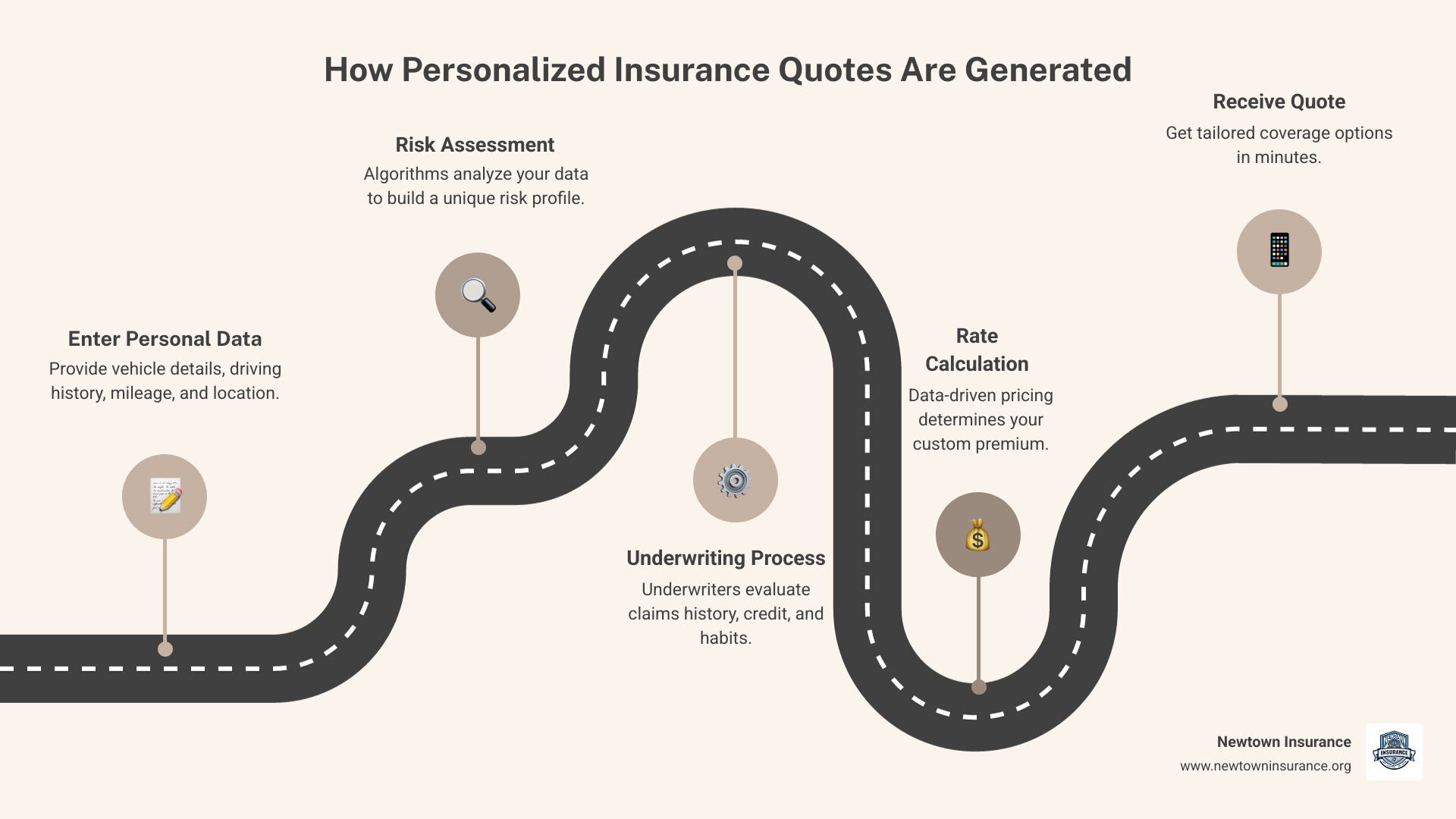
At its core, a personalized insurance quote is a data-driven prediction. When we talk about personalized insurance quotes, we aren’t just talking about a random number pulled from a hat. We are talking about a sophisticated risk assessment.
Insurance companies use a process called underwriting to determine how likely you are to file a claim. This involves analyzing thousands of data points to create a “risk profile.” If you have a clean driving record and live in a quiet neighborhood in Newtown, your risk profile looks very different from someone with multiple speeding tickets in a high-traffic city.
The goal of Pennsylvania car insurance coverage is to ensure that the premium you pay matches the level of risk the insurer is taking on. This leads to data-driven pricing where every factor—from the safety features on your car to your history of on-time payments—helps shape the final cost. By looking at Services Content, you can see how these individual rating plans are structured to provide tailored protection rather than a generic “one-size-fits-all” policy.

How personalized insurance quotes are calculated
You might wonder what’s going on behind the scenes when you click “submit” on a quote form. Modern insurance providers use complex algorithms to crunch your data in real-time. Here are the primary pillars of that calculation:
- Driving Habits and Experience: This isn’t just about how long you’ve had your license. It’s about your violations, accidents, and even how many miles you drive each year.
- Claims History: If you’ve made several claims in the past three to five years, insurers may view you as more likely to make another one in the future.
- Credit Score Impact: In Pennsylvania, your credit history is a significant factor. Statistics show a correlation between credit health and claim frequency. A higher score often leads to lower premiums.
- Vehicle Usage: Do you use your car for a short commute to the train station, or are you driving across the state for work? The more time you spend on the road, the higher the statistical chance of an incident.
If you’re ready to see how these factors apply to you, you can Start Now to begin your own calculation.
Information needed for your personalized insurance quotes
To get an accurate price, you’ll need to have a few pieces of information handy. Providing precise details ensures that the quote you receive is the price you’ll actually pay.
- Vehicle Details: You’ll need the vehicle registration (or the make, model, and year). Details like the Vehicle Identification Number (VIN) are even better because they tell the insurer exactly what safety features and anti-theft devices are installed.
- Driver Information: This includes the names, ages, and license numbers of everyone in your household who will be driving the car.
- Address: Where you park your car at night matters. A locked garage in a low-crime zip code can lower your rate compared to street parking in a high-theft area.
- Job Title: Believe it or not, some occupations are statistically associated with lower risk.
- Annual Mileage: Be honest here! If you overestimate, you’re paying for “risk” that doesn’t exist. If you underestimate, you could face issues during a claim.
The great thing about modern tools is that you don’t have to finish everything in one sitting. Most systems allow for saving quotes for later, so you can gather missing info and come back when you’re ready.
Key Factors That Influence Your Insurance Costs
When you start comparing personalized insurance quotes, you’ll notice that the vehicle itself plays a starring role. Insurance companies look at “car groups” or “rating symbols.” These are based on how expensive the car is to repair, how well it protects passengers in a crash, and how often that specific model is stolen.
The Car You Drive
The age and model of your vehicle are massive factors. For example, a brand-new luxury SUV will cost more to insure than a five-year-old sedan because the parts for the SUV are more expensive and the technology (like sensors in the bumpers) is costlier to replace.
| Vehicle Model | Estimated Average Annual Premium |
|---|---|
| Honda Fit | $1,521 |
| Chevrolet Spark | $1,776 |
| Honda CR-V | $1,650 |
| Ford F-150 | $1,720 |
Note: These are national averages; your specific Pennsylvania rate will vary based on personal factors.
Your Location and Experience
In Pennsylvania, where you live is a top-tier pricing factor. Most online quote tools will ask for your zip code immediately because local accident rates and repair costs vary by county.
Furthermore, your experience level is vital. New drivers (especially teens) are statistically more likely to be involved in accidents due to inexperience. Conversely, drivers over 50 often see some of the lowest rates because they have decades of experience behind the wheel. If you are looking for specific state-level information, localized insurance resources can provide more context.
Strategies to Secure Cheaper Personalized Rates
We all want to save money, but the goal is to get “smart savings”—lower prices without sacrificing the protection you actually need. Here are the most effective ways to drive down the cost of your personalized insurance quotes:
- Bundling Policies: This is often the single biggest discount available. By combining your auto insurance with your Home insurance, you can save an average of $1,086 over 12 months.
- Increasing Deduuctibles: If you have a solid emergency fund, consider raising your deductible (the amount you pay out of pocket before insurance kicks in). Moving from a $250 to a $1,000 deductible can significantly slash your monthly premium.
- Electronic Payments and Documents: Many insurers offer a small discount just for going paperless and setting up automatic EFT (Electronic Funds Transfer) payments.
- No-Claims Discounts (NCD): Every year you drive without an accident, you build up a “no-claims bonus.” Over five or more years, this can lead to massive savings.
- Annual vs. Monthly Payments: If you can afford it, pay for the whole year upfront. Monthly plans often include interest or “convenience fees” that add up over time.
- Low Mileage Benefits: If you’ve transitioned to working from home, tell your insurer! If you drive fewer than 7,500 miles a year, you might qualify for a low-mileage discount.
- Telematics Options: Some companies offer “black box” or app-based insurance. These tools monitor your actual braking, cornering, and speed. If you’re a safe driver, your premium will drop based on your real-world performance.
Understanding Coverage Types and Optional Upgrades
When you get personalized insurance quotes, you aren’t just buying one thing; you’re building a package. Understanding the components of that package is key to ensuring you aren’t overpaying for things you don’t need—or leaving yourself exposed.
- Liability Insurance: This is required by law in Pennsylvania. It pays for injuries or property damage you cause to others.
- Collision Insurance: This covers damage to your car if you hit another vehicle or an object (like a fence), regardless of who is at fault.
- Comprehensive Insurance: This covers “acts of God” or things out of your control—theft, fire, hail, or hitting a deer.
- Full Coverage: While not a technical term, “full coverage” usually refers to a policy that includes Liability, Collision, and Comprehensive. The average monthly premium for this level of protection is roughly $138.
- Personal Injury Protection (PIP): Pennsylvania is a “no-fault” state, meaning your own insurance pays for your medical bills after an accident, regardless of who caused it.
You can also add optional upgrades to your policy. While these increase the quote, they provide peace of mind:
- Roadside Assistance/Breakdown Cover: Helps if you have a flat tire or need a tow.
- Rental Reimbursement: Pays for a rental car while yours is in the shop after a covered accident.
- Uninsured/Underinsured Motorist: Protects you if you’re hit by someone who doesn’t have enough insurance to cover your bills.
For a deeper dive into these options, visit our Services Content page.
Frequently Asked Questions about Personalized Quotes
How long is a personalized car insurance quote valid for?
Typically, a quote is valid for 30 days. However, this can vary by company. It is important to remember that rates can fluctuate based on underwriting updates or changes in the insurance market. If you wait too long, you might need to refresh the quote to get the most current pricing.
Can adding an additional driver affect my personalized quote?
Absolutely. Adding a driver means the insurer is taking on more risk. If you add an experienced driver with a clean record, it might actually help lower the overall risk profile of the household. However, adding a teen driver or someone with a history of violations will almost certainly increase the premium.
How can I compare personalized car insurance quotes from multiple companies?
The best way is to use a comparison tool or work with a local agent who can access multiple “trusted provider products.” Ensure you are comparing “apples to apples”-meaning the deductibles and coverage limits are identical across all quotes.
If you want to double-check the baseline terms that most auto policies are built around, it can help to review a neutral reference on core coverage concepts like liability and collision before you compare quotes. For example: Vehicle insurance.
You can see how we handle side-by-side comparisons by checking out our Services Content.
Conclusion
At Newtown Insurance, we believe that you shouldn’t have to settle for a generic policy that doesn’t fit your life. Our focus is on providing tailored Pennsylvania coverage that combines smart savings with transparent pricing. We prioritize customer-first support to ensure you understand every line of your policy, helping you avoid overpaying for unnecessary extras while keeping you protected where it counts.
Getting personalized insurance quotes is the first step toward a more secure and affordable future on the road. Don’t leave your financial safety to chance or averages.
Ready to see your real rate?
Get a Personalized Quote and discover how much you could save today.