

A Comprehensive Guide to Renters Insurance Quotes
What You Need to Know About Renters Insurance Quotes

Renters insurance quotes can start as low as $5 per month -- making it one of the most affordable ways to protect your belongings, cover liability, and avoid major out-of-pocket costs after an unexpected event.
While rates vary significantly between providers, most policies offer a range of customizable features and digital tools to manage your coverage. The national average is roughly $13-$20 per month, but your actual rate depends on where you live, what you own, and how much coverage you choose. In Pennsylvania, the average runs closer to $43 per month -- so comparing quotes matters more than most renters realize.
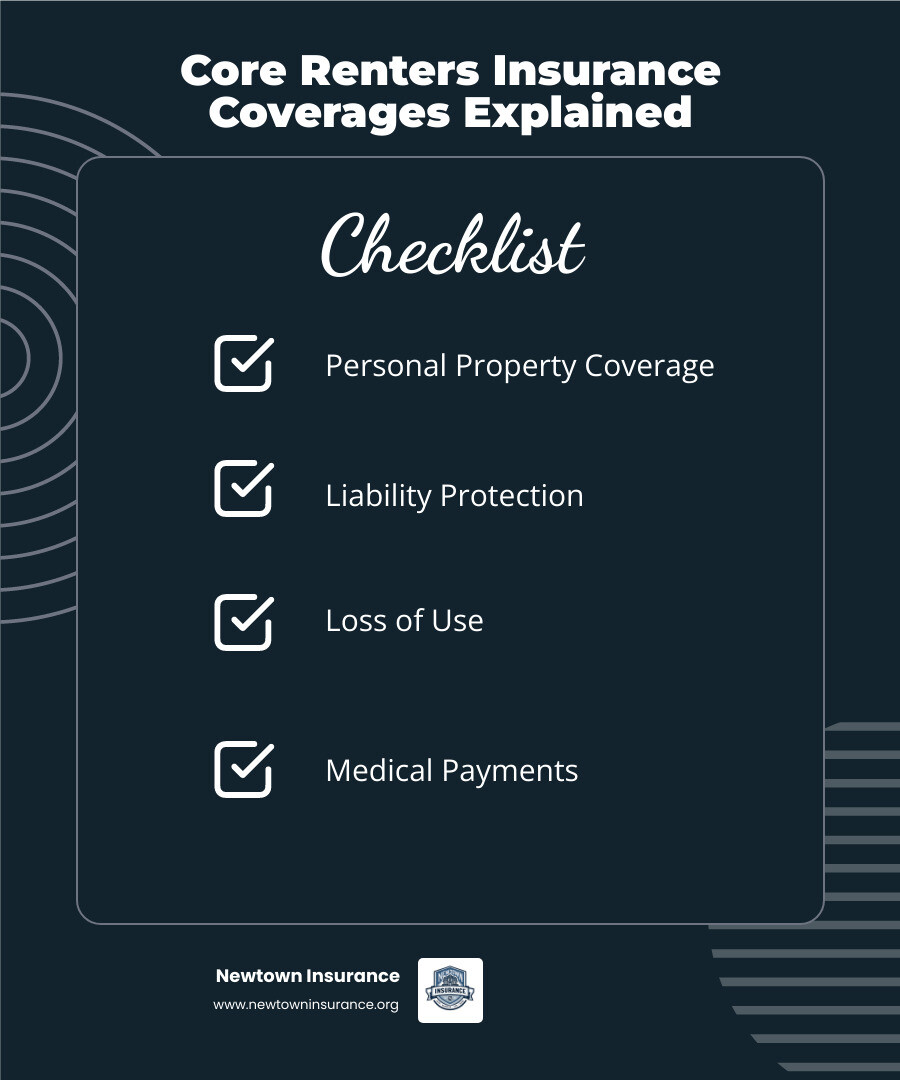
According to the Insurance Information Institute, renters insurance typically covers four core things:
- Personal property -- your furniture, electronics, clothing, and more
- Liability -- if someone is injured in your home
- Loss of use -- temporary housing if your rental becomes unlivable
- Medical payments -- for guest injuries, regardless of fault
Most renters don't have it yet -- and many who do are overpaying simply because they never compared options.
I'm Shawn Beihl, an insurance specialist with over 15 years of experience across life, commercial, and personal lines -- including helping renters find coverage that actually fits their budget and needs. I've seen how comparing renters insurance quotes can save people hundreds of dollars a year without sacrificing protection.
Read on for a full breakdown of how to compare quotes, what affects your rate, and how to get the right coverage in Pennsylvania.
Understanding Coverage and Renters Insurance Quotes
When you start looking for renters insurance quotes, it helps to think of the policy as a multi-layered safety net. It isn't just about replacing a stolen laptop; it’s about protecting your financial future. Most standard policies are built on four primary pillars of coverage.
First, there is Personal Property coverage. This covers the "stuff" you own—furniture, clothes, electronics, and even that expensive espresso machine you bought during a late-night shopping spree. This protection applies to perils like fire, smoke, theft, and certain types of water damage (like a burst pipe, but usually not a flood).
Second, Liability coverage is perhaps the most underrated part of a quote. If a guest trips over your rug and decides to sue, or if you accidentally overflow your bathtub and ruin the neighbor's ceiling downstairs, liability coverage helps pay for legal fees and settlements. Most experts recommend at least $100,000 in liability limits, though increasing this to $300,000 often costs just a few extra dollars a month.
Third, Loss of Use (or Additional Living Expenses) kicks in if a fire or major leak makes your apartment unlivable. It helps pay for hotel stays and even the extra cost of restaurant meals while you’re displaced.
Finally, Medical Payments cover small medical bills if a guest is injured in your home, regardless of who is at fault. It’s a great way to handle a minor injury without it escalating into a full-blown lawsuit.
How to Get Renters Insurance Quotes Online
Getting renters insurance quotes online is often faster than ordering a pizza. In fact, some modern platforms allow you to activate a policy in as little as 90 seconds. To get the most accurate estimate, you’ll usually need to provide:
- Your ZIP Code: This is the biggest factor, as it tells the insurer about local crime rates and weather risks.
- Personal Details: Your name, date of birth, and sometimes your social security number (to check your insurance score).
- Property Type: Is it a high-rise apartment, a single-family home, or a basement suite?
- Security Features: Does the building have a 24/7 doorman, deadbolts, or a sprinkler system? These can trigger significant discounts.
- Inventory Estimate: You don't need a line-by-line list yet, but you should have a ballpark figure of what it would cost to replace everything you own.
Many providers offer an "Online Purchase Discount" (sometimes up to 10%) just for using their digital tools. Once you find a rate you like, you can often pay and have your proof of insurance emailed to your landlord instantly.
What to Consider When Comparing Renters Insurance Quotes
When you have three different renters insurance quotes sitting in front of you, don't just look at the monthly premium. You need to look at the "fine print" of what those dollars are actually buying.
The Deductible is the amount you pay out of pocket before the insurance kicks in. A higher deductible (like $1,000) will lower your monthly premium, while a lower deductible ($250 or $500) will make the monthly cost slightly higher but save you stress during a claim.
The most critical distinction, however, is between Replacement Cost and Actual Cash Value (ACV).
| Feature | Actual Cash Value (ACV) | Replacement Cost |
|---|---|---|
| Calculation | Replacement cost minus depreciation | Current market price for a new item |
| Payout | Lower (gives you the "used" value) | Higher (buys you a brand new version) |
| Premium | Cheaper monthly cost | Slightly more expensive |
| Best For | Extreme budget-conscious renters | Most renters who want full protection |
We always recommend opting for Replacement Cost. If your five-year-old TV is stolen, ACV might only give you $100 (its "used" value), whereas Replacement Cost will give you enough to buy a brand-new TV of similar quality.
Factors That Influence Your Renters Insurance Rates
Why does your best friend pay $12 a month while your renters insurance quotes are coming back at $25? It isn't just bad luck; insurers use complex algorithms to determine risk.
- Credit-Based Insurance Score: In many states, including Pennsylvania, your credit history can impact your insurance rates. A higher score typically leads to lower premiums because insurers view you as more financially stable.
- Claims History: If you’ve filed three claims in the last two years, insurers will see you as a higher risk. Conversely, being "claims-free" for five or more years can earn you a significant discount.
- Location: If you live in a neighborhood with high theft rates or in an area prone to brush fires, your quote will reflect that. Even the distance between your front door and the nearest fire hydrant can move the needle.
- Building Age and Construction: Older buildings with outdated wiring or plumbing are riskier than modern constructions with built-in safety features.
- Pet Ownership: While many pets don't affect your rate, certain dog breeds might increase your liability premium or require a specific waiver.
State-Specific Differences in Pennsylvania
Pennsylvania renters face a unique set of circumstances. While the national average for renters insurance is often quoted around $15, our local data shows that Pennsylvania averages can be higher, sometimes reaching $43 per month depending on the city.
In cities like Philadelphia or Pittsburgh, crime rates and the density of older housing stock can drive up renters insurance quotes. However, in quieter areas like Newtown, rates are often much more competitive. We also have to consider Pennsylvania weather—from heavy snow loads that can cause roof collapses to summer storms that lead to power surges.
It's also worth noting that while Pennsylvania law doesn't require you to have renters insurance, almost every professional landlord in the state will require it as a condition of your lease. They usually ask for a minimum of $100,000 in liability coverage to protect themselves from damage you might cause to the building.
For a deeper dive into local regulations, check out our guide on Renters Insurance Pennsylvania.
How to Compare Renters Insurance Quotes Effectively
To find the best value, we suggest gathering at least three to five renters insurance quotes. But don't just collect numbers—look for ways to slash those numbers down.
One of the most effective ways to save is through Security Alarms and Safety Devices. If your rental has smoke detectors, fire extinguishers, or a burglar alarm, make sure to mention them. Some insurers offer discounts for "gated communities" or buildings with 24-hour security staff.
Another easy win is Paperless Billing. Many companies will knock a few dollars off your premium if you agree to receive documents via email and set up automatic monthly payments. Being a "Claims-Free" customer is also a major asset; if you haven't filed a claim in five years, you might see your premium drop by 10% or more.
Maximizing Savings Through Bundling
If you want the "secret sauce" for the lowest renters insurance quotes, it’s Bundling. This is when you buy your renters insurance from the same company that provides your auto or life insurance.
Insurers love "multi-line" customers because they are less likely to switch providers. To keep you, they offer massive discounts. For example, some major carriers report that customers save up to $900 annually when they bundle renters and auto insurance. Even if the discount on the renters policy itself is small (around 10-15%), the discount it triggers on your car insurance can often pay for the entire renters policy for the year!
At Newtown Insurance, we specialize in finding these "smart savings." By looking at your total insurance picture, we can often find ways to increase your coverage while actually lowering your total monthly out-of-pocket costs.
Determining How Much Coverage You Need
Most people underestimate how much they actually own. Think about it: if you had to go out tomorrow and buy every shirt, pair of shoes, kitchen utensil, and piece of furniture you own, how much would that cost?
The average renter has between $20,000 and $30,000 worth of belongings. To get accurate renters insurance quotes, we recommend creating a Home Inventory.
- Walk through your home with your phone: Take a video of every room, opening drawers and closets.
- Focus on high-value items: Note the brand and model of your computer, TV, and appliances.
- Use an app: There are many free digital home inventory apps that allow you to store photos and receipts in the cloud.
If you find that you own more than the "standard" $20,000 limit, don't worry. Increasing your property coverage is surprisingly cheap—often just a dollar or two more per month for every $5,000 in additional coverage.
Coverage for Pets and High-Value Items
Standard renters insurance quotes have limits on certain types of items. For example, many policies cap jewelry coverage at $1,000 or $1,500. If you have a $5,000 engagement ring, a standard policy won't fully protect you.
In these cases, you’ll want to add a Jewelry Rider (also called "scheduling" an item). This provides "all-risk" coverage, meaning it can even cover you if you lose the ring down a drain or at the beach—perils not covered by a standard policy.
When it comes to Pets, renters insurance is primarily about Liability. If your dog bites someone, your renters insurance liability coverage typically pays for their medical bills and your legal defense. However, keep in mind that renters insurance usually does not cover damage your pet does to your own stuff (like chewing up your sofa) or your pet's own medical bills. For that, you would need a separate pet insurance policy.
One major perk of quality renters insurance is Worldwide Coverage. If your laptop is stolen out of your backpack while you're on vacation in Europe, your renters insurance can help replace it. Your "stuff" is protected no matter where it is in the world.
Frequently Asked Questions about Renters Insurance Quotes
Is renters insurance required by law or landlords?
While the Commonwealth of Pennsylvania does not have a law requiring renters to carry insurance, your landlord almost certainly does. Most lease agreements in Newtown and the surrounding areas require tenants to provide proof of insurance before they can move in. This protects the landlord from being held liable for your belongings and ensures you can pay for damages you might accidentally cause to the property (like a kitchen fire).
What is the difference between renters and landlord insurance?
This is a common point of confusion. A Landlord’s Insurance policy covers the physical structure of the building—the walls, the roof, and the shared hallways. It does not cover anything inside your apartment. If the building burns down, the landlord’s insurance will rebuild the structure, but you will be left with nothing if you don't have renters insurance. Furthermore, landlord insurance doesn't provide you with liability protection if someone gets hurt inside your specific unit.
Does renters insurance cover theft outside of the home?
Yes! This is one of the best "hidden" features of the renters insurance quotes you'll receive. Most policies include "off-premises" protection. If your bike is stolen from outside a coffee shop, or your suitcase is swiped from a hotel lobby, your policy can help. Usually, the coverage limit for items outside the home is about 10% of your total personal property limit, but that is still plenty to cover most portable electronics and gear.
Conclusion
Finding the right renters insurance quotes doesn't have to be a chore. By understanding the core coverages—Personal Property, Liability, Loss of Use, and Medical Payments—you can customize a policy that fits your lifestyle without breaking the bank.
At Newtown Insurance, we pride ourselves on offering tailored protection for Pennsylvania renters. We don't believe in one-size-fits-all policies. Instead, we focus on smart savings and transparent pricing to ensure you know exactly what you're paying for. Our customer-first support means we are here to help you navigate the quoting process, maximize your bundling discounts, and provide a steady hand if you ever need to file a claim.
Don't leave your "security blanket" to chance. Whether you're renting a cozy apartment in the heart of Newtown or a spacious house in the suburbs, we can help you find a quote that makes sense.