

Compare Insurance Quotes 101
Why You Should Before Buying

Comparing insurance quotes is one of the fastest ways to stop overpaying for coverage. Prices for the same policy can vary by hundreds of dollars depending on which company you ask.
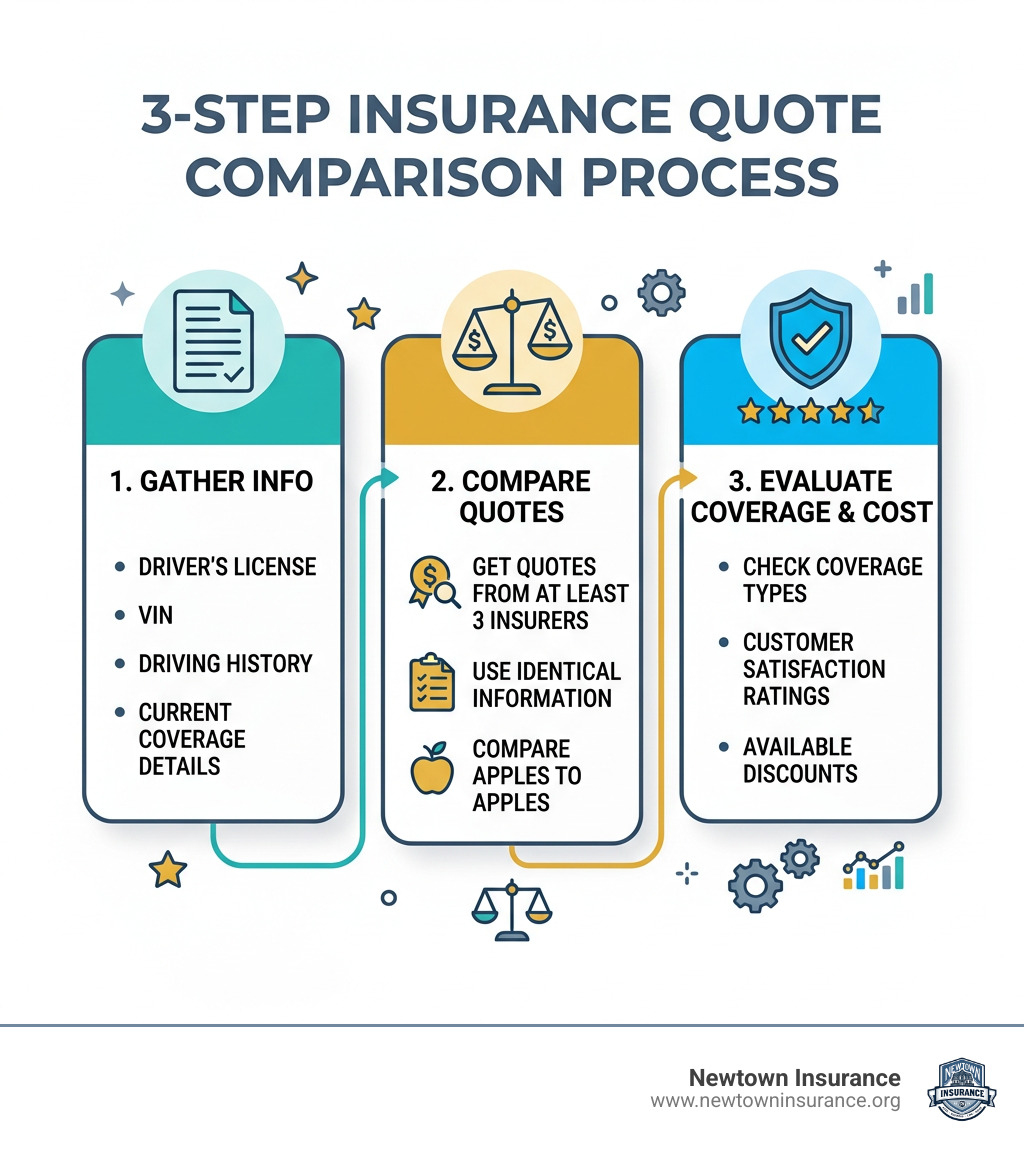
Here's how to compare insurance quotes in 3 steps:
- Gather your information - driver's license, VIN, driving history, and current coverage details
- Get quotes from at least 3 insurers - use the same information for each so you're comparing apples to apples
- Evaluate beyond price - check coverage types, customer satisfaction ratings, and available discounts
Most drivers in the U.S. pay around $136 per month for car insurance. But rates shift significantly based on your location, driving record, vehicle type, and credit history. Pennsylvania residents especially can find wide gaps between what different insurers charge for identical coverage.
The good news? Shopping around doesn't have to take hours. Comparison tools and independent agents can show you multiple real quotes in minutes - with no hidden fees or markups.
At Newtown Insurance, with years of specialty insurance experience across life, commercial property and casualty, health, and benefits management, we've helped countless clients learn how to compare insurance quotes to find coverage that actually fits their needs and budget. In this guide, we'll walk you through everything you need to make a confident, informed decision.
How to Compare Insurance Quotes Online Effectively
The ability to compare insurance quotes from your couch is a game-changer. However, "fast" doesn't always mean "accurate." To get a price that actually holds up when you go to buy the policy, you need to be precise with the data you provide.
The process usually begins with an online form. While it might feel tedious to type in your details repeatedly, this is where the magic happens. To save time, we recommend using a platform that allows you to enter your information once and see results from multiple highly-rated carriers. This ensures that the "apples-to-apples" comparison is maintained; if you tell one company you drive 5,000 miles a year and another you drive 15,000, your quotes will be useless for comparison.

When you seek a free quote, you are looking for transparency. A reliable comparison should show you real-time rates based on your specific driving habits and preferences, not just "ballpark" estimates that change the moment you click "buy." At Newtown Insurance, we believe in More info about our services to help you navigate these digital waters without getting lost in the fine print.
Essential Information for Accurate Quotes
To make the most of your time, have these items ready before you start:
- Driver's License Numbers: For everyone in your household who will be on the policy.
- Social Security Numbers: Most insurers in Pennsylvania use credit-based insurance scores to determine risk (and therefore, your rate).
- Vehicle Identification Number (VIN): This tells the insurer exactly what safety features and engine type your car has.
- Current Coverage "Declarations" Page: This is the best way to ensure you are matching your current limits when looking for a better deal.
- Annual Mileage: Check your odometer or your last service record to get an accurate estimate of how much you actually drive.
Evaluating Comparison Website Reliability
Not all quote sites are created equal. Some are "lead-generation" sites that simply collect your data and sell it to dozens of agents, resulting in a barrage of phone calls. Others are "true comparison" sites that partner directly with insurance companies to show you live, bindable rates.
Look for platforms that offer pricing transparency—meaning no hidden fees or markups added to the carrier's base price. A reliable site should also offer post-purchase support, such as price drop alerts or renewal reminders, to ensure you stay on the best rate possible as the market shifts. Get started today by choosing a path that respects your privacy while delivering the savings you deserve.
Key Factors That Determine Your Insurance Rates
Have you ever wondered why your neighbor pays half of what you do for the same car? Insurance companies use proprietary "math" to calculate risk, and every company weighs factors differently. This is exactly why you must compare insurance quotes—one company might penalize a minor speeding ticket heavily, while another might barely notice it.
In Pennsylvania, several variables carry significant weight. Your credit history is a major one; statistics show that drivers with higher credit scores tend to file fewer claims, leading to lower premiums. Your geographic location also matters—rates in a busy area like Philadelphia or even parts of Bucks County may differ from more rural areas due to traffic density and crime rates.
| Coverage Type | Average Monthly Cost (Est.) | What it Covers |
|---|---|---|
| Liability-Only | $55 - $75 | Damage/injuries you cause to others. |
| Full Coverage | $107 - $140 | Liability + Collision + Comprehensive (theft/weather). |
Understanding Auto Coverage Types
When you compare insurance quotes, don't just look at the monthly premium. Look at what you are buying:
- Liability Limits: This covers bodily injury and property damage to others. Pennsylvania has state minimums, but if you have assets like a home, you likely need much higher limits to protect yourself from lawsuits.
- Collision Coverage: This pays to fix your car if you hit something, regardless of fault.
- Comprehensive Protection: This covers "acts of God," such as a tree falling on your car, theft, or hitting a deer (a common occurrence for us here in PA!).
- Uninsured/Underinsured Motorist: This is vital. It protects you if you're hit by someone who has no insurance or not enough insurance to cover your medical bills.
Home Insurance Rating Variables
If you are looking at home insurance, the "math" changes. Carriers look at the age of your home and the condition of your roof—a roof older than 20 years can significantly spike your rates or even make a home uninsurable with some companies. They also consider your proximity to a fire station and whether you have a monitored security system. Investing in a smart home security setup can often pay for itself through insurance discounts.
Maximizing Savings Through Bundling and Discounts
The single most effective way to slash your premiums is through "bundling"—placing your home and auto insurance with the same company. When you compare insurance quotes for a bundle, you aren't just looking for a discount; you're looking for a total household savings strategy.
On average, customers can save approximately $693 per year by bundling their policies. Some data even shows savings as high as $757 depending on the carrier and the complexity of the risk. Beyond the raw dollars, bundling simplifies your life. You have one login, one agent, and in some cases, a single deductible if a single event (like a massive hailstorm) damages both your car and your roof.
If you're ready to see the difference, you can Start Now to see how those percentages add up.
Why You Should Compare Insurance Quotes for Bundled Policies
- Multi-Policy Discount: This is often the largest discount an insurer offers, sometimes reaching 20% or more off the total premium.
- Simplified Management: One renewal date and one point of contact for claims.
- Single Deductible Options: Some carriers offer "common cause" deductibles.
- Loyalty Rewards: Bundled customers are often prioritized for customer service and are less likely to be "dropped" after a single claim.
Additional Ways to Lower Your Premium
- Safe Driving Programs: Many insurers now offer apps that track your driving. If you aren't a lead-foot, you could save up to 30%.
- Annual Payments: Paying your full 6-month or 12-month premium upfront usually removes installment fees.
- Higher Deductibles: If you have an emergency fund, raising your deductible from $500 to $1,000 can drop your monthly cost significantly.
- Professional/Academic Associations: Are you a teacher, an engineer, or a member of an alumni association? Many carriers offer affinity discounts.
Choosing the Right Insurer Beyond the Price
It is tempting to just pick the lowest number on the screen. But insurance is a promise to pay in the future, and you want to make sure the company can keep that promise.
When you compare insurance quotes, take a moment to research the company's financial strength and customer satisfaction. AM Best provides letter grades (like A++ or B+) regarding a company's ability to pay claims. J.D. Power scores and the NAIC Complaint Index will tell you how the company treats its customers when things go wrong. A company with a very low price but a high complaint ratio might end up costing you more in stress and unpaid claims down the road. At Newtown Insurance, we pride ourselves on transparency, which you can learn more about by reading About our approach.
When to Compare Insurance Quotes for the Best Rates
Timing is everything. You should shop for quotes:
- 30 to 45 days before your current policy expires: This gives you time to switch without a gap in coverage.
- After a major life change: Marriage, buying a home, or moving to a new ZIP code can all trigger lower rates.
- When you've improved your credit: If your credit score has jumped 50 points, your current insurer might not automatically lower your rate, but a new one will.
- Every 12 months: The insurance market is volatile. A company that was the cheapest last year might have raised rates across the board this year.
Steps to Switch Companies Effectively
- Don't cancel your old policy until the new one is active. You want zero gaps in coverage, as even a one-day lapse can cause your future rates to skyrocket.
- Confirm the cancellation in writing. Don't just stop paying the bill; that can hurt your credit.
- Get your refund. If you paid your old policy in full, they are required to refund the "unearned" portion of your premium.
- Notify your lender. If you have a car loan or a mortgage, your bank needs to know your new policy details so they don't buy expensive "force-placed" insurance for you.
Frequently Asked Questions about Comparing Insurance
Which cars are the cheapest to insure?
Generally, vehicles with high safety ratings and low repair costs are the winners. Small SUVs and minivans often have the lowest premiums because they are typically driven by families (a lower-risk demographic). Models like the Honda Fit and Subaru Impreza frequently appear on "cheapest to insure" lists because of their stellar safety records and affordable parts.
What happens if I cancel one policy in a bundle?
If you have a home and auto bundle and decide to move your auto insurance elsewhere, you will almost certainly lose your multi-policy discount on the home insurance. This often causes the remaining policy's price to jump significantly. Always compare insurance quotes for the total cost before splitting a bundle.
How much can I save by switching?
While every case is different, many drivers find they can save hundreds of dollars a year. Because every company uses its own "proprietary math," one insurer might see you as a "high risk" while another sees you as their "ideal customer." Competitive shopping is the only way to find out which one is which.
Conclusion
Navigating insurance doesn't have to be a headache. Whether you're looking for the state minimums or a robust "full coverage" package for your family, the key is to stay informed and shop around.
At Newtown Insurance, we are proud to serve our neighbors in Pennsylvania. We focus on providing tailored protection and smart savings without the "smoke and mirrors" of big-box insurance marketing. We believe that by helping you compare insurance quotes and understand your options, we can help you avoid overpaying and ensure your most valuable assets are protected. Ready to see how much you could save? Explore our Services Content and let us help you find the perfect fit for your lifestyle and budget.