What Pennsylvania Homeowners Need to Know About Home Insurance

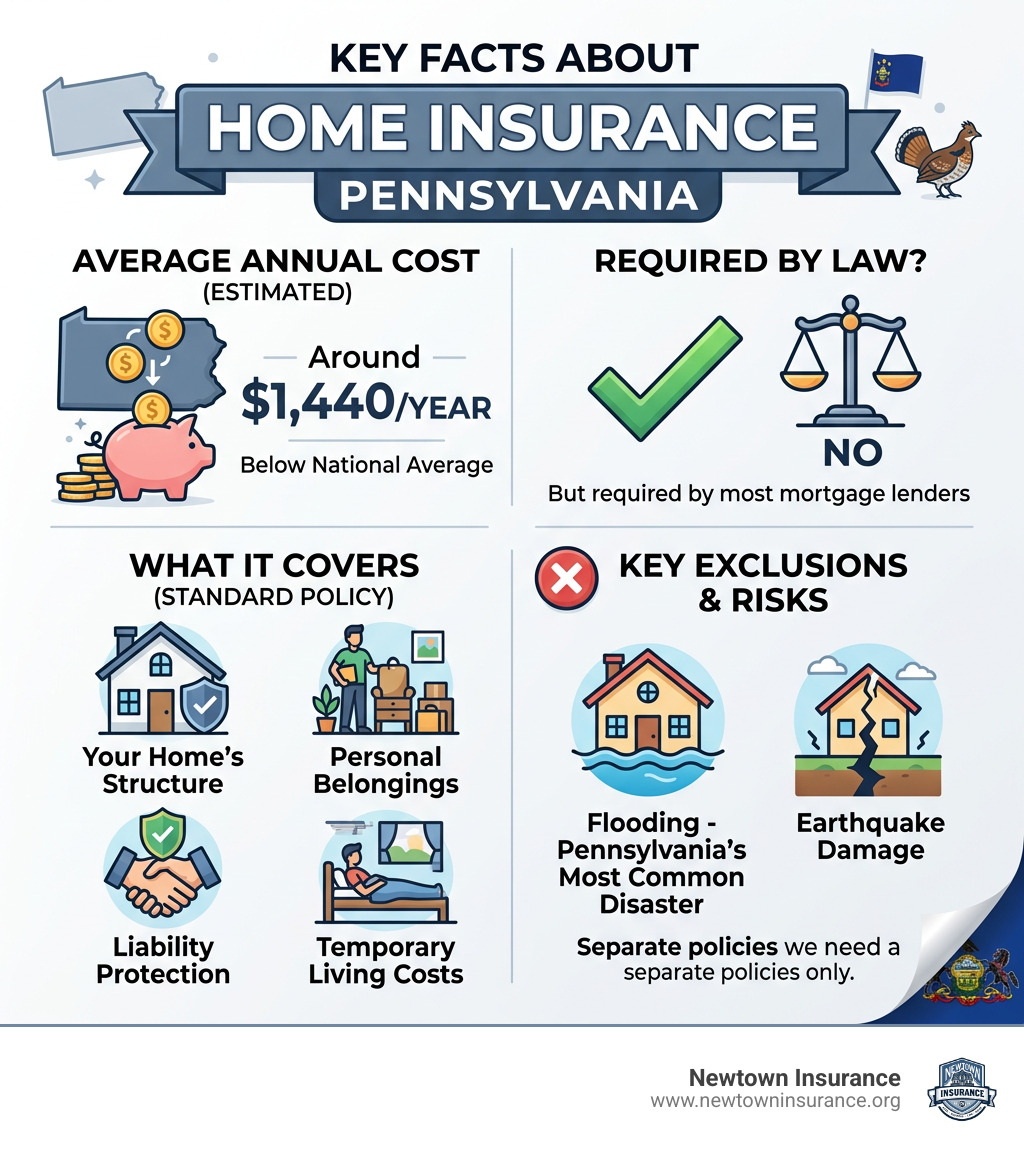
Home insurance Pennsylvania residents need doesn’t have to be complicated or overpriced. Here’s a quick snapshot of the essentials:
- Required by law? No — but your mortgage lender will almost certainly require it.
- Average annual cost: Around $1,440/year, well below the national average of $2,110.
- What it covers: Your home’s structure, personal belongings, liability, and temporary living costs after a covered loss.
- What it doesn’t cover: Floods and earthquakes require separate policies.
- Biggest local risk: Flooding is Pennsylvania’s most common disaster, according to the Pennsylvania Emergency Management Agency.
Pennsylvania is a state of contrasts — from dense urban neighborhoods in Philadelphia and Pittsburgh to quiet rural townships and historic stone farmhouses. That variety means home insurance needs can differ dramatically depending on where you live, what your home is made of, and what risks your area faces.
Whether you’re worried about winter ice dams, basement flooding, or simply paying too much for a policy that doesn’t fit your life, this guide covers everything you need to make a smart, informed decision.
I’m Shawn Beihl, and with over 15 years of specialty insurance experience — including property and casualty coverage — I’ve helped countless homeowners navigate the complexities of home insurance Pennsylvania policies to find the right protection at the right price. Let’s break down exactly what you need to know.
Understanding Home Insurance Pennsylvania Requirements and Coverage
One of the most frequent questions we hear at Newtown Insurance is: Do I need homeowners insurance? While the Commonwealth of Pennsylvania does not have a state law requiring you to carry a policy (unlike auto insurance), you aren’t exactly “off the hook” if you have a mortgage.
Lender Mandates and Mortgage Requirements
If you are financing your home, your bank or lender will absolutely require you to have a policy in place. In fact, most lenders require you to cover the home for at least the amount of the mortgage to protect their investment. If you let your coverage lapse, the lender might “force-place” insurance on your property, which is usually much more expensive and offers less protection than a policy you choose yourself.
The “Big Six” Components of a Standard Policy
When you look at a quote for home insurance Pennsylvania, it is usually broken down into six main types of coverage. Understanding these helps you see exactly where your money is going:
- Dwelling Coverage: This protects the physical structure of your home (the walls, roof, and foundation) from “perils” like fire, hail, and wind.
- Other Structures: This covers buildings on your property that aren’t attached to your house, such as a detached garage, a tool shed, or a fence.
- Personal Property: This is for your “stuff.” Furniture, clothes, electronics, and appliances are covered even if they are stolen or damaged while you are away from home.
- Liability Protection: If a guest slips on an icy sidewalk on your property and sues you, this coverage helps pay for legal fees and court awards. It even follows you—if your dog bites someone at a local park, your liability coverage often kicks in.
- Medical Payments: This is a smaller “no-fault” coverage that pays for medical bills if someone is injured on your property, regardless of who is to blame. It’s meant to settle small injuries quickly without a lawsuit.
- Loss of Use (Additional Living Expenses): If a kitchen fire makes your home uninhabitable, this pays for your hotel stays, restaurant meals, and other extra costs while your home is being repaired.
For a deeper dive into how these work specifically for your property type, you can explore more info about insurance services that we provide to the local community.
Factors Influencing the Cost of Home Insurance Pennsylvania
Why does your neighbor pay $1,200 while you pay $1,600? In Pennsylvania, several “behind the scenes” factors determine your premium.
Location and Regional Differences
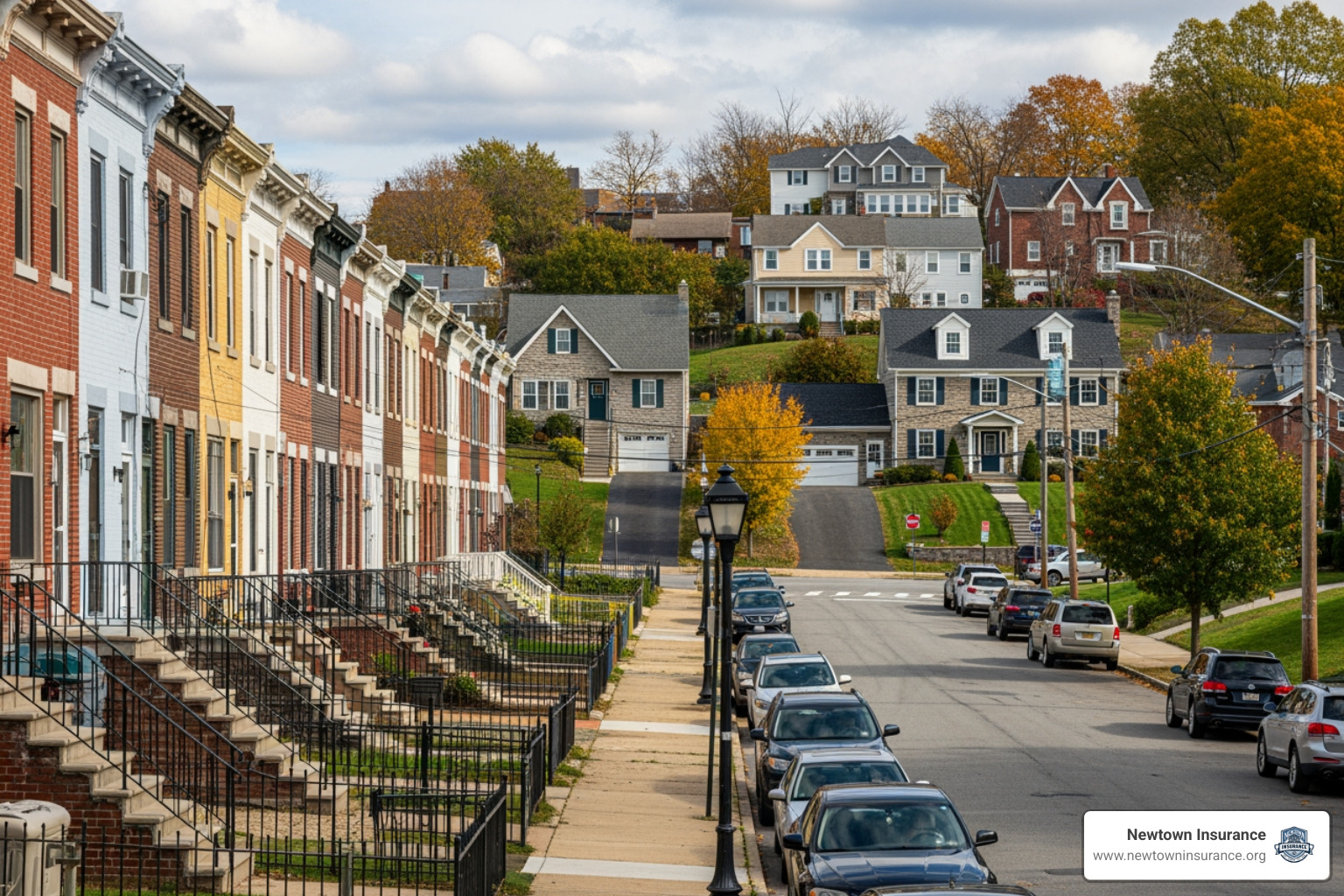
Geography plays a massive role. If you live in a densely packed area like Philadelphia, you will likely face higher premiums due to increased risks of theft or fire spreading between row homes. Conversely, homeowners in Pittsburgh or more rural areas often see lower rates.
- Philadelphia average: $2,155 per year
- Pittsburgh average: $1,410 per year
- Statewide average: $1,440 per year
Credit-Based Insurance Scores
Pennsylvania is one of many states where insurers are allowed to use your credit history to help determine your rate. It might seem unfair, but data shows a correlation between credit health and the likelihood of filing a claim. In fact, homeowners with poor credit in Pennsylvania pay an average of $2,915 per year—more than double what those with good credit pay!
Home Age and Construction Materials
Do you live in a classic Bucks County stone farmhouse or a new build in a modern subdivision?
- Construction: Brick and stone homes are more fire-resistant and may earn lower rates, though they can be more expensive to rebuild.
- Age: Older homes often have outdated electrical or plumbing systems, which increases the risk of fire or water damage. However, a brand-new roof can significantly lower your costs.
Average Premiums by Major PA Cities (Estimated)
| City | Average Annual Premium |
|---|---|
| Philadelphia | $2,155 |
| Pittsburgh | $1,410 |
| Allentown | $1,380 |
| Erie | $1,455 |
| Harrisburg | $1,290 |
If you feel your rates are out of line with these averages, you can always consult Pennsylvania Insurance Department resources to understand your rights as a consumer.
Navigating Pennsylvania Risks: From Winter Storms to Floods
Pennsylvania weather is nothing if not unpredictable. We get the “full experience” of all four seasons, and each one brings unique risks to your doorstep.
Winter Hazards: Frozen Pipes and Ice Dams
Our winters can be brutal. When temperatures plunge, water in your pipes can freeze and expand, leading to bursts that cause thousands of dollars in water damage. Another common PA issue is the “ice dam”—when snow melts on your roof, runs down to the colder eaves, and freezes, creating a dam that forces water back up under your shingles and into your ceilings.
Flooding: The #1 Threat
According to the Pennsylvania Emergency Management Agency, flooding is the most common disaster in the state. Whether it’s the Delaware River overflowing or a sudden flash flood from a summer thunderstorm, water is a major threat.
Crucial Note: Standard home insurance Pennsylvania policies do not cover flood damage. To protect your home from rising surface water, you must purchase a separate flood insurance policy. We strongly recommend you check your flood risk on FEMA maps or use First Street climate hazards to see a more detailed model of your risk.
Tornadoes and Wind
While we aren’t in “Tornado Alley,” Pennsylvania still sees its fair share of twisters and severe windstorms, particularly in the spring and summer. Fortunately, wind and hail damage are typically covered under a standard policy, though some policies may have a separate “named storm” deductible.
The “Hidden” Risks: Sewer Backup and Sinkholes
- Sewer Backup: Many Pennsylvania homes have older sewer systems. If the main line backs up into your basement, a standard policy won’t cover the cleanup unless you’ve added a specific “Water Backup” endorsement.
- Sinkholes: Because much of Pennsylvania sits on limestone (karst) terrain, sinkholes are a real risk in certain counties. This usually requires a separate endorsement or policy.
How to Customize and Save on Your Policy
At Newtown Insurance, we believe you shouldn’t pay for coverage you don’t need, but you definitely shouldn’t be underinsured. Customizing your policy is the best way to find that balance.
Policy Endorsements and High-Value Items
Standard policies have “sub-limits” for certain items. For example, your policy might only cover $1,500 worth of jewelry for theft. If you have an engagement ring or a collection of fine watches, you need to “schedule” these items or add a “Valuable Items Blanket” to ensure they are covered for their full appraised value.
Deductible Selection
Your deductible is the amount you pay out of pocket before insurance kicks in. Choosing a higher deductible (like $2,500 instead of $1,000) can lower your annual premium significantly. Just make sure you have that money tucked away in an emergency fund!
Ready to see how these options affect your bottom line? Start your insurance quote now to get a customized look at your potential savings.
Choosing Between Replacement Cost and Actual Cash Value in Home Insurance Pennsylvania
This is one of the most important decisions you’ll make.
- Actual Cash Value (ACV): This pays what your items are worth today, factoring in depreciation. If your 10-year-old TV is destroyed, ACV might only give you $50—hardly enough to buy a new one.
- Replacement Cost Value (RCV): This pays to buy a brand-new version of what was lost, regardless of age.
- Guaranteed Replacement Cost: This is the gold standard. It pays to rebuild your home even if the cost exceeds your policy limits (common after a disaster when labor and material costs spike). We often recommend this for older Pennsylvania homes where specialized craftsmanship might be required for repairs.
Smart Discounts for Home Insurance Pennsylvania
Saving money doesn’t mean cutting corners. You can often lower your bill through these common discounts:
- Multi-Policy Bundling: Combining your home and auto insurance with the same provider can save you up to 20%.
- Protective Devices: Installing a monitored security system, smoke alarms, or a smart water-leak detector can earn you a “Safe Home” discount.
- Claims-Free History: If you haven’t filed a claim in the last five years, you’re a lower risk for the insurer, and they’ll often reward you with lower rates.
- New Home/Renovated Roof: Newer homes (or older homes with a roof replaced in the last 10 years) are much less likely to suffer weather damage.
Frequently Asked Questions about Home Insurance Pennsylvania
Is homeowners insurance required by law in Pennsylvania?
No. Unlike car insurance, there is no state law that says you must have home insurance. However, if you have a mortgage, your lender will make it a mandatory part of your loan agreement. If you own your home “free and clear,” you could technically go without it, but you would be personally responsible for every cent of damage from fires, storms, or lawsuits.
Does standard insurance cover flood damage in Pennsylvania?
Absolutely not. This is the biggest misconception in the industry. Standard policies exclude damage from “rising water.” To be protected against floods, you need a policy through the National Flood Insurance Program (NFIP) or a private flood insurer. Given that flooding is PA’s most common disaster, this is a critical add-on for many residents.
What should I do immediately after a covered loss in PA?
- Safety First: Ensure your family is safe and the property is secure.
- Mitigate Damage: If a pipe bursts, turn off the water. If a window is broken, board it up. Insurers expect you to prevent further damage.
- Document Everything: Take photos and videos of the damage before you clean anything up.
- Check Your Inventory: This is where having a home inventory is a lifesaver. We recommend using the NAIC Home Inventory App to keep a digital record of your belongings.
- File Your Claim: Contact your agent or insurance company as soon as possible to start the process.
Conclusion: Securing Your Pennsylvania Home
Your home is likely your most significant financial asset, but in a state with unpredictable winters and high flood risks, it’s also an asset that needs careful protection. At Newtown Insurance, we pride ourselves on being more than just a provider; we are your neighbors in Newtown, Pennsylvania.
We focus on tailored protection that fits the unique character of Keystone State homes—whether you’re in a historic Philadelphia row house or a suburban spread in Bucks County. Our goal is to provide smart savings and transparent pricing without the “fluff” or “hidden fees” that make insurance feel like a burden.
Don’t leave your financial security to chance. Whether you want to learn about our local expertise or you’re ready to get your home insurance quote, we are here to help you navigate home insurance Pennsylvania with confidence. Let’s make sure your “home sweet home” stays that way.