Understanding the Landscape of Insurance in Pennsylvania

When you think about the government, “helpful” might not be the first word that springs to mind, but the Pennsylvania Insurance Department (PID) is a vital ally for residents. Established to oversee the massive insurance marketplace in the Commonwealth, the PID’s primary mission is to protect you. They don’t just sit in an office in Harrisburg; they actively regulate the companies that sell policies, license the professionals who advise you, and ensure that the market remains fair and competitive.
The PID ensures that any company selling insurance in Pennsylvania follows strict state laws. This includes reviewing the rates companies want to charge to make sure they aren’t excessive or discriminatory. They also monitor the financial health of these companies—after all, an insurance policy is only as good as the company’s ability to pay the claim when you actually need it.
For more details on how they work for you, you can About the Pennsylvania Insurance Department.
Navigating the Pennsylvania Insurance Department Resources
One of the most underutilized tools for Pennsylvanians is the Consumer Help Center. Think of it as your personal insurance ombudsman. If you feel a claim was unfairly denied, or if an agent gave you questionable advice, the PID is where you go to file a formal complaint.
Beyond complaints, their resources allow you to:
- Verify Licenses: Never buy a policy from someone who isn’t licensed to sell insurance in Pennsylvania. You can look up agents and agencies to ensure they are in good standing.
- Research Companies: See “complaint ratios” for various insurers to see how they treat their customers compared to their competitors.
- Access Rate Reviews: Want to know why your premiums are going up? You can view the annual rate review process for individual and small group health plans on their site.
If you have a specific question or need to report an issue, you can Contact the PA Insurance Department directly.
Health Insurance Pathways: Pennie, Medicare, and Beyond
In Pennsylvania, we have a unique way of doing things when it comes to the Affordable Care Act (ACA). While many states use the federal healthcare.gov site, we have our own state-based marketplace. This allows for more local control and, often, better customer service for our residents.
Whether you are self-employed, working a job that doesn’t offer benefits, or between careers, understanding these pathways is the difference between being “confused” and being “covered.” To start your search, you should Visit Pennie.com.
Pennie: The Official Marketplace for Insurance in Pennsylvania
Pennie is Pennsylvania’s official health insurance marketplace. It is the only place where Pennsylvania residents can access financial assistance (subsidies) to help lower the cost of monthly premiums.
Timing is everything with Pennie. There are two main ways to get covered:
- Open Enrollment: This typically runs from November 1 through January 15. This is the window when anyone can sign up for a plan for the upcoming year.
- Special Enrollment Periods (SEP): If you miss the open window, you aren’t necessarily out of luck. “Qualifying Life Events”—such as losing your job-based coverage, getting married, having a baby, or moving to a new county—allow you to shop for a plan outside of the standard dates.
All plans offered through Pennie are required to cover “Essential Health Benefits,” which include emergency services, maternity care, mental health services, and prescription drugs. To see what financial help you might qualify for, Explore marketplace coverage through Pennie.com.
Medicare, Medicaid, and CHIP Eligibility
For those who don’t fit into the standard marketplace category, Pennsylvania offers several robust programs based on age, disability, or income.
Medicare
Medicare is the federal health insurance program for people age 65 or older. It also covers younger people with certain disabilities. It’s important to sign up during your Initial Enrollment Period (the 7-month window around your 65th birthday) to avoid lifelong late-enrollment penalties.
| Medicare Part | What It Covers | How It Works |
|---|---|---|
| Part A | Hospital Insurance | Covers inpatient stays, hospice, and some home health. |
| Part B | Medical Insurance | Covers doctor visits, outpatient care, and medical supplies. |
| Part C | Medicare Advantage | Private plans that combine Parts A, B, and usually D. |
| Part D | Prescription Drugs | Helps cover the cost of self-administered medications. |
For the most up-to-date federal guidelines, Visit Medicare.gov.
Medicaid and CHIP
If your income falls below certain thresholds, you may be eligible for Medicaid (often called Medical Assistance in PA). Enrollment is open year-round. For families with children who earn too much for Medicaid but not enough for private insurance, the Children’s Health Insurance Program (CHIP) provides comprehensive coverage, often for free or at a very low cost.
Auto and Homeowners Insurance Essentials
If you drive a car in Pennsylvania, you are legally required to carry insurance. Specifically, you must have medical benefits (to cover your own injuries), bodily injury liability (to cover others you might hurt), and property damage liability.
Homeowners insurance, while not mandated by state law, is almost always required by mortgage lenders. It protects your biggest investment from fire, wind, and theft. However, many residents in Newtown and surrounding areas realize too late that standard homeowners insurance does NOT cover flooding. Because of Pennsylvania’s topography and river systems, we often recommend looking into separate flood insurance.
You can find More info about insurance services to see how these policies fit together for your specific lifestyle.
Maximizing Discounts for Auto and Motorcycle Insurance in Pennsylvania
We hate to see people overpay for insurance in Pennsylvania. Most companies offer a “menu” of discounts, but they won’t always apply them automatically unless you ask.
Common discounts include:
- Policy Bundling: Combining your auto and homeowners (or renters) insurance with the same company.
- Safe Driving Records: Maintaining a clean slate for 3-5 years.
- Safety Courses: Motorcyclists who complete approved safety courses often see significant premium drops.
- Anti-lock Brakes & Anti-theft: Factory-installed safety features on cars and bikes.
- Association Memberships: Discounts for being a member of certain professional groups, alumni associations, or even AAA.
Understanding COBRA and Short-Term Health Plans
If you lose your job, you’ll likely hear about COBRA (or “Mini-COBRA” for smaller Pennsylvania employers). This allows you to keep your employer’s health plan for a limited time.
The Catch: COBRA is usually incredibly expensive because you have to pay the full premium, including the portion your employer used to pay, plus an administrative fee. Before signing up for COBRA, we strongly suggest checking Pennie. Losing your job is a “Qualifying Life Event,” and marketplace coverage is often significantly cheaper.
Short-Term Plans: These are “gap-filler” plans. While they are available in PA, they do not meet the minimum requirements of the ACA. They can deny you for pre-existing conditions and may not cover things like maternity or mental health. Use them only as a last resort for very short periods.
Life Insurance and Consumer Rights
The main purpose of life insurance is simple: to make sure the people you love aren’t left in a financial lurch if you pass away. It can replace your income, pay off a mortgage, or fund a child’s education.
There are two primary flavors:
- Term Life: Coverage for a set period (10, 20, or 30 years). It’s the most affordable way to get high coverage amounts.
- Whole/Universal Life: These policies last your entire life and include a “cash value” component.
If you believe a deceased relative had a policy but you can’t find the paperwork, the NAIC offers a free service to Locate a Life Insurance Policy.
Protecting Yourself from Viatical Settlements and STOLI
The life insurance world has a few dark corners you should avoid.
- Viatical/Life Settlements: This is when a policyholder sells their policy to a third party for a lump sum of cash (less than the death benefit). While legal, it’s a complex financial move that can have huge tax implications.
- STOLI (Stranger-Originated Life Insurance): This is a red flag. STOLI involves investors “buying” a policy on a stranger’s life purely as a gamble on their death. Pennsylvania regulators warn against these “zero premium” schemes as they often violate state insurance laws and can jeopardize your future eligibility for coverage.
Handling Denials, Surprise Bills, and Mental Health Parity
Pennsylvania has some of the strongest consumer protection laws in the country regarding medical billing.
The “No Surprises Act”: Have you ever gone to an “in-network” hospital only to get a massive bill from an “out-of-network” anesthesiologist you didn’t choose? Federal and state laws now protect you from these surprise bills in emergency situations.
Mental Health Parity: Pennsylvania law requires insurance companies to treat mental health and substance use disorder coverage the same way they treat physical health coverage. They cannot charge higher co-pays or set stricter limits on visits for mental health than they do for a broken leg.
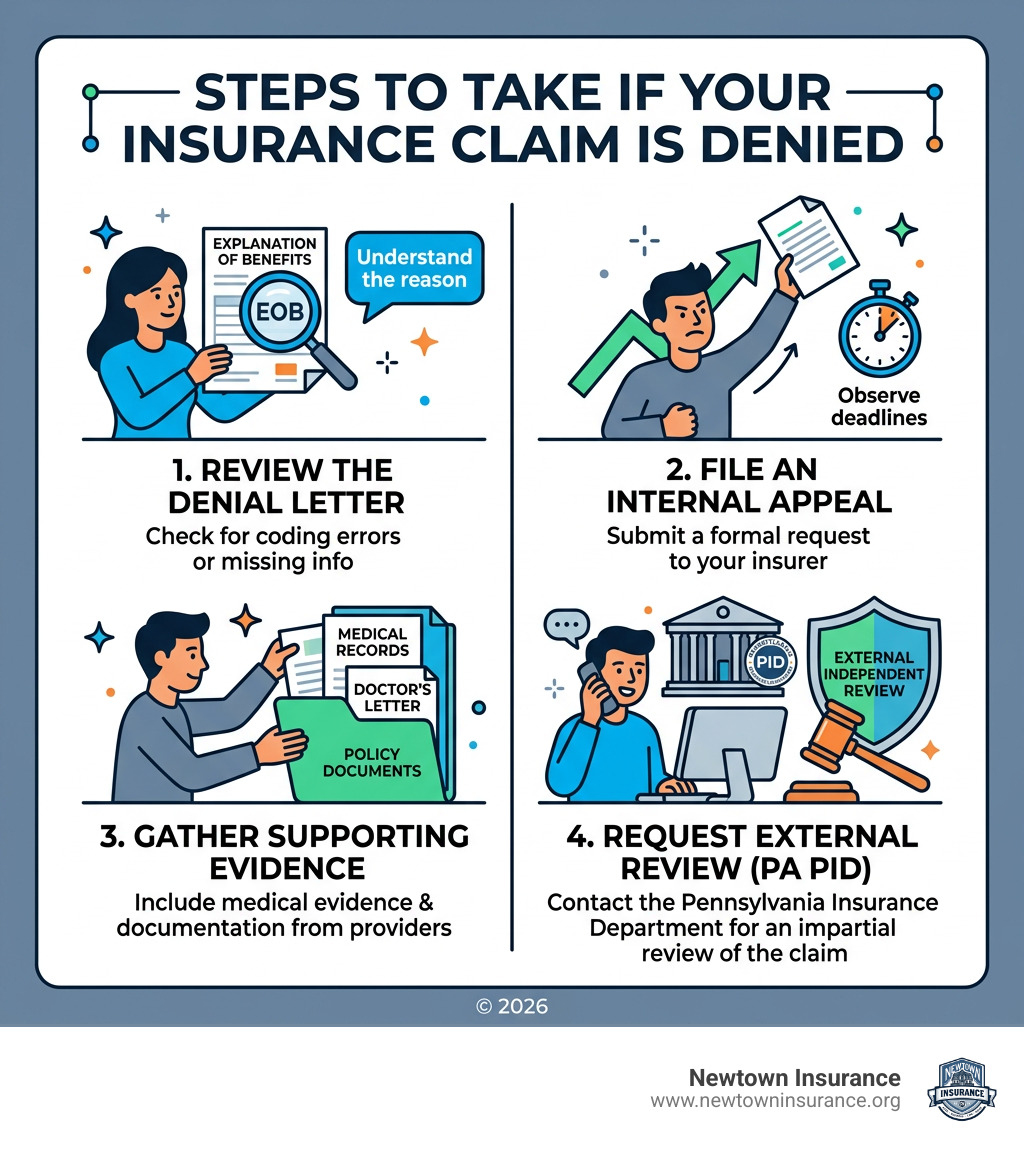
If your insurance company denies a treatment your doctor says is necessary, you have the right to an independent review. The PID can help facilitate these “External Reviews” to ensure the insurance company isn’t just trying to save a buck at the expense of your health.
Frequently Asked Questions about Insurance in Pennsylvania
What should I do if my health insurance claim is denied?
First, read the “Explanation of Benefits” (EOB) to understand why it was denied. You have the right to file an internal appeal with the insurance company. If they still say no, you can contact the Pennsylvania Insurance Department to request an external independent review.
How do I find a lost life insurance policy of a deceased relative?
Use the NAIC Life Insurance Policy Locator. You’ll submit the deceased person’s information, and the service will ask insurance companies to search their records for any matching policies where you might be a beneficiary.
When is the open enrollment period for health insurance in PA?
For the Pennie marketplace, Open Enrollment typically runs from November 1 through January 15. For Medicare, the General Enrollment period is January 1 – March 31, and the Open Enrollment period (for switching plans) is October 15 – December 7.
Conclusion
Navigating insurance in Pennsylvania doesn’t have to be a solo mission. Whether you’re settling into a new home in Newtown or looking to protect your family’s future, the right coverage is about more than just the lowest price—it’s about having the right protection when life gets sideways.
At Newtown Insurance, we pride ourselves on being “locally focused.” We understand the specific risks and regulations that affect Pennsylvania residents. Our goal is to provide you with tailored protection, smart savings, and transparent pricing. We believe in a customer-first approach, helping you understand your policy so you never feel like you’re overpaying for things you don’t need.
Don’t wait for an emergency to find out if you’re covered. Start your insurance journey today and let us help you secure the peace of mind you deserve.