

How Much Does It Cost to Insure a Home in Pennsylvania?
What Pennsylvania Homeowners Pay for Home Insurance

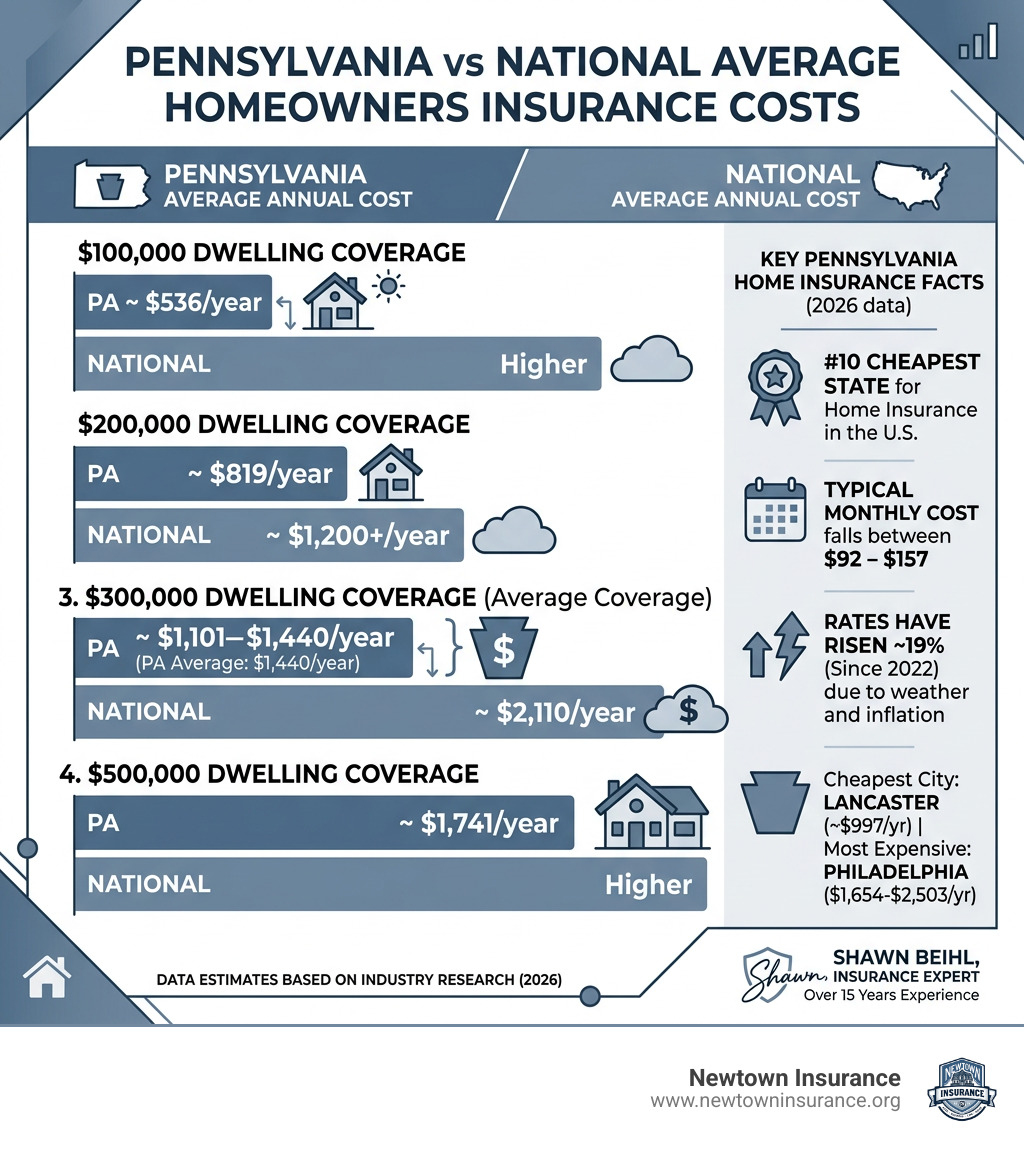
Homeowners insurance PA cost averages around $1,440 per year (roughly $120 per month) — well below the national average of $2,110 per year.
Here's a quick snapshot to answer the most common questions at a glance:
| Coverage Level | PA Average Annual Cost | National Average |
|---|---|---|
| $100,000 dwelling | ~$536/year | Higher |
| $200,000 dwelling | ~$819/year | ~$1,200+/year |
| $300,000 dwelling | ~$1,101–$1,440/year | ~$2,110/year |
| $500,000 dwelling | ~$1,741/year | Higher |
Key facts for Pennsylvania homeowners:
- Pennsylvania ranks #10 cheapest state in the U.S. for home insurance
- Monthly cost typically falls between $92 and $157, depending on your coverage and location
- Cheapest city: Lancaster (~$997/year); most expensive: Philadelphia (~$1,654–$2,503/year)
- Rates vary significantly by provider, with annual premiums ranging from under $820 to over $5,100 depending on the carrier
- Rates have risen roughly 19% since 2022 due to weather events and inflation
Even though Pennsylvania is one of the more affordable states for home insurance, costs vary significantly based on where you live, your home's age, your credit score, and the coverage limits you choose.
I'm Shawn Beihl, and with over 15 years of experience across specialty insurance lines — including property and casualty coverage — I've helped countless homeowners navigate the exact questions around homeowners insurance PA cost that this guide addresses. Let's break down everything you need to know so you can stop overpaying and start getting the right coverage for your home.
Average Homeowners Insurance PA Cost and National Comparisons
When we look at the numbers, Pennsylvania residents have a lot to be happy about. According to data from the Insurance Information Institute, Pennsylvania consistently ranks among the top 10 most affordable states for homeowners insurance.
While the national average premium has climbed to over $2,100 per year, our state average sits comfortably at approximately $1,440. This means the typical Pennsylvanian pays about $120 per month to protect their biggest investment. In comparison, homeowners in states like Oklahoma or Florida often face bills three to four times higher due to severe weather risks.
At Newtown Insurance, we see these variations every day. While $1,440 is the "middle of the road" figure, your actual homeowners insurance PA cost could be as low as $800 or as high as $2,500 depending on your specific profile. Our goal is to ensure you fall on the lower end of that spectrum without sacrificing the quality of your home insurance services.
| Metric | Pennsylvania Average | National Average | Difference |
|---|---|---|---|
| Annual Premium | $1,440 | $2,110 | -$670 |
| Monthly Premium | $120 | $176 | -$56 |
| Rank (Cheapest) | #10 | N/A | PA is 32% cheaper |
Key Factors Influencing Your Pennsylvania Premiums

Why does your neighbor pay less than you do? It isn't just luck. Insurance companies use complex algorithms to determine your homeowners insurance PA cost, but they generally boil down to a few major categories:
- Credit Score: This is a massive factor in Pennsylvania. There is a staggering difference in premiums—sometimes over $4,000—between those with "Excellent" credit and those with "Poor" credit. Insurers view a high credit score as an indicator of lower risk.
- Claims History: If you've filed a claim in the last three to five years, expect to pay more. Even a single claim can hike your rates by 9% to 24%.
- Home Age and Construction: Older homes, common in areas like Newtown and Philadelphia, often have outdated electrical or plumbing systems. A brand-new home might cost only $884 a year to insure, while a 30-year-old home could cost over $4,000 because the risk of a pipe bursting or a fire starting is much higher.
- Roof Material and Age: A new architectural shingle or metal roof is a darling in the eyes of an underwriter. An old, curling roof in a state prone to heavy snow and wind is a liability.
- External Economic Pressures: We can't ignore Billion-Dollar Weather and Climate Disasters that affect the global insurance market. Even if a hurricane hits the Gulf Coast, it can drive up "reinsurance" costs for companies operating in PA. Furthermore, inflation has sent the cost of lumber and labor through the roof, meaning it costs more to rebuild your home today than it did three years ago.
Fortunately, the Pennsylvania Insurance Department is quite proactive. In recent years, they have blocked hundreds of millions of dollars in requested rate increases to keep coverage affordable for us.
How Dwelling Coverage Affects Homeowners Insurance PA Cost
The "Dwelling Coverage" (Coverage A) is the part of your policy that pays to rebuild the physical structure of your house. It is the single biggest driver of your premium.
It is vital to understand the difference between market value and replacement cost. You might have bought your home for $500,000, but if the cost to clear the debris and rebuild it from scratch with modern materials is only $350,000, that lower number is what your dwelling coverage should reflect. Conversely, if you own a historic stone farmhouse, the replacement cost might be much higher than the market value because of the specialized craftsmanship required.
As your coverage limit increases, so does your premium. For example, moving from $200,000 to $500,000 in dwelling coverage in PA can increase your annual cost by nearly $1,000.
Regional Price Differences and Homeowners Insurance PA Cost by City
Where you park your car and lay your head matters. Pennsylvania is a diverse state with risks that vary by ZIP code.
- Philadelphia: Homeowners here often see the highest rates, averaging around $1,654 to $2,503. Higher crime rates and the density of older row homes contribute to this.
- Lancaster: This area is consistently one of the cheapest, with averages around $997. Lower crime and lower risk of certain natural disasters help keep premiums down.
- Pittsburgh: Sitting in the middle, Pittsburgh averages around $1,330.
- Bucks County: In our neck of the woods, premiums average around $1,893. This is slightly higher than the state average, often reflecting higher property values and reconstruction costs in the Philly suburbs.
Insurers also look at your "Fire Protection Class." If you live within a mile of a fire station and have a hydrant on your curb, you'll pay less than someone in a rural township where the nearest fire truck is 15 miles away.
Understanding Coverage: Standard Policies vs. Pennsylvania Risks
A standard Pennsylvania home policy (usually an HO-3) typically covers 16 "perils," including fire, lightning, windstorm, hail, and theft. However, Pennsylvania has some specific quirks you need to watch out for.
The Flood Gap
According to the National Flood Insurance Program, flooding is the most common natural disaster in the Keystone State. Yet, only about 2% of Pennsylvania homeowners have a flood policy. Standard homeowners insurance does NOT cover flooding. If the Schuylkill River overflows or a heavy rain sends water into your basement through the foundation, a standard policy won't help you.
Water Backup and Sump Pump Failure
This is a "must-have" add-on for many PA residents. If your sump pump fails during a summer thunderstorm or a sewer line backs up, the resulting mess is usually excluded from a basic policy. Adding this coverage is relatively inexpensive but can save you tens of thousands in basement remediation costs.
The Pennsylvania FAIR Plan
If you own a high-risk property that private companies refuse to insure, you may need to look at the Pennsylvania FAIR Plan. It’s the "insurer of last resort." It provides basic coverage, though it's often more expensive and less comprehensive than what we can find for you in the private market.
Common PA Add-ons to Consider:
- Sewer/Water Backup Coverage
- Identity Theft Protection
- Service Line Coverage (for the pipes between your house and the street)
- Scheduled Personal Property (for high-value jewelry or collectibles)
Strategies to Lower Your Homeowners Insurance PA Cost
At Newtown Insurance, we believe you shouldn't pay a penny more than necessary. Our insurance philosophy is built on transparency and helping you find "smart savings." Here is how you can proactively lower your bill:
- Bundle and Save: This is the "Old Reliable" of insurance savings. Combining your home and auto policies with the same carrier can slash your premiums by up to 30%.
- Raise Your Deductible: If you can afford to pay $2,500 out of pocket instead of $1,000 in the event of a claim, you can lower your annual premium by about 12%. It’s a great way to save money if you don't plan on filing small "nuisance" claims.
- Install Protective Devices: Deadbolts, smoke detectors, and fire alarms are standard. But "smart" home devices—like water leak sensors that alert your phone—can earn you even deeper discounts.
- Stay Claim-Free: Many companies offer a "claims-free discount" that grows the longer you go without filing a report.
- Audit Your Policy Annually: Life changes. If you’ve replaced your roof or installed a security system, let us know so we can update your file and hunt for new discounts.
Ready to see what your specific numbers look like? You can start your insurance quote now to get a personalized estimate.
Smart Ways to Reduce Your Homeowners Insurance PA Cost
Beyond the big hitters, there are several "niche" ways to save:
- Affinity Groups: Are you an AARP member? A credit union member? Some insurers offer discounts for specific professional or social organizations.
- New Home/New Purchase Discount: If you just bought your home or if it was built in the last few years, you are eligible for significant "New Business" discounts.
- Autopay and Paperless: It sounds small, but many carriers knock $50 or more off the bill just for setting up automatic drafts and opting out of snail mail.
Frequently Asked Questions about Pennsylvania Home Insurance
Why are home insurance rates in Pennsylvania increasing?
Even though PA is cheaper than the national average, rates have jumped about 19% recently. This is due to a "perfect storm" of factors. According to S&P Global market trends, the cost of building materials (inflation) and an increase in severe localized storms (wind and hail) have forced insurers to pay out more in claims. To stay solvent, they have to raise premiums.
Is homeowners insurance required by law in PA?
No, the Commonwealth of Pennsylvania does not legally require you to have home insurance. However, if you have a mortgage, your lender will require it to protect their investment. If you let your policy lapse, the lender may buy "force-placed" insurance for you, which is significantly more expensive and provides much less protection for your personal belongings.
Does a standard policy cover flooding in Pennsylvania?
Absolutely not. This is the most dangerous misconception in the industry. As we mentioned, only 2% of Pennsylvanians have flood insurance, yet we live in one of the most flood-prone states. You can check your specific risk level using the Penn State flood risk tool. If you are in a high-risk zone, we strongly recommend looking into a private or NFIP flood policy.
Conclusion
Finding the right homeowners insurance PA cost doesn't have to be a headache. While the state average of $1,440 is a helpful benchmark, your home is unique. Whether you’re living in a historic home in Newtown or a new build in the suburbs, you deserve a policy that fits your budget and your life.
At Newtown Insurance, we pride ourselves on customer-first support and transparent pricing. We don't just sell policies; we help you understand what you're buying so you can avoid overpaying for coverage you don't need—or being underinsured for the risks you actually face.
Don't settle for a "one-size-fits-all" rate. Get a personalized quote for your Pennsylvania home today and let us help you protect what matters most.