

What is a Life Insurance Premium?
What Is a Life Insurance Premium and What Does It Cost?

A life insurance premium is the regular payment you make to keep your life insurance policy active. Miss a payment, and your coverage can lapse — leaving your family without financial protection.
Here is a quick snapshot of what most people pay:
| Policy Type | Coverage | Age | Average Monthly Cost |
|---|---|---|---|
| 20-year term | $500,000 | 30 (male) | ~$30/month |
| 20-year term | $500,000 | 30 (female) | ~$23/month |
| 20-year term | $500,000 | 40 (male) | ~$124/month |
| 20-year term | $500,000 | 40 (female) | ~$98/month |
| Whole life | $500,000 | 40 (male) | ~$460/month |
| Whole life | $500,000 | 40 (female) | ~$414/month |
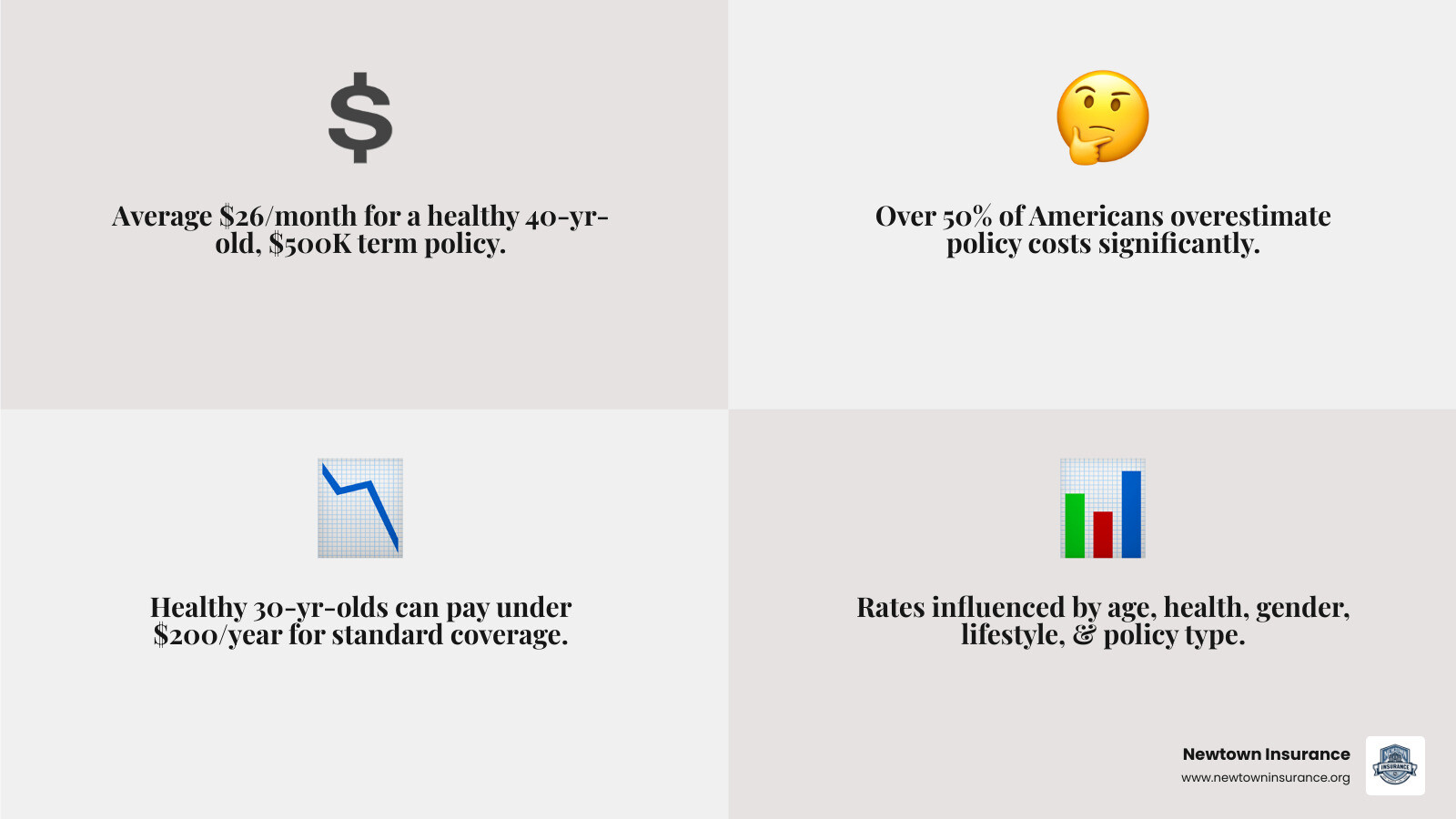
The average cost across all ages is about $26 per month for a healthy 40-year-old buying a 20-year, $500,000 term policy. That is less than most people think — a LIMRA study found that more than half of Americans guessed a standard policy would cost over $500 per year, when it actually averages under $200 per year for a healthy 30-year-old.
Your actual rate depends on several factors: your age, health, gender, lifestyle, and the type and amount of coverage you choose. Some of those factors are in your control. Some are not. This guide breaks all of it down clearly.
I'm Shawn Beihl, and I've spent over 15 years helping individuals and families navigate life insurance premium costs across a wide range of policies. I'll walk you through everything you need to know to avoid overpaying and find coverage that actually fits your life.
How a Life Insurance Premium is Calculated
At its core, a life insurance premium isn't just a number pulled out of thin air. It is the result of complex actuarial math designed to ensure the insurance company can pay out your death benefit while covering its own bills.
Insurers in Pennsylvania and across the country use three primary ingredients to bake your premium "cake":
- Mortality Risk: This is the big one. Insurers use mortality tables to estimate how many people in a specific age group are likely to pass away in a given year. If you are in a group with a higher statistical risk, your premium goes up.
- Interest Factors: Believe it or not, the insurance company wants you to pay less—sort of. They take the premiums we pay and invest them in bonds, stocks, and real estate. The interest they expect to earn on those investments helps offset the cost of the policy.
- Expense Loading: Like any business, insurance companies have overhead. This includes salaries for the people who process your application, rent for their offices, and the cost of the underwriting process.
When you apply, the company puts you through underwriting to see where you fit on those mortality tables. Most people opt for level-premium payments, which means your cost stays exactly the same for the entire length of the policy. Whether you are 30 or 49, a 20-year level term policy won't cost you a penny more in year 19 than it did in year one.
Factors That Determine Your Monthly Rate
When we sit down with clients in Newtown, we often explain that a life insurance premium is highly personalized. You, your neighbor, and your local barista could all apply for the same $500,000 policy and receive three completely different quotes.

Impact of Age and Health on Life Insurance Premium
Age is the most significant "uncontrollable" factor. As we get older, our life expectancy naturally decreases, which means the insurer takes on more risk. For example, the average cost of life insurance is roughly $31 per month at age 25, but that jumps to a staggering $593 per month by age 65.
Your physical health is the "controllable" counterpart. During a medical exam, insurers look at:
- Weight and BMI: Being significantly overweight can lead to higher rates.
- Blood Pressure and Cholesterol: Well-managed levels lead to better risk classifications.
- Pre-existing Conditions: Chronic illnesses like diabetes or heart disease will impact your rate, though many insurers specialize in specific conditions.
Insurers then assign you a "risk class." A "Super Preferred" individual (the marathon runner who eats kale for breakfast) will pay significantly less than someone in the "Standard" or "Substandard" categories.
Why Gender and Lifestyle Affect Your Life Insurance Premium
It might seem unfair, but men almost always pay more for life insurance than women. On average, men pay about 23% more for term life insurance. Why? Statistically, women live longer—about 81.4 years compared to 76.5 years for men, according to the CDC.
Your lifestyle choices also carry a heavy price tag:
- Smoking Status: This is the single biggest lifestyle factor. Smokers pay 6 to 10 times more for life insurance than nonsmokers. In some cases, a smoker might pay a 218% higher premium than a nonsmoker of the same age.
- Occupation and Hobbies: If your job involves high-voltage power lines or your weekends involve skydiving, expect a higher life insurance premium.
- Driving Record: A history of DUIs or reckless driving suggests a higher risk of accidental death, which insurers track closely.
| Age | Gender | 20-Year Term ($500k) | Whole Life ($500k) |
|---|---|---|---|
| 20 | Male | $749/year | N/A |
| 20 | Female | $554/year | N/A |
| 40 | Male | $1,482/year | $5,524/year |
| 40 | Female | $1,175/year | $4,967/year |
| 60 | Male | $8,435/year | $15,200/year |
Data based on nonsmoker, preferred health profiles as of April 2026.
What Does Not Impact Your Premium Costs
With all the data insurers collect, it’s easy to feel like your whole life is under a microscope. However, Pennsylvania residents should know that there are strict regulatory guidelines regarding what an insurer cannot use to set your rates.
Your life insurance premium will NOT be affected by:
- Race or Ethnicity: Discrimination based on heritage is strictly prohibited.
- Religion: Your faith has no bearing on your mortality risk in the eyes of an actuary.
- Sexual Orientation: This does not impact your health rating or premium.
- Credit Score: While your credit might affect your car insurance in some states, it generally does not impact life insurance rates.
- Marital Status: Being single or married doesn’t change your life expectancy.
- Number of Beneficiaries: Whether you leave your money to one child or ten charities, the cost of the policy remains the same.
Strategies to Lower Your Life Insurance Costs
We hate to see people overpay for protection. If you are looking to trim your life insurance premium, here are the most effective strategies we recommend to our Pennsylvania clients.

- Buy While You’re Young: This is the "Golden Rule" of life insurance. Every year you wait, the price goes up. Locking in a 30-year term policy at age 25 is significantly cheaper than trying to find coverage at 45.
- Choose Term Over Whole Life: If you just need to protect your family during the "high-risk" years (like when you have a mortgage and kids at home), term life is the way to go. It can be 6 to 10 times cheaper than whole life because it doesn't build cash value.
- Improve Your Health: If you were rated as "Standard" because of your weight or blood pressure, but you’ve since lost 30 pounds and started jogging, you can often ask for a "re-rating."
- Quit Smoking: Most insurers require you to be tobacco-free for at least 12 to 24 months to qualify for nonsmoker rates. The savings are massive—often thousands of dollars over the life of the policy.
- Pay Annually: Many companies offer a small discount (around 2-5%) if you pay your entire annual premium at once rather than in monthly installments.
- Bundle and Shop Around: Rates vary wildly between companies. We always suggest comparing quotes to find the insurer whose underwriting "niche" fits your specific health profile.
For those specifically looking to protect their family's largest asset, you might want to look into life insurance for homeowners to ensure your mortgage is covered without overspending on unnecessary riders.
Frequently Asked Questions about Life Insurance Costs
Are life insurance premiums tax-deductible?
Generally, no. For the average individual, the IRS views life insurance premiums as a personal expense, much like your rent or groceries. However, there is a major silver lining: the death benefit paid to your beneficiaries is almost always 100% income tax-free. Additionally, if you have a permanent policy, the cash value grows on a tax-deferred basis.
Just be careful with "overfunding" a policy. If you put too much cash into a policy too quickly, it can become a Modified Endowment Contract (MEC), which changes how the money is taxed and can trigger IRS penalties.
How much life insurance coverage do I need?
A common rule of thumb is to aim for 10 times your annual income. However, we prefer the DIME formula:
- Debt: Total all your debts (credit cards, car loans).
- Income: How many years of salary does your family need to stay afloat?
- Mortgage: The remaining balance on your home.
- Education: Future tuition costs for your children.
Using a life insurance calculator can help you get a more precise number so you don't pay for more coverage than you actually need.
When is the best time to buy a policy?
The best time was yesterday; the second best time is today. If you have anyone who depends on your income—a spouse, children, or even a business partner—you need coverage. Buying early allows you to lock in a low life insurance premium before age-related health issues arise. For example, a $250,000 20-year term policy for a healthy 30-year-old often costs less than $200 per year. By age 65, that same protection could cost you over $500 per month.
Conclusion
Understanding your life insurance premium is the first step toward taking control of your family’s financial future. It isn't just another bill; it’s the price of peace of mind. Whether you are a young parent in Newtown or a homeowner looking to protect your equity, there is a policy that fits your budget.
At Newtown Insurance, we pride ourselves on helping our Pennsylvania neighbors find tailored protection with transparent pricing. We believe in a customer-first approach that helps you avoid overpaying for the "bells and whistles" you don't need.
Ready to see your real numbers? Get a customized life insurance quote today and let us help you secure your legacy.