How to Get Personalized Insurance Quotes Easily in Under 5 Minutes

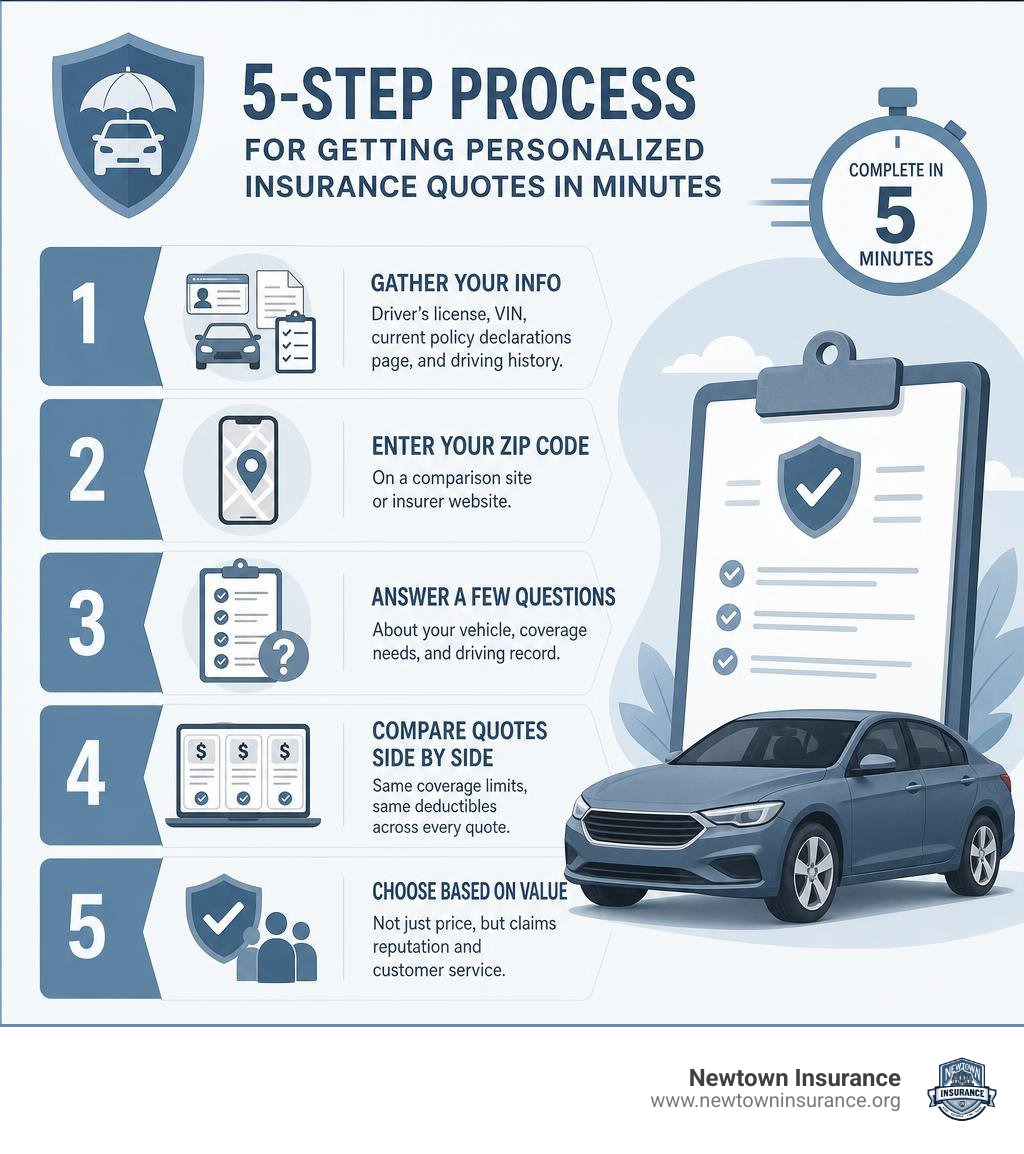
How to get personalized insurance quotes easily comes down to five simple steps:
- Gather your info — driver’s license, VIN, current policy declarations page, and driving history
- Enter your ZIP code on a comparison site or insurer website
- Answer a few questions about your vehicle, coverage needs, and driving record
- Compare quotes side by side — same coverage limits, same deductibles across every quote
- Choose based on value — not just price, but claims reputation and customer service
Most drivers can complete this process in about five minutes.
Here’s why this matters: a NerdWallet analysis found that drivers who skip this step can overpay by as much as $2,452 per year. And it’s not just about finding a cheaper number — the cheapest company for a 35-year-old in your ZIP code may be completely different from the cheapest option for a 20-year-old or a driver with a recent accident.
Insurance companies each weigh the same factors — your age, credit score, driving history, location, and vehicle — differently. That means the only way to know if you’re getting a fair rate is to compare.
Take a real example: a 30-year-old woman in Florida with good credit might see quotes ranging from $129 to $298 per month for the same full coverage policy — just from different insurers. That’s a $2,028 annual difference for identical protection.
I’m Shawn Beihl from Newtown Insurance, and with over 15 years of experience advising clients on personal and commercial coverage, I’ve helped countless Pennsylvania residents navigate how to get personalized insurance quotes easily without overpaying or getting locked into generic plans. Read on for a straightforward guide to doing it right.
Why You Should Compare Rates and How to Get Personalized Insurance Quotes Easily
We all want to protect our hard-earned money, yet many of us let hundreds of dollars slip through our fingers every year simply because we renew our insurance policies on autopilot. Taking a few minutes to explore your options is the single most effective way to secure tailored protection at a price that fits your budget.
By learning the mechanics of how premiums are calculated, you put yourself in the driver’s seat. Our Compare Insurance Quotes Complete Guide outlines how simple adjustments to your coverage can lead to major changes in your monthly bill.

The Financial Impact of Shopping Around
The numbers speak for themselves. According to industry data, drivers can save up to $1,100 annually by actively comparing car insurance quotes. Other market analyses show that shoppers using comparison platforms save an average of $867 to $879 per year by switching to a carrier that better aligns with their profile.
When you do the math, staying with the same insurer year after year without checking the market carries a massive overpayment risk. Why does this happen? The insurance market is incredibly dynamic. Carriers adjust their pricing algorithms constantly based on statewide claims data, inflation, and corporate financial targets.
A company that offered you the absolute lowest rate two years ago might now be pricing itself out of your budget. Furthermore, as you cross certain milestones—like turning 25, improving your credit score, or maintaining a clean driving record—your risk profile drops, making you eligible for significant rate drops that your current insurer might not automatically apply.
Key Factors That Influence Your Personalized Rates
To understand why prices vary so wildly, it helps to look at the ingredients that go into your personalized rate. Insurance is essentially a game of mathematical risk, and every carrier uses its own proprietary recipe to calculate that risk.
- Driving Record: This is the most significant factor under your control. A clean record with no moving violations or at-fault accidents signals to insurers that you are a safe bet. Conversely, a single speeding ticket or DUI can cause your premiums to spike, requiring you to shop around to find specialized carriers that cater to high-risk drivers.
- Credit Score: In Pennsylvania and most other states, insurers use your credit history to calculate an insurance-based credit score. Industry data reveals that in 48% of U.S. ZIP codes, the cheapest car insurance company for drivers with poor credit is entirely different from the cheapest for those with good credit.
- Age: Statistically, younger drivers are more prone to accidents. In 43% of ZIP codes, the cheapest insurance company for a 20-year-old driver is different from the cheapest for a 35-year-old. Rates typically decline as you enter your 30s and stable driving patterns take over, before rising slightly again in your late 70s.
- Location: Where you park your car matters. Urban neighborhoods with high traffic density, vandalism, or weather risks naturally command higher rates than quiet suburban streets in Bucks County.
- Vehicle Type: The cost of repairing or replacing your vehicle heavily influences your premium. For example, a standard commuter vehicle like a Subaru Forester costs significantly less to insure (averaging around $1,200 annually) compared to a high-performance luxury sedan like an Infiniti Q50 (which averages $2,736 annually).
To put this variation into perspective, consider the average rates among major national insurers: some offer highly competitive average rates at around $1,653 per year for full coverage, while others charge an average of $4,105 for the exact same coverage level. Without comparing, you could easily end up paying more than double for the same peace of mind.
The Best Ways to Compare Insurance Quotes Online
The digital age has made shopping for coverage incredibly convenient, but not all online quoting methods are created equal. To figure out how to get personalized insurance quotes easily, you need to understand the different avenues available to you.
Online Comparison Sites vs. Direct Insurers
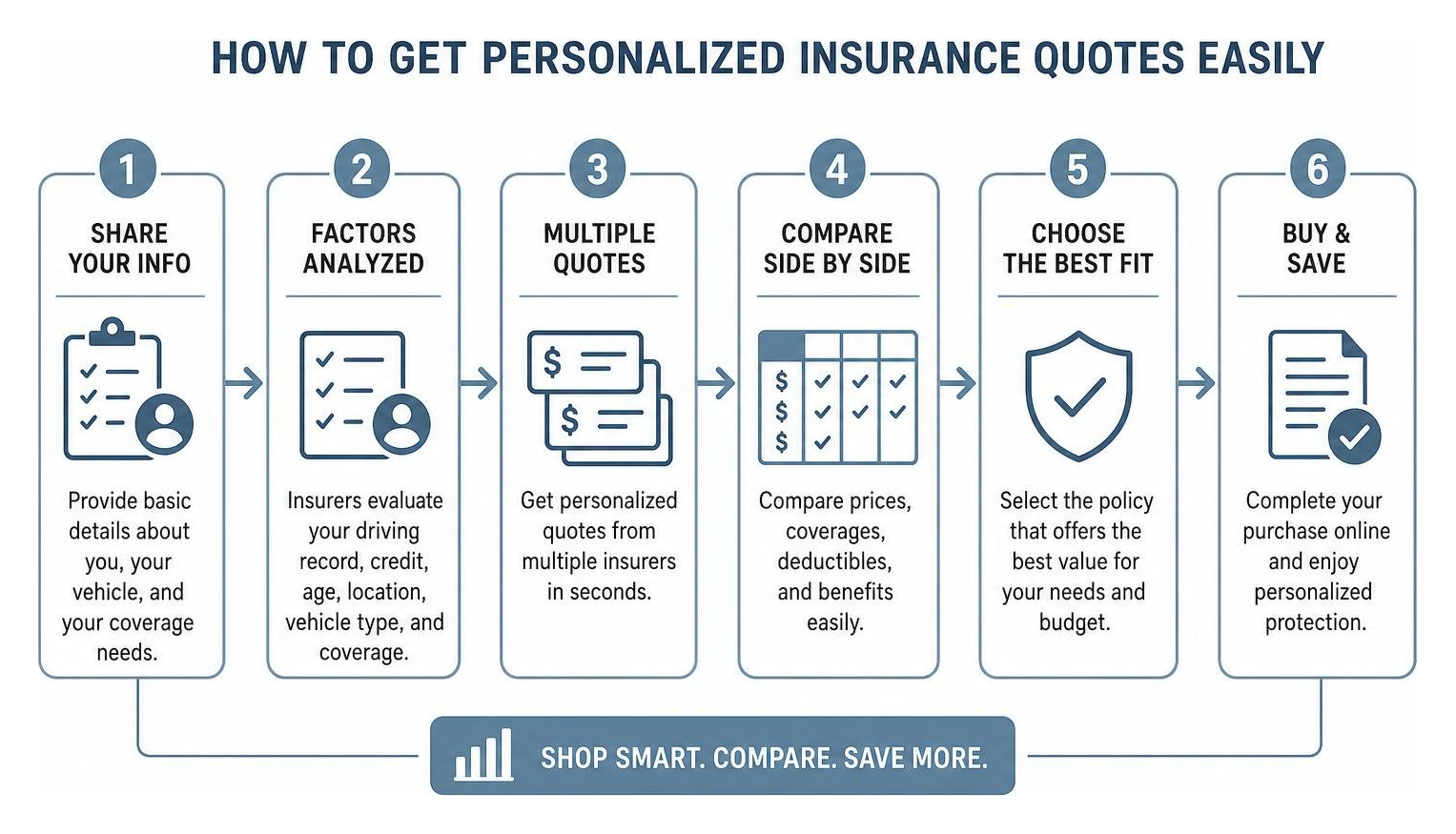
When shopping online, you generally have three choices: using a comparison platform, visiting direct carrier websites one by one, or partnering with an independent local agent.
- Comparison Platforms: Some online quote marketplaces allow you to enter your information once and view multiple real-time quotes side by side. This can save time, but some platforms act as lead generators, meaning they may sell your contact details to third parties, resulting in unwanted sales calls. If you value your privacy, you will want to read our Insurance Quotes No Personal Info Guide to learn how to navigate these systems safely.
- Direct Insurers: You can go directly to carrier websites to request quotes. While this gives you complete control over the process, filling out the same 50+ questions on five or six different websites is tedious and time-consuming.
- Independent Agents: Working with an independent local agency (like us at Newtown Insurance) gives you the best of both worlds. We use advanced, secure quoting software to compare rates across multiple top-tier carriers for you. You get highly accurate, personalized quotes, expert advice on coverage limits, and zero spam calls.
How to Get Personalized Insurance Quotes Easily Using AI and Automation
For the tech-savvy shopper, there are exciting open-source tools designed to automate the online quoting process while keeping your personal data completely private.
One such tool is anakai3/insurance-quotebot . This browser-based tool allows you to fill out your insurance profile just once and export it as a secure JSON file. You can then use an AI agent with browser control to automatically fill out forms across the top 20 U.S. auto insurance websites.
To protect your sensitive information, the AI agent is designed to pause whenever it reaches fields requiring highly sensitive data, such as your Social Security Number, allowing you to enter it manually before resuming the automation. It is a fantastic option for those who want to compare multiple direct carriers without repetitive typing.
Step-by-Step Guide to Comparing Rates
To ensure your quotes are highly accurate and that you are truly comparing apples to apples, it helps to follow a structured approach.

How to Get Personalized Insurance Quotes Easily in Three Steps
If you want to streamline your quoting process down to the absolute essentials, follow this three-step checklist:
- Get Organized Upfront: Before you open a single browser tab, gather your driver’s license number, the Vehicle Identification Number (VIN) for each vehicle, your driving history (including dates of any minor accidents or tickets over the past three to five years), and a copy of your current policy’s declarations page. Having these details on hand ensures your quotes match your real-world risk profile, preventing unexpected price jumps during final underwriting. If you are hesitant to share your personal details right away, check out our Car Insurance Quote No Personal Info Guide for smart workarounds.
- Obtain Baseline Quotes: Use a reputable online comparison tool or contact a local independent agent to run your initial numbers. If you want to explore direct state-specific options, you can look into dedicated portals of national carriers to see how they price regional risks. You can also research local captive agents to understand how single-carrier pricing compares to independent options.
- Review and Refine: Once you have three to five competitive quotes, review the coverages line by line. Ensure the liability limits, comprehensive/collision deductibles, and optional add-ons are identical across all offers before making your final decision.
Determine Your Coverage Needs and Deductibles
One of the most common mistakes shoppers make is looking only at the bottom-line premium without checking what they are actually buying. To protect your family and your assets, you need to understand the core components of your policy:
- Liability Limits: This covers bodily injury and property damage to others if you cause an accident. Pennsylvania law requires minimum limits, but these state minimums are rarely enough to protect your personal assets in a severe accident. We generally recommend limits of at least 100/300/100 ($100,000 per person for bodily injury, $300,000 per accident, and $100,000 for property damage).
- Collision Coverage: This pays to repair your vehicle if you hit another car, a guardrail, or a tree.
- Comprehensive Coverage: This protects your vehicle against “acts of God” or events out of your control, such as animal collisions, theft, vandalism, hail, or windshield damage.
- Deductibles: Your deductible is the out-of-pocket amount you pay before your insurance kicks in. Choosing a higher deductible is one of the easiest ways to lower your monthly premium, but you must ensure you have that cash readily available in an emergency.
| Deductible Level | Impact on Monthly Premium | Out-of-Pocket Risk in an Accident | Best Suited For |
|---|---|---|---|
| Low ($250 – $500) | Higher monthly cost | Low financial strain | Drivers who prefer predictable monthly expenses and want minimal out-of-pocket costs after a claim. |
| High ($1,000 – $2,500) | Lower monthly cost (saves up to 15-30%) | Higher financial strain | Experienced drivers with a clean record and a healthy emergency fund who can easily cover a larger unexpected expense. |
Evaluate and Compare Your Quotes Correctly
When evaluating your options, look beyond the price tag. A cheap policy from a company with a reputation for denying claims or providing poor customer service will cost you far more in the long run.
Always check a carrier’s financial strength rating through independent agencies like AM Best (look for an “A” rating or better), which measures their ability to pay out major claims after large-scale disasters. Additionally, read consumer reviews regarding their claims handling process.
Do they resolve claims quickly? Do they have a user-friendly mobile app for submitting photos of vehicle damage? A great insurance policy is a promise of future performance, so make sure you are partnering with a carrier that keeps its promises.
Frequently Asked Questions About Personalized Insurance Quotes
To help you navigate the process with complete confidence, we have compiled answers to some of the most common questions we hear from Pennsylvania shoppers.
How often should I compare car insurance quotes?
We recommend comparing your insurance rates at least once a year, preferably 30 to 45 days before your current policy is set to renew.
You should also shop around whenever you experience a major life event, such as buying a home, getting married, adding a teen driver to your policy, moving to a new ZIP code, or purchasing a new vehicle. These milestones often qualify you for new discounts or change your risk profile entirely.
Do insurance comparison sites sell my data or spam me?
It depends on the site. Many national lead-generation websites make money by selling your contact information to dozens of local insurance agents and call centers, which can lead to an overwhelming flood of spam calls and emails.
However, high-quality comparison marketplaces and local independent agencies operate on a commission-based model. They get paid by the insurance carrier only when you actually purchase a policy, meaning they have no incentive to sell your data or spam you. Always read a platform’s privacy policy before entering your phone number.
Can I get personalized quotes for other types of insurance?
Absolutely. The exact same comparison principles apply to homeowners, renters, and life insurance. Bundling multiple policies with a single provider is often the single most effective way to secure deep discounts.
If you are planning for your family’s long-term financial security, read our guide on How to Get a Personalized Quote for Life Insurance to understand how coverage terms and health factors affect your pricing. We also provide a comprehensive Life Insurance Quote No Personal Info Guide 2026 for those who want to explore preliminary rates privately, as well as our primary resource on securing Personalized Insurance Quotes across all personal coverage lines.
Conclusion
Getting personalized insurance quotes does not have to be a stressful, confusing, or time-consuming chore. By understanding the key factors that drive your premiums and utilizing secure, modern comparison strategies, you can easily uncover significant savings while strengthening your family’s safety net.
At Newtown Insurance, we believe in making the process as transparent and straightforward as possible. As a local Pennsylvania provider, we specialize in delivering tailored protection, smart savings, and honest, customer-first support. We work closely with you to analyze your unique needs, compare top-tier carriers, and build a policy that ensures you never overpay for the coverage you deserve.
Ready to see how much you could save? Start Now or visit our Get Started with Newtown Insurance portal today to connect with our friendly local team and secure your personalized quotes in minutes.