

The Definitive Guide to Life Insurance Options
Why Understanding Your Life Insurance Options Matters

Life insurance options fall into two main categories — term and permanent — each with distinct subtypes suited to different needs and budgets.
Here's a quick overview of the main types:
| Type | Coverage Length | Cash Value | Best For |
|---|---|---|---|
| Term Life | 10–30 years | No | Affordable, temporary coverage |
| Whole Life | Lifetime | Yes (fixed growth) | Lifelong protection + savings |
| Universal Life | Lifetime | Yes (flexible) | Flexible premiums + cash growth |
| Variable Life | Lifetime | Yes (market-linked) | Investment-oriented coverage |
| Final Expense | Lifetime | Sometimes | Seniors covering end-of-life costs |
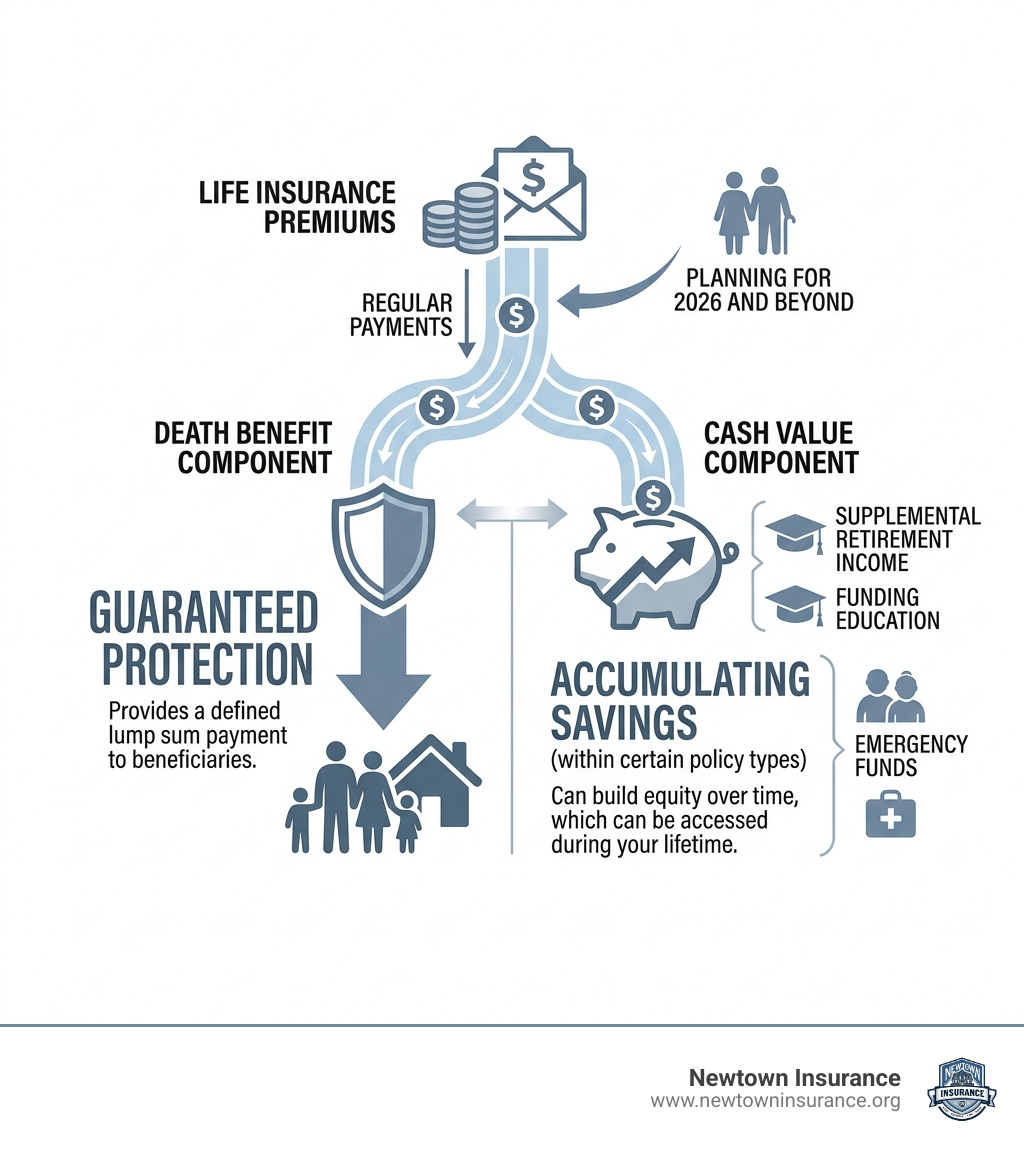
Life insurance is straightforward at its core: you pay regular premiums, and when you die, your insurer pays a lump sum — called a death benefit — to the people you choose, known as your beneficiaries. That money can cover anything: a mortgage, lost income, college tuition, or funeral costs.
But choosing the wrong type can mean overpaying for coverage you don't need — or being underinsured when it matters most. As of April 2026, rising premiums and an increasingly complex market make it more important than ever to understand exactly what you're buying before you sign.
I'm Shawn Beihl, and with over 15 years of specialty insurance experience — including life, health, disability, and benefits management — I've helped countless clients navigate their life insurance options to find coverage that actually fits their lives. In the sections ahead, I'll break down every major policy type, what they cost, and how to choose the right one.
Understanding Your Primary Life Insurance Options
Navigating life insurance can feel like trying to read a map in a different language. At its heart, however, every policy is designed to solve one of two problems: "What happens if I die too soon?" or "How can I leave a legacy and build wealth while I'm still here?"
In Pennsylvania, we have specific regulations to protect consumers, and staying informed through resources like the Life | Insurance Department - Commonwealth of Pennsylvania is a great first step.
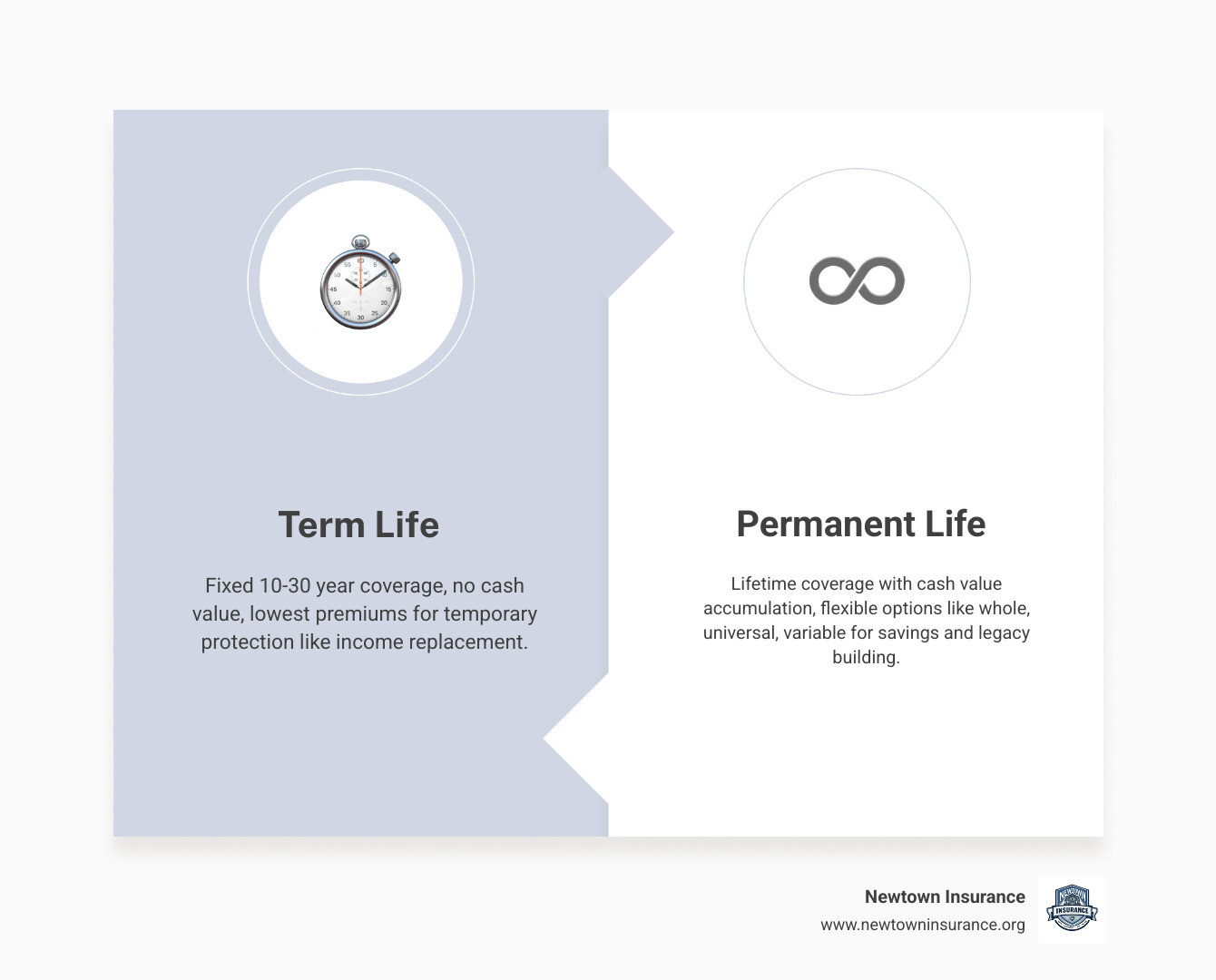
The biggest fork in the road is choosing between Term and Permanent coverage. Think of term insurance like renting a home; you have it for a set time, and it’s very affordable. Permanent insurance is more like owning a home; it builds equity (cash value) and stays with you as long as you pay the "mortgage" (premiums).
Term Life Insurance Options
Term life insurance is the "no-frills" favorite for many of our clients in Newtown. It provides coverage for a specific period—typically 10, 15, 20, or 30 years. If you pass away during that window, your beneficiaries receive the death benefit. If you outlive the policy, it simply ends.
Why people love it:
- Affordability: It is significantly cheaper than permanent options. For example, a 30-year-old man might pay around $221 annually for a $500,000 20-year term policy, whereas a woman might pay about $187.
- Income Replacement: It’s perfect for covering the "high-expense" years of life—when you have a mortgage, young children, or debt.
- Level Premiums: Your price is locked in for the duration of the term. It won't go up just because you got older or developed a health condition.
For our local residents, this is often the go-to life insurance for homeowners because you can match the term of the insurance to the length of your mortgage.
Permanent Life Insurance Options
If term life is a "if-you-need-it" safety net, permanent life insurance is a "when-you-need-it" financial tool. It provides lifetime coverage and includes a cash value component—a sort of savings account inside your policy that grows tax-deferred.
- Whole Life Insurance: This is the most predictable permanent option. Your premiums are fixed, the death benefit is guaranteed, and the cash value grows at a steady rate. Some companies have even paid dividends to policyholders every year since the 1860s! However, this stability comes at a price. That same $500,000 policy that cost $221 a year in term might cost over $4,300 a year in whole life.
- Universal Life (UL): UL offers more flexibility. You can often adjust your premium payments and death benefit amounts as your financial situation changes.
- Variable Life: This is for the risk-takers. Your cash value is invested in sub-accounts (similar to mutual funds). If the market does well, your cash value and death benefit can grow significantly. If the market dips, so does your value.
- Indexed Universal Life (IUL): This middle-ground option ties your cash value growth to a market index (like the S&P 500) but usually includes a "floor" to protect you from market losses.
Specialized Policies for Specific Financial Needs
Beyond the "Big Two," there are several other life insurance options designed for very specific scenarios.
Joint and Survivorship Policies
These policies cover two people (usually spouses) under one contract.
- First-to-Die: Pays out when the first spouse passes away. This is often used to help the surviving spouse pay off debt or maintain their lifestyle.
- Second-to-Die (Survivorship): Does not pay out until both people have passed. This is a heavy-hitter in estate planning, often used to pay estate taxes so that heirs don't have to sell off family assets.
Mortgage and Dependent Life Insurance
- Mortgage Life: Specifically designed to pay off your remaining mortgage balance if you die. Unlike standard term life, the benefit usually decreases as your mortgage balance goes down.
- Dependent Life: This provides a small amount of coverage for a spouse or children. While no one likes to think about it, it helps cover funeral costs and gives the family breathing room during a tragedy.
Group and Supplemental Coverage
Many of our clients in the Newtown area have "Group Life" through their employers. It’s often free or very cheap, usually covering 1x or 2x your salary. While it’s a great perk, it’s rarely enough on its own, and it usually doesn't follow you if you change jobs. Supplemental life is an extra layer you can buy through your employer or privately to fill that gap.
Final Expense and Burial Insurance
As we get older, our needs shift from replacing income to covering end-of-life costs. Final expense insurance (also known as burial or funeral insurance) typically offers smaller death benefits—between $2,500 and $40,000.
It is designed to be accessible. Many of these are "guaranteed issue" or "simplified issue," meaning there is no medical exam. This is a vital option for seniors who may have health issues that make standard policies too expensive. If you are looking to protect your family from the immediate costs of a service, exploring funeral expense coverage is a compassionate way to plan ahead.
Key Factors in Choosing and Customizing Coverage
Choosing the right policy isn't just about picking a name off a list; it’s about looking at your personal "financial health" and your physical health.

The Role of Health and Age
In the insurance world, youth is a currency. The younger and healthier you are, the lower your premiums. As you age, premiums increase by roughly 8% to 10% for every year you wait.
When you apply, you’ll likely encounter one of three underwriting paths:
- Fully Underwritten: Requires a full medical exam (blood work, vitals). This usually results in the lowest prices.
- Simplified Issue: No exam, but you must answer a detailed health questionnaire.
- Guaranteed Issue: No exam and no health questions. This is the most expensive per dollar of coverage but ensures everyone can get some protection.
To get a baseline of what you might need, we recommend using a Life Insurance Calculator | Newtown Savings Bank to see how your debts and income translate into a coverage number.
Common Riders and Policy Add-ons
Riders are like "upgrades" for your insurance policy. They allow you to customize your coverage for specific risks.
- Accidental Death Benefit: Pays an extra amount if you die in an accident.
- Waiver of Premium: If you become seriously disabled and can't work, the insurance company pays your premiums for you so the policy stays active.
- Chronic/Terminal Illness Riders: These allow you to access a portion of your death benefit while you are still alive if you are diagnosed with a qualifying illness.
Statistics show that a 20-year-old has a one in four chance of becoming disabled during their working years. Furthermore, over 66% of 65-year-olds will eventually need long-term care. Adding these riders can turn a standard life policy into a comprehensive safety net for your living years as well.
Frequently Asked Questions about Life Insurance
How much life insurance coverage do I actually need?
A common industry rule of thumb is to aim for 10 to 12 times your annual income. However, you should also factor in specific "milestone" costs:
- Your total mortgage balance.
- Future college tuition for children.
- Outstanding personal or business debts.
- An "emergency fund" for your spouse.
If you make $75,000 a year, a $750,000 to $1,000,000 policy is a standard starting point for a young family.
Can I convert my term policy to permanent coverage?
Yes! This is one of the most underrated life insurance options. Many term policies include a conversion rider. This allows you to switch your term policy to a permanent one (like whole life) without having to take a new medical exam.
This is huge if your health has declined since you first bought the policy. You get to keep your "healthy" rating from years ago while getting the lifetime benefits of a permanent policy. We always recommend reviewing this option with your agent annually.
What happens if I outlive my term life insurance policy?
It might surprise you to learn that over 97% of term life policies end up not paying out a death benefit. This isn't a bad thing—it means the policyholder lived!
When the term ends, the coverage simply expires. You usually have three choices:
- Let it go: If your house is paid off and the kids are through college, you might not need it anymore.
- Renew it: Most policies allow for a year-to-year renewal, but be warned: the premiums will jump significantly because you are now older.
- Convert it: As mentioned above, you can turn it into a permanent policy before the term expires.
Conclusion
At the end of the day, life insurance isn't really for you—it's for the people who depend on you. Whether you’re a new homeowner in Newtown, Pennsylvania, or a grandparent looking to leave a legacy, there is a path that fits your budget.
At Newtown Insurance, we pride ourselves on offering tailored protection and smart savings. We believe in transparent pricing and customer-first support to ensure you never overpay for the peace of mind you deserve.
Don't leave your family's future to chance. Explore your life insurance options with Newtown Insurance today, and let’s build a plan that protects what matters most.