

Don't Terminate Your Peace of Mind with Basic Life Coverage
Why Basic Term Life Insurance Is the Smart Starting Point for Family Protection

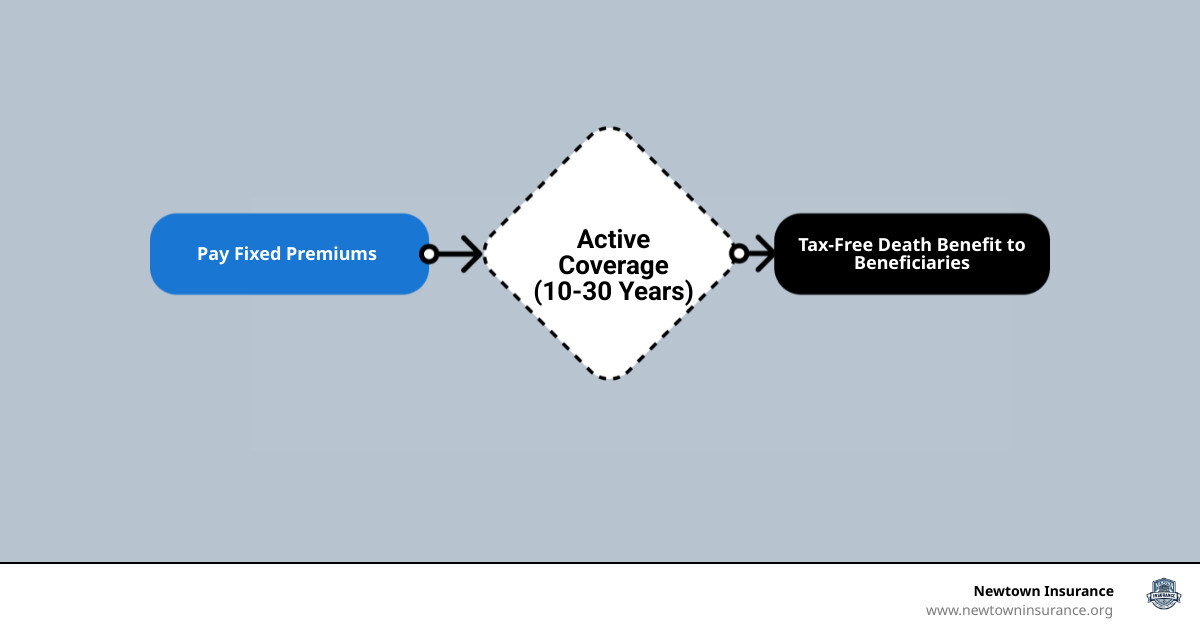
Basic term life insurance is straightforward, affordable coverage that pays a tax-free death benefit to your loved ones if you pass away during a set period — typically 10, 20, or 30 years.
Here's what you need to know at a glance:
| Question | Quick Answer |
|---|---|
| What is it? | Temporary life insurance with a fixed death benefit |
| How long does it last? | Usually 10, 20, or 30 years |
| Does it build cash value? | No |
| How much does it cost? | As low as $21.25/month for $500,000 in coverage |
| Who is it for? | Anyone with dependents, a mortgage, or financial obligations |
| Is the payout taxed? | No — death benefits are generally income-tax free |
No investment component. No complicated fine print. You pay a fixed premium, and if you die during the term, your beneficiaries receive the payout.
Yet here's the thing — 63% of employees worry about leaving their families financially unprotected, and a large share of people never act because they assume coverage is too expensive. In reality, most families can get $500,000 in coverage for less than $30 a month.
I'm Shawn Beihl, and with over 15 years of specialty insurance experience — including life, health, and benefits management — I've helped countless Pennsylvania families find the right basic term life insurance without overpaying. Let's break down everything you need to make a confident, informed decision.
What is Basic Term Life Insurance and How Does It Work?
At its core, term life insurance is the simplest form of life insurance available. Think of it like your car or homeowners insurance: you pay a premium to protect against a specific risk for a specific amount of time. If that "risk" (in this case, your death) occurs while the policy is active, the insurance company pays a set amount of money to the people you’ve chosen as your beneficiaries.
This payout is known as a "death benefit." One of the greatest advantages of basic term life insurance is that this benefit is almost always paid out 100% income-tax free. It provides an immediate financial cushion for your family during an emotionally devastating time.
Because these policies focus solely on "pure risk"—meaning they don't have fancy investment accounts or cash-back features—they are incredibly efficient. In fact, the industry sees a high level of reliability here, with approximately 97% of claims paid out to beneficiaries.
Understanding the Mechanics of Basic Term Life Insurance
How does the day-to-day actually look? When you sign up for basic term life insurance, you agree to two main things: the coverage amount (the "face value") and the duration (the "term").
- Level Premiums: Most modern term policies feature "level premiums." This means your monthly or annual cost is locked in. If you start a policy at age 30, you’ll pay the same amount when you’re 49.
- Policy Duration: You choose how long you need the protection. Standard terms are 10, 15, 20, 25, or 30 years.
- Coverage Periods: According to U.S. News, the goal is to match the term to your longest financial obligation. If you just bought a house in Newtown with a 30-year mortgage, a 30-year term is a logical fit.
Common Uses for the Death Benefit
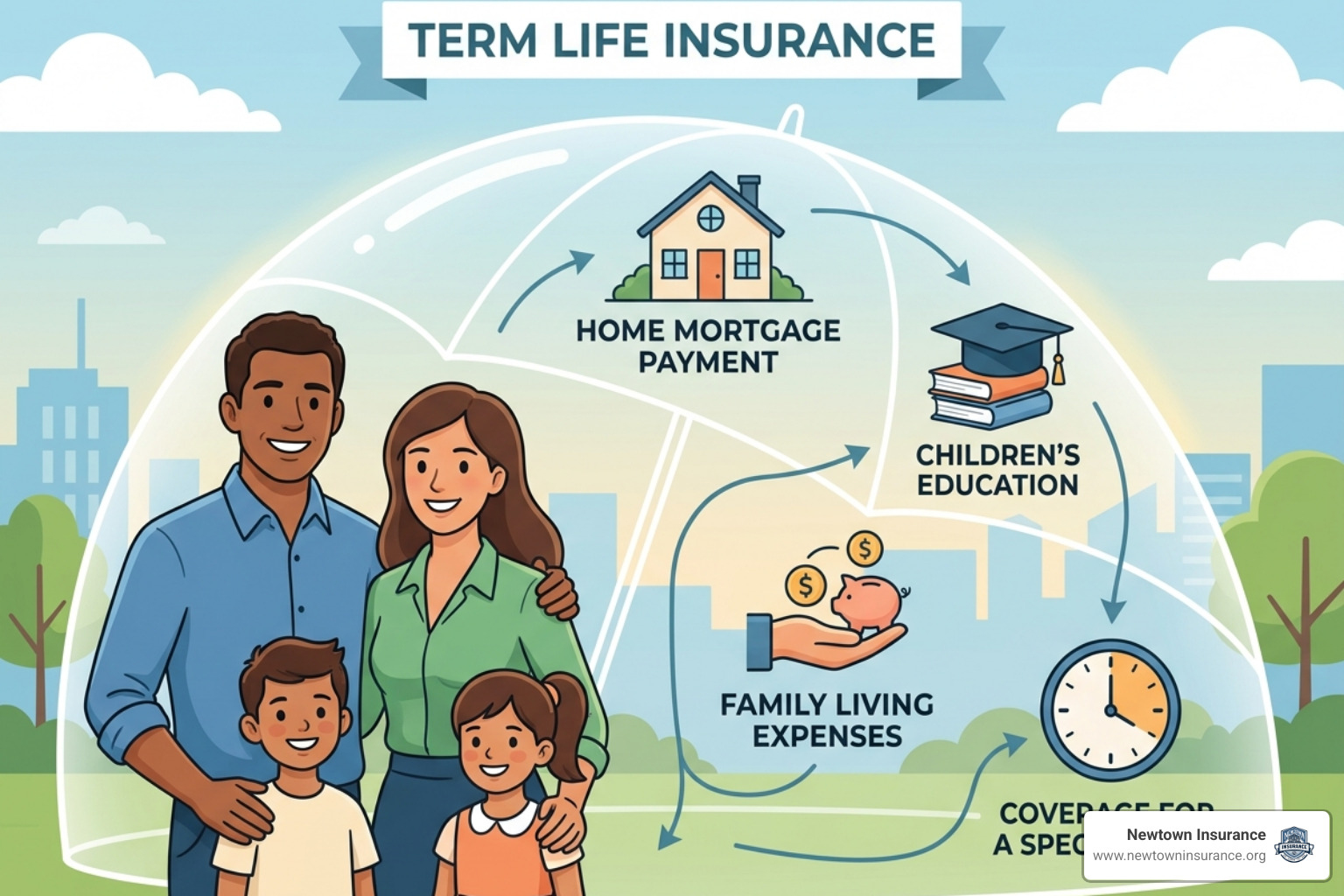
The money your family receives isn't restricted; they can use it for whatever they need most. Common uses include:
- Income Replacement: If you are the primary breadwinner, the death benefit replaces your salary so your family can maintain their standard of living.
- Mortgage Payoff: Life insurance for homeowners is often used to ensure a surviving spouse or children can stay in their home without the burden of monthly payments.
- Education Funds: Many parents calculate their coverage based on the future cost of college tuition for their children.
- Daily Living Expenses: From groceries to utility bills, the benefit provides the "bridge" that keeps a household running.
Comparing Term Life vs. Permanent Life Insurance
When shopping for life insurance in Pennsylvania, you’ll inevitably run into "Permanent" or "Whole Life" options. While these policies last your entire life and include a cash value component, they come at a significant cost.
| Feature | Basic Term Life Insurance | Whole/Permanent Life |
|---|---|---|
| Coverage Duration | Set period (10-30 years) | Lifelong |
| Premium Cost | Very Affordable | 6x to 10x more expensive |
| Cash Value | None | Yes (accumulates over time) |
| Complexity | Simple | Complex |
| Best For | Income replacement & debt | Estate planning & high net worth |
The 6-10x price gap is the main reason we often recommend the "Buy Term and Invest the Difference" strategy. By choosing a more affordable term policy, you can use the money you save to invest in a retirement account or a 529 college savings plan. You can even use a Buy Term and Invest the Difference Calculator to see how those savings compound over 20 years.
Why Most Families Choose Basic Term Life Insurance
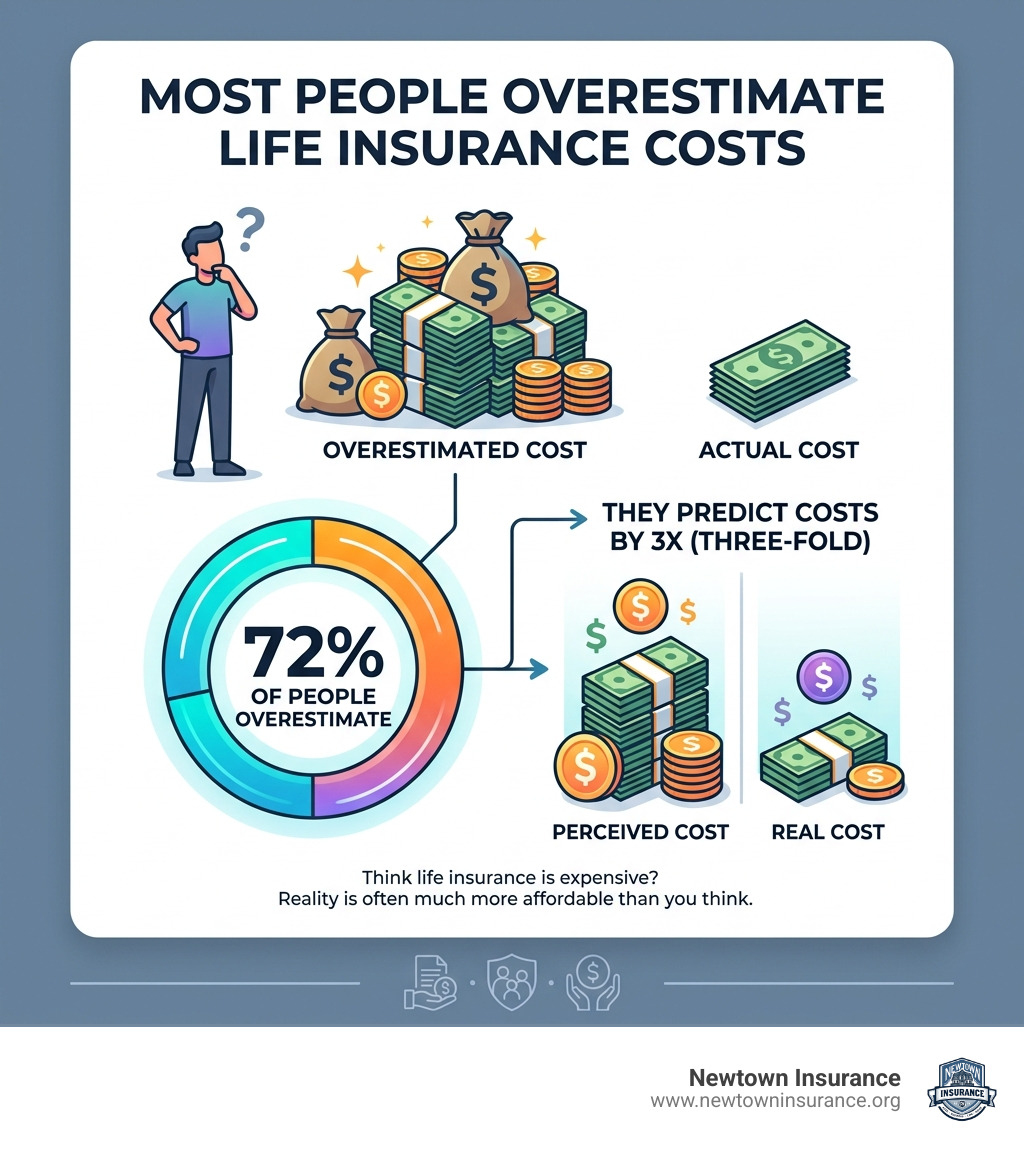
Affordability is the king of the conversation. Our research shows that a staggering 72% of people overestimate the actual cost of a basic term life insurance policy. Many think it will cost hundreds of dollars a month, when in reality, a healthy 35-year-old might find a $500,000 policy for roughly $30 per month.
The simplicity of the structure is another major draw. You don't need a degree in finance to understand your policy. It’s a straightforward contract: you pay, they protect.
Who Should Consider Buying Term Coverage?
If someone relies on your income or your labor, you likely need a term policy. This includes:
- Parents: To cover childcare and future education.
- Homeowners: To protect the equity in their home.
- Stay-at-Home Parents: Many people forget that replacing the "free" labor of a stay-at-home parent (childcare, cooking, cleaning) is incredibly expensive.
- Co-signers: If your parents co-signed a student loan or a car loan, a term policy ensures they aren't stuck with your debt.
Determining Your Coverage Needs and Policy Types
How much is enough? We generally suggest one of two methods:
- The 10-12x Rule: A quick rule of thumb is to buy coverage equal to 10 to 12 times your annual income.
- The DIME Formula: This is more precise. It stands for Debt, Income replacement, Mortgage, and Education. Add those four numbers up, and that’s your target coverage amount.
Different Types of Term Policies
Not all term insurance is "Level Term." Depending on your needs, you might encounter:
- Decreasing Term: The death benefit drops over time, often used to match a declining mortgage balance.
- Increasing Term: The benefit grows as you get older (and usually, so do the premiums).
- Return of Premium (ROP): If you outlive the term, the company pays back every cent you paid in premiums. Warning: These policies can cost 2-5 times more than standard term.
- Annual Renewable: The policy renews every year. It’s cheap at first, but the price jumps every single year as you age.
Workplace Options and Group Plans
Many employers in Newtown offer "Basic Group Term Life" as a free benefit. This is a fantastic perk, but it’s often only for a small amount (like 1x your salary).
- Supplemental Tiers: You can often pay extra to increase this amount.
- Guaranteed Issue: Group plans often don't require a medical exam for the basic amount.
- Portability: Be careful—if you leave your job, you usually lose this coverage. This is why having your own individual policy is a vital safety net.
The Application Process and Cost Factors
Buying basic term life insurance in 2026 is faster than ever. While some "no-exam" policies exist, the most affordable rates usually require a brief medical exam.
The exam typically takes about 30 minutes and can be done at your home or office. A technician will check your height, weight, blood pressure, and take a small blood and urine sample. This helps the "underwriter" determine your risk level.
Factors Affecting Your Insurance Rates
Insurance companies look at several data points to set your price:
- Age: The younger you are, the lower the rate. Rates tend to rise 8-10% for every year you wait to buy.
- Health Status: Chronic conditions or high blood pressure can increase rates.
- Lifestyle: Tobacco use is the biggest factor; smokers often pay 3x to 4x more than non-smokers.
- Location: Rates can vary slightly by state, so it’s important to look at the best life insurance companies in Pennsylvania for local context.
Options for Renewal and Conversion
What happens if your health changes?
- Convertibility Riders: Most policies allow you to "convert" your term policy into a permanent one without taking a new medical exam. This is a lifesaver if you develop a health condition later in life.
- Guaranteed Renewability: This allows you to keep the policy after the term ends, though the price will go up significantly. This is often used to bridge the gap if you still need coverage for funeral expenses or final debts.
Frequently Asked Questions about Term Coverage
What happens if you outlive your term life insurance policy?
If you reach the end of your 20-year term and you’re still healthy (congratulations!), the coverage simply ends. You stop paying premiums, and the insurance company is no longer obligated to pay a benefit. You can choose to apply for a new policy, renew the current one at a higher rate, or let the coverage lapse if you no longer have major debts or dependents.
Do term life policies require a medical exam?
Not always. "Simplified Issue" and "Guaranteed Issue" policies skip the exam, but they are more expensive and offer lower coverage limits. Many carriers now offer "Accelerated Underwriting," which uses your digital health records to approve you instantly without an exam if you are in excellent health.
How much does basic term life insurance cost?
As of May 2026, a 35-year-old female in excellent health can find a $500,000 policy with a 20-year term for approximately $243 per year. That breaks down to about $21.25 per month. Even for those with average health, most families can secure substantial protection for less than the cost of a monthly streaming subscription.
Conclusion
At Newtown Insurance, we believe that protecting your family shouldn't be a financial burden. Basic term life insurance is the most cost-effective way to ensure that if the unthinkable happens, your loved ones can stay in their home, attend college, and move forward without financial ruin.
Whether you are looking for Newtown burial insurance options or a robust $1 million term policy to protect your growing family, we are here to provide transparent pricing and expert guidance tailored to Pennsylvania residents.
Don't let the "what-ifs" keep you up at night. Secure your family's future today and get the peace of mind you deserve.