Why Liability Insurance PA Matters for Every Business and Driver

Liability insurance PA is a broad term covering the policies that protect Pennsylvania residents and businesses when they’re held responsible for injuries, property damage, or professional mistakes.
Here’s a quick snapshot of what you need to know:
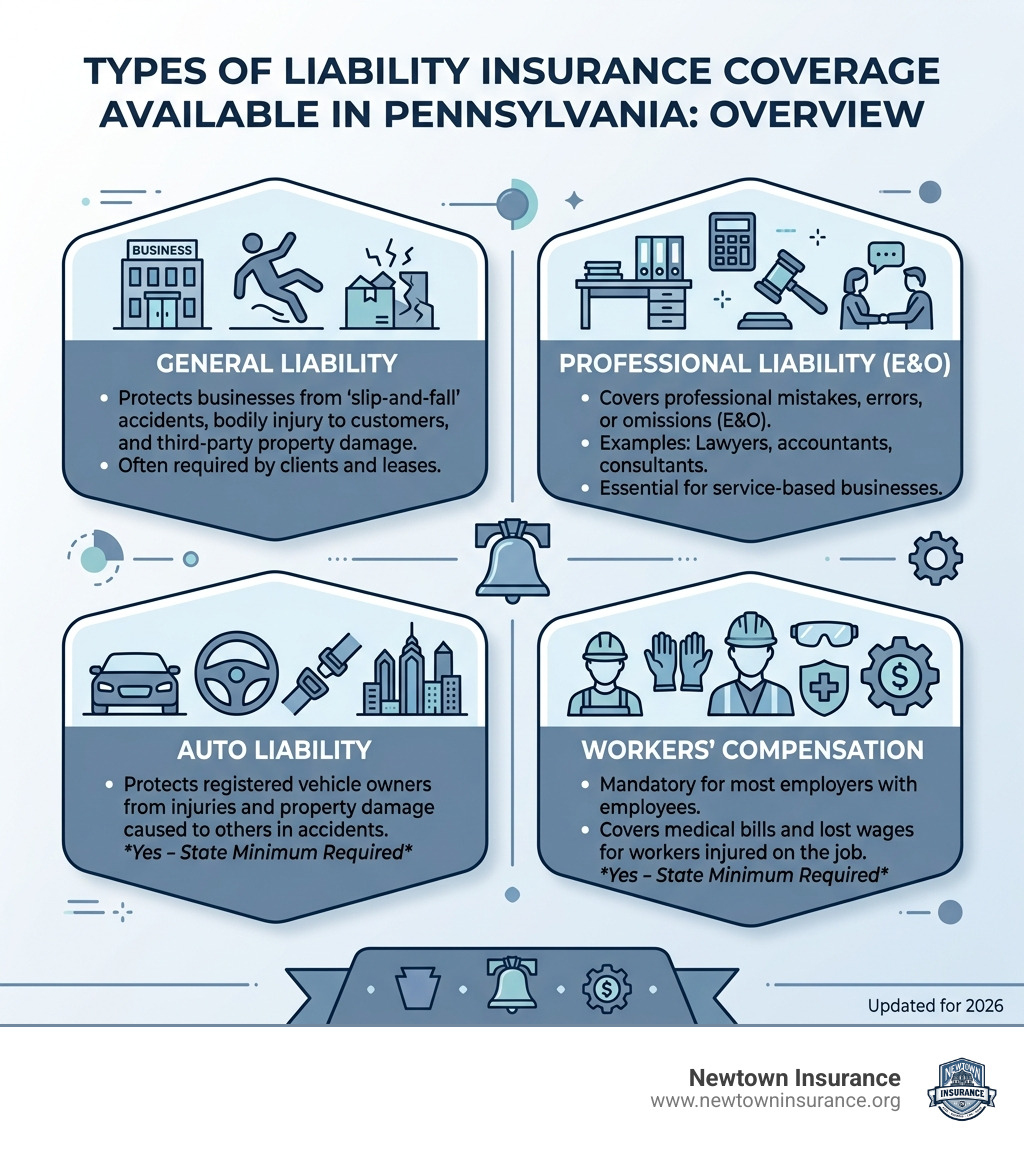
| Type | Who Needs It | Required by Law? |
|---|---|---|
| General Liability | Small businesses, contractors, retailers | No, but often required by clients/leases |
| Professional Liability (E&O) | Lawyers, accountants, consultants | No, but strongly advised |
| Auto Liability | All registered vehicle owners | Yes — state minimum required |
| Workers’ Compensation | Most employers with employees | Yes |
Pennsylvania has over 1.1 million small businesses employing nearly half of the state’s workforce. That’s a lot of people with a lot to lose.
And the risks are real. A single slip-and-fall claim can average over $30,000. A customer injury lawsuit can run past $100,000 in legal fees alone. Pennsylvania’s legal climate makes this worse — a state constitutional provision limits the legislature’s ability to cap certain business liability lawsuit awards, leaving businesses more exposed than in many other states.
Whether you’re a sole contractor in Lancaster, a restaurant owner in Allentown, or a driver commuting through Philadelphia, the right liability coverage is the difference between a manageable setback and a financial disaster.
I’m Shawn Beihl, and with over 15 years in commercial P&C and specialty insurance, I’ve helped countless Pennsylvania clients navigate liability insurance PA — from finding the right coverage to avoiding costly gaps. Let’s break down exactly what you need to know.
The Essentials of Liability Insurance PA
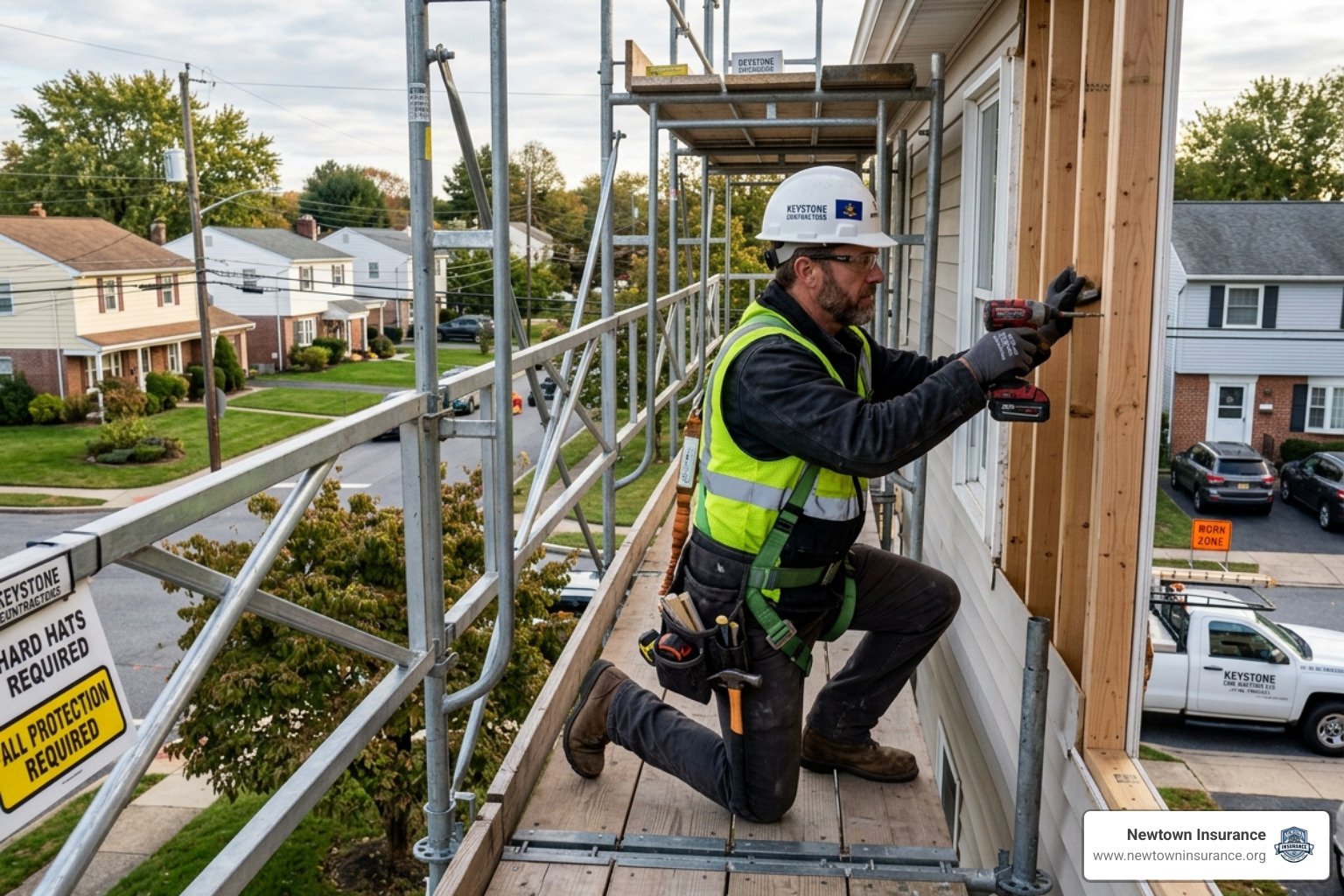
When we talk about the core of business protection, we are usually talking about General Liability (GL). This is the foundational layer of liability insurance PA that shields your business from “slip-and-fall” style accidents. If a customer trips over a sidewalk crack outside your shop or an employee accidentally damages a client’s property while on a service call, this policy steps in.
Most policies cover three main areas:
- Bodily Injury: Medical bills and legal fees if a third party is hurt on your premises.
- Property Damage: Costs to repair or replace someone else’s property that you or your employees damaged.
- Personal and Advertising Injury: Protection against claims of libel, slander, or copyright infringement in your marketing.
In Pennsylvania, the legal climate is notably challenging. Because the state constitution prevents the legislature from setting certain limits on business liability lawsuits, an unexpected judgment could easily exceed your liquid assets. For a deeper dive into how this fits into your overall strategy, check out our Business Insurance Pennsylvania Guide 2026. You can also find more specifics on General Liability Insurance in PA.
Is Liability Insurance PA Mandatory?
Technically, Pennsylvania state law does not mandate general liability insurance for most businesses in the same way it mandates workers’ compensation. However, “not mandatory” doesn’t mean “not required.”
In practice, you’ll find it’s nearly impossible to operate without it. Landlords typically require proof of GL before signing a commercial lease. High-value clients often demand specific coverage limits in their contracts before you can start work. Furthermore, certain cities like Philadelphia and Pittsburgh may require proof of liability insurance to obtain specific business permits or professional licenses. If you are in the trades, our Contractor Insurance Pennsylvania Guide outlines these specific requirements in more detail.
Who Needs Liability Insurance PA?
If your business interacts with the public, visits client sites, or handles third-party property, you need coverage. This includes:
- Small Businesses: Retail shops, restaurants, and cafes where foot traffic is high.
- Independent Contractors: Plumbers, electricians, and landscapers who work on other people’s homes.
- Consultants and Freelancers: Even home-based businesses face risks, such as a delivery person slipping on their porch.
Finding Affordable Business Insurance is about matching the policy to your specific risk level rather than just buying the cheapest option available.
Professional Liability and Specialized Coverage

General liability is great for physical accidents, but what if your mistake is financial or intellectual? That is where Professional Liability, also known as Errors and Omissions (E&O), comes in.
If you provide expert advice or specialized services—like an architect, engineer, or IT consultant—you can be sued for negligence or failing to deliver a promised result. Even if the claim is groundless, the cost to defend yourself in a Pennsylvania court can be staggering. While E&O covers your “brainwork,” don’t forget that if you have even one employee, you are likely required to carry Workers Compensation Insurance PA by law.
Lawyers Professional Liability and Admitted Carriers
Pennsylvania lawyers have unique avenues for protection. The Pennsylvania Bar Insurance Program offers tailored enhancements for law firms of all sizes. Key features often include:
- Continuous Coverage: Ensuring there are no gaps when switching policies.
- Full Prior Acts: Covering work done before the policy started (as long as you had continuous coverage).
- Consent to Settle: Giving the lawyer a say in whether a claim is settled or fought in court.
When choosing a carrier, we often discuss “admitted” versus “non-admitted” companies. Admitted carriers are licensed by the Pennsylvania Insurance Department and contribute to the state guaranty fund, which provides an extra layer of protection for policyholders if the insurer goes bust. Non-admitted carriers (surplus lines) handle higher-risk cases that standard companies won’t touch. There are also Risk Retention Groups (RRGs), which are liability insurance companies owned by their members.
Employment Practices and Cyber Liability
As your business grows, so do your risks. Employment Practices Liability Insurance (EPLI) protects you against claims of wrongful termination, sexual harassment, or discrimination. Cyber Liability is also essential, covering the fallout from data breaches or ransomware attacks. If you’re worried about the physical tools of your trade alongside these digital risks, consider Business Equipment Insurance to protect your hardware.
Pennsylvania Vehicle Liability and Financial Responsibility
If you own a vehicle in the Keystone State, liability insurance isn’t just a good idea—it’s a legal requirement. Pennsylvania’s “Financial Responsibility” law ensures that if you cause an accident, you have the means to pay for the damage. You can read the official state guidelines at the Auto Insurance | Insurance Department | Commonwealth of Pennsylvania page.
Minimum Auto Liability Requirements
To legally drive in PA, you must carry at least the following minimums:
| Coverage Type | PA State Minimum Requirement |
|---|---|
| Medical Benefits | $5,000 |
| Bodily Injury (One Person) | $15,000 |
| Bodily Injury (Total Accident) | $30,000 |
| Property Damage | $5,000 |
While these are the minimums, we usually recommend much higher limits. A $5,000 property damage limit won’t even cover a minor fender-bender with a modern electric vehicle. For a full breakdown of how to protect your personal assets, see our Insurance Pennsylvania Complete Guide.
Consequences of Insurance Lapses and Suspensions
Pennsylvania does not take insurance lapses lightly. If your insurance company notifies PennDOT that your policy has been cancelled, and you don’t have a new one in place, you face:
- A three-month suspension of your vehicle registration.
- A $500 civil penalty (which you can pay to avoid the suspension once every 12 months).
- Restoration fees to get your plates back.
If your insurance lapses, you should surrender your registration plate to PennDOT immediately to avoid further penalties. You can find more details on the Insurance Overview – Commonwealth of Pennsylvania website.
The Cost of Liability Protection in Pennsylvania
We know what you’re thinking: “How much is this going to cost me?” For many small businesses in PA, liability insurance PA can be surprisingly affordable, with some policies starting between $25 and $45 per month.
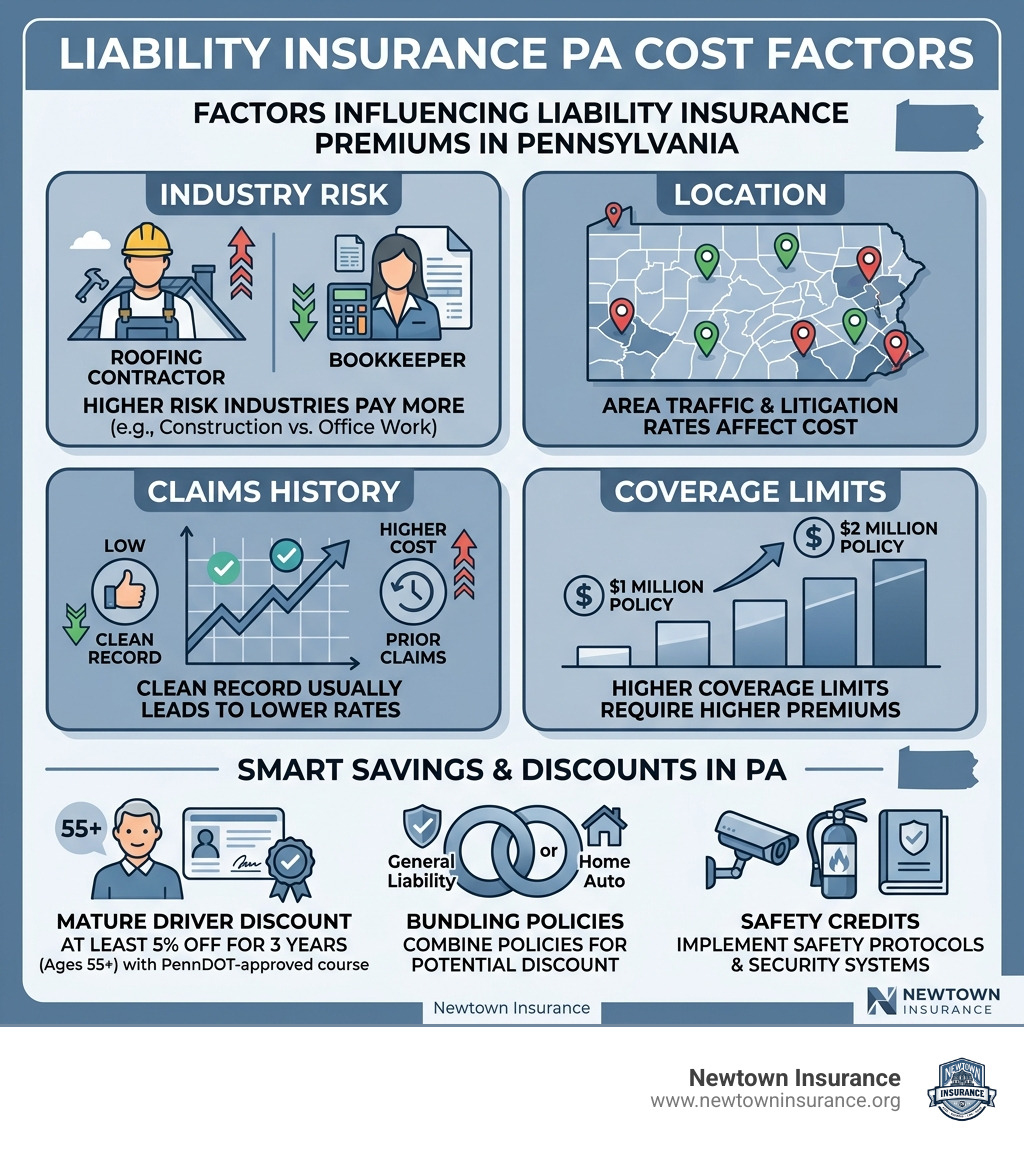
However, your actual premium depends on several factors:
- Industry Risk: A roofing contractor pays more than a bookkeeper.
- Location: Higher traffic areas or regions with higher litigation rates can cost more.
- Claims History: A clean record usually leads to lower rates.
- Coverage Limits: Naturally, a $2 million policy costs more than a $1 million policy.
Discounts and Premium Reduction Programs
We love helping our clients find “smart savings.” In Pennsylvania, there are specific programs mandated by law to help you save:
- Mature Driver Discount: If you are 55 or older and complete a PennDOT-approved driver improvement course, insurers must give you at least a 5% premium reduction for three years.
- Bundling: Combining your general liability with property insurance (a Business Owner’s Policy) or your Home Insurance Pennsylvania Complete Guide with your auto policy.
- Safety Credits: Implementing safety protocols or installing security systems can often trigger discounts.
Obtaining Proof of Insurance and Certificates
Once you have a policy, you’ll eventually need a Certificate of Insurance (COI). This is a one-page document that proves you have active coverage. Whether you need it for a new lease or a big contract, we make it easy to access your COI digitally so you can get to work without delay. This is just as important for personal lines, like when a landlord asks for proof of Renters Insurance Pennsylvania.
Frequently Asked Questions about Liability Coverage
Does general liability cover employee injuries?
No. This is a common misconception. General liability is for third-party claims (customers, vendors, or passersby). If your own employee gets hurt on the job, that is covered by workers’ compensation. However, GL does often include “Medical Payments” coverage, which can pay for minor third-party injuries quickly without a full-blown lawsuit.
What is the difference between admitted and non-admitted carriers?
Admitted carriers follow all state insurance regulations and are backed by the PA Guaranty Fund. If the insurer goes bankrupt, the state helps pay claims. Non-admitted (surplus lines) carriers have more flexibility in their rates and forms, allowing them to cover high-risk businesses that admitted carriers won’t touch, but they don’t have that same state fund backing.
How does general liability differ from professional liability?
Think of it this way: General Liability covers physical accidents (a customer slips on your floor). Professional Liability covers financial or service-based mistakes (you gave bad legal advice or missed a deadline on a construction blueprint).
Conclusion
Navigating liability insurance PA doesn’t have to be a headache. At Newtown Insurance, we pride ourselves on providing tailored protection that fits the unique needs of Pennsylvania business owners and drivers. We believe in smart savings and transparent pricing—no hidden fees, just straightforward coverage that protects your hard work.
Whether you are looking for your first general liability policy or need to review your professional E&O coverage, our customer-first support is here to ensure you never overpay for the protection you need.