

Stop Winging It and Find the Best Aviation Renters Insurance
Why the Best Aviation Renters Insurance Is Worth Finding Before You Fly

The best aviation renters insurance protects you — not the flight school, not the FBO — when you're flying an aircraft you don't own. According to the Federal Aviation Administration (FAA), pilots are responsible for the safe operation of their aircraft, which includes managing financial risks.
Here's a quick look at the types of coverage to consider in April 2026:
| Coverage Type | Best For | Key Feature |
|---|---|---|
| Standard Annual | All renter pilots | No deductible, comprehensive liability |
| Student/CFI | Training & Instruction | Customizable limits, instructional liability |
| Short-Term | Flexible flyers | Daily, weekly, or monthly options |
| Association Bundles | Member pilots | Bundled benefits and discounts |
Renting an airplane is exciting. But there's a gap most pilots don't think about until it's too late.
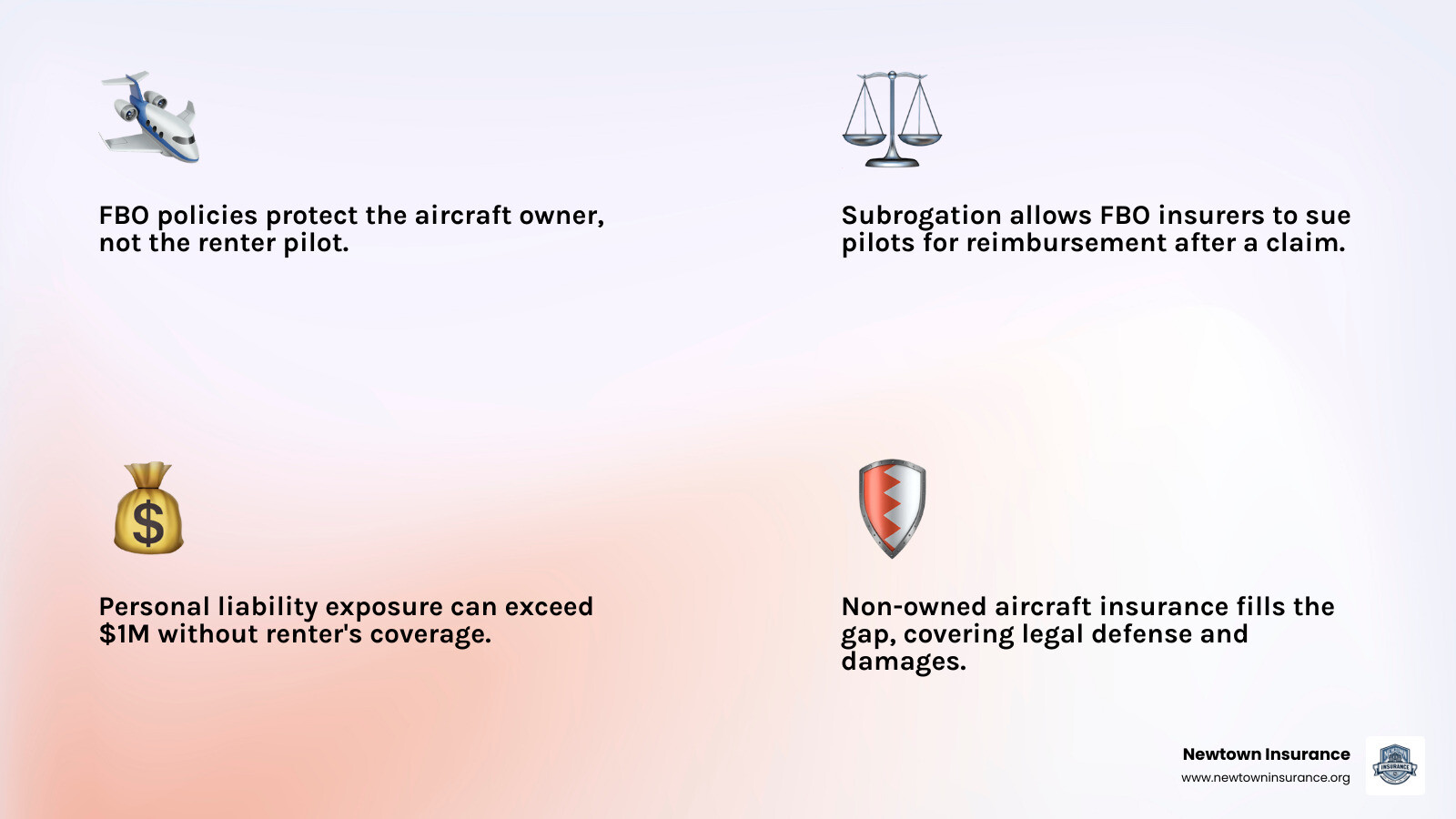
Your flight school has insurance. Your FBO has insurance. But that coverage protects them — not you. If you damage a rental aircraft or injure someone on the ground, you could be personally on the hook for thousands of dollars in repairs, legal fees, and liability claims.
That gap is real, and it's expensive.
I'm Shawn Beihl, and with over 15 years in specialty insurance — including commercial P&C, liability, and risk management — I've helped clients find the best aviation renters insurance that fits their actual needs without overpaying. Let's break down exactly what to look for, who offers it, and how to make a smart choice.
Why Flight School Insurance Isn't Enough for Modern Pilots
It is a common misconception among pilots in Pennsylvania and across the country that the insurance policy held by a Flight Base Operator (FBO) or flight school covers the person in the left seat. In reality, those policies are designed to protect the business's assets, not yours.
The Danger of Subrogation
One of the most significant risks of "winging it" without your own policy is subrogation. If you have a hard landing that collapses the nose gear, the FBO’s insurance company might pay the FBO for the repairs. However, that insurance company then has the legal right to sue you to recover the money they paid out. Without the best aviation renters insurance, you are personally responsible for those costs.
FBO Policy Limitations
Even if a flight school claims you are "covered," their policy likely has a high deductible—often $5,000 or more. If an incident occurs, the school will expect you to pay that deductible out of pocket. Furthermore, FBO policies rarely provide you with a legal defense if a third party sues you for bodily injury or property damage.
Asset Protection and Legal Defense
When you carry your own non-owned aircraft insurance, you aren't just buying "repair money"; you are buying a legal team. Top-tier providers offer uncapped legal defense fees. This means if you are sued for more than your policy limit, the insurer continues to pay for your lawyers until the case is resolved. For pilots concerned about Renters Insurance Pennsylvania requirements, having this personal layer of protection is the only way to ensure your personal savings and assets remain safe.
Essential Coverage: Liability, Hull Damage, and Add-ons
Understanding what goes into a policy helps you avoid paying for fluff while ensuring you aren't underinsured. As we look at April 2026 trends, coverage is typically split into three main buckets.

1. Liability (Bodily Injury and Property Damage)
This is the foundation of any policy. It covers damage you cause to others.
- Bodily Injury: Covers medical bills or legal claims if a passenger or someone on the ground is hurt.
- Property Damage: Covers costs if you taxi into a hangar or clip another aircraft.
- Liability Limits: These often start at $250,000 per occurrence, with sub-limits (e.g., $25,000) per passenger.
2. Aircraft Damage Liability (ADL)
Often called "Hull Coverage," ADL is what pays for the damage to the plane you are actually flying. Most flight schools in Pennsylvania require a minimum amount of ADL. For example, many academies require at least $60,000 of non-owned hull coverage for single-engine aircraft. If you are stepping up to a multi-engine plane like an Aztec, that requirement often jumps to $100,000.
3. Medical Payments and Add-ons
Standard policies might not include personal injury for the pilot. Adding medical payments coverage (often up to $5,000) helps cover your own immediate medical expenses regardless of fault.
- Loss of Use: This covers the income the flight school loses while the plane is in the shop. Without this add-on, the school might bill you for every day the plane sits idle.
- No Blanket FAR Exclusions: Look for policies that don't automatically void your coverage for minor Federal Aviation Regulation (FAR) infractions. You want an insurer that stands by you even if a mistake was made.
To get a better sense of how these pieces fit into your budget, check out our guide on Renters Insurance Cost Per Year.
Finding the Best Aviation Renters Insurance for Your Flying Goals
Choosing a provider depends on how often you fly and what you fly. In 2026, the market offers more flexibility than ever before.
| Feature | Annual Policy | Short-Term (Daily/Monthly) |
|---|---|---|
| Best For | Frequent renters, CFIs, Students | One-off checkouts, weekend trips |
| Typical Cost | $300 - $600+ | $130+ per month |
| Convenience | Set it and forget it | Pay only when you fly |
| Renewals | Annual | Manual or Auto-renew options |
Where to Buy
You have three main paths to securing coverage:
- Direct Underwriters: Some companies write their own policies. This often leads to faster claims and specialized features like "no deductible."
- Specialized Aviation Brokers: Brokers can shop multiple "A-rated" carriers to find the best fit. This is helpful if you have a unique flying history.
- Digital Insurance Apps: Modern platforms allow you to buy coverage on your phone in minutes.
For a deeper dive into comparing these options, see our Compare Insurance Quotes Complete Guide.
Best Aviation Renters Insurance for Student Pilots
If you are a student pilot, you are a higher risk in the eyes of an actuary. Expect to pay between $300 and $500 annually for a comprehensive policy. However, if you only need basic liability to satisfy a school's solo flight requirements, some providers offer "liability only" options for as low as $84 per year.
Most flight academies will not let you fly solo without proof of insurance. It is best to secure your policy before your instructor signs off on your first solo endorsement to avoid delays in your training.
Best Aviation Renters Insurance for Certified Flight Instructors (CFIs)
CFIs have unique needs because they are "renting" the aircraft while teaching. A standard renter's policy won't cover you while you are providing instruction. You need a specialized CFI policy that includes instructional liability.
- Average Cost: Around $425 per year for $1M liability and $50,000 hull coverage.
- Professional Indemnity: This protects you if a student later claims your instruction was inadequate following an incident.
- Versatility: These policies often follow you whether you are teaching in a rental, a student-owned aircraft, or a flying club plane.
Cost Analysis: What to Expect for Premiums in 2026

Aviation insurance isn't "one size fits all." In 2026, several factors influence what you’ll pay for the best aviation renters insurance.
Experience and Ratings
The more hours you have, the less you pay. Adding an Instrument Rating or a Commercial Certificate can significantly lower your premiums. Insurers view these as "safety upgrades."
Aircraft Complexity
Flying a Cessna 172 is cheaper to insure than a high-performance Cirrus or a multi-engine Piper. If you are renting complex aircraft, your ADL (hull) requirements will be higher, which drives up the cost.
Typical Price Points
- Basic Liability Only: $60 – $100 per year.
- Standard Private Pilot (Liability + $20k Hull): ~$295 per year.
- Comprehensive Annual Coverage: ~$600 per year.
Tips for Lowering Your Bill
- Build Hours: Insurance rates often drop once you hit milestones like 100 or 250 total hours.
- Loyalty: Staying with one insurer can lead to "claims-free" discounts over time.
- Membership Discounts: National pilot organizations often offer credits or bundled rates for members.
For more ways to keep your flying budget in check, explore our Insurance Savings Tips.
Frequently Asked Questions About Non-Owned Aircraft Policies
How do I choose the right coverage limits for my rental?
Look at the rental agreement from your FBO or flight school. They will specify the minimum "Non-Owned Hull" or ADL coverage required. If they require $60,000, don't buy $50,000. Additionally, consider your personal net worth. If you have significant assets, you should opt for higher liability limits ($500k to $1M) to protect yourself from lawsuits.
What happens if I have a lapse in my renters insurance?
A lapse in coverage means you are flying uninsured. If an accident happens during a lapse, you have zero protection. Many digital providers offer auto-renewal to prevent this. If you don't fly for a few months, you can cancel and get a pro-rated refund, but always ensure the policy is active before you pre-flight.
Does renters insurance cover multi-engine or high-performance aircraft?
Usually, yes, but you must specify the aircraft type when getting a quote. Multi-engine coverage is generally more expensive. Short-term monthly policies for multi-engine aircraft can cost around $130 per month. Always check that your policy doesn't have a "single-engine only" restriction before you hop into a twin.
Conclusion
At Newtown Insurance, we believe that every pilot in Pennsylvania deserves to fly with peace of mind. Whether you are a student pilot at a local airfield or a seasoned CFI, "winging it" without the best aviation renters insurance is a gamble that isn't worth taking.
We specialize in providing tailored protection, smart savings, and transparent pricing. Our customer-first support is designed to help you understand the fine print so you never overpay for coverage you don't need—or find yourself underinsured when it matters most.
Don't let an unexpected incident on the runway ground your financial future. Secure your protection today and focus on what really matters: the joy of flight.