
What is Scheduled Personal Property Coverage?
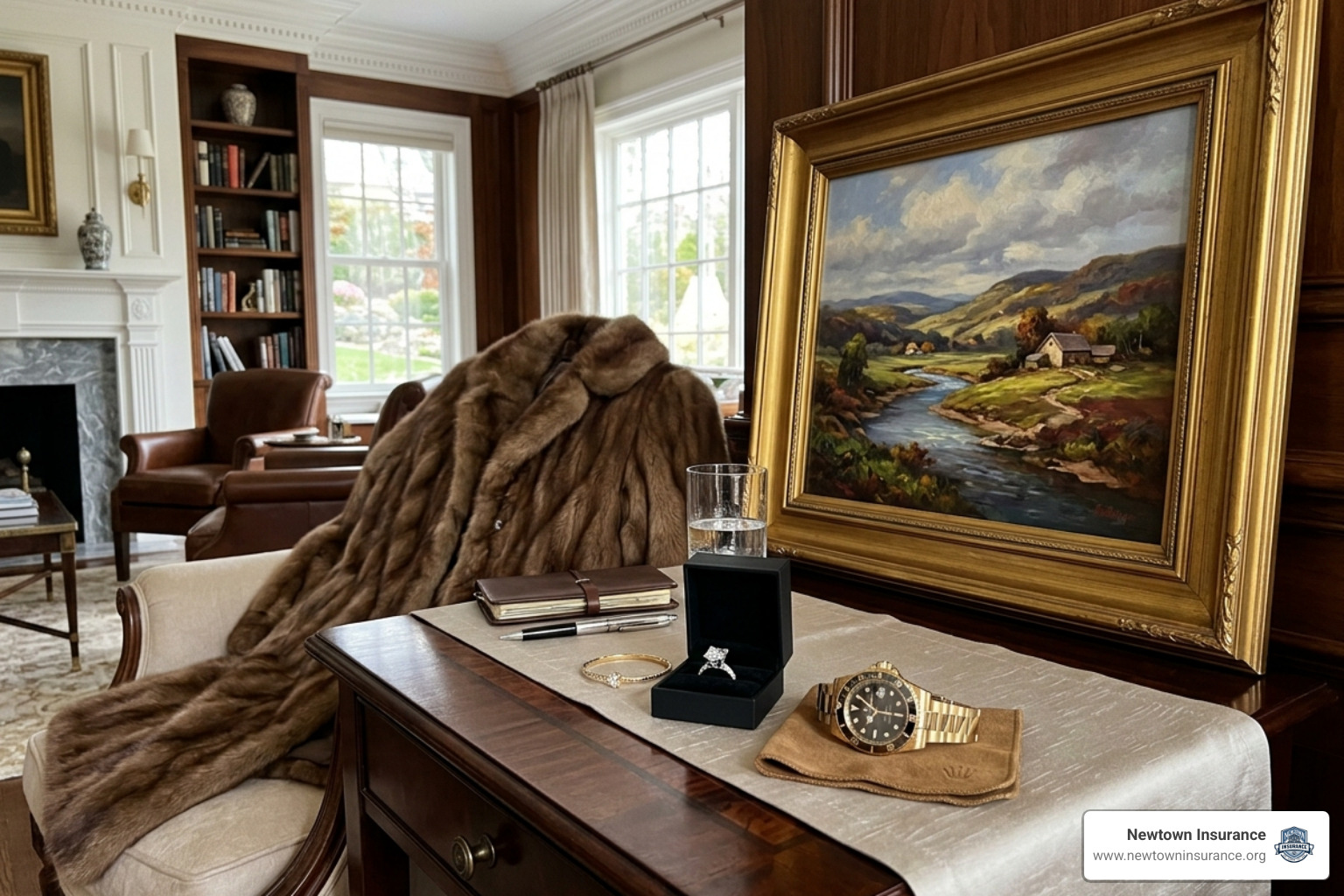
In insurance, “Coverage C” is the part of your homeowners or renters policy that protects your stuff—your clothes, your couch, and your toaster. However, standard policies treat your diamond engagement ring and your toaster with the same broad brush. Scheduled personal property coverage is a specific insurance endorsement, also known as a policy rider or a “floater,” that pulls your most valuable items out of that general pile and gives them their own dedicated spotlight.
When you “schedule” an item, you are providing your insurer with a detailed description and a professional valuation (usually an appraisal) for that specific piece. This creates a mini-insurance policy within your main policy, ensuring that the item is protected for its actual worth rather than a generic, capped amount. According to Investopedia’s definition of Scheduled Personal Property, this supplemental coverage is essential because standard policies often exclude certain types of losses that are common with high-value items, such as losing a stone from a ring or accidentally leaving a violin on a train.
For those navigating the complexities of local coverage, our Home Insurance Pennsylvania Complete Guide explains how these endorsements fit into the broader landscape of protecting your home in the Keystone State.
How Scheduled Personal Property Differs from Standard Coverage
The biggest shock most homeowners face after a theft or fire is discovering “sublimits.” While your policy might have $50,000 in total personal property coverage, it likely has a “sublimit” or cap of just $1,500 for jewelry, $2,500 for silverware, or $2,000 for firearms. If a $10,000 ring is stolen, a standard policy leaves you $8,500 short.
Scheduled personal property removes these caps. Furthermore, standard coverage often pays out based on “Actual Cash Value” (ACV), which factors in depreciation. Scheduling ensures you are covered on a “Replacement Cost” basis—meaning you get enough to actually buy a new version of the item at today’s prices.
| Feature | Standard Personal Property | Scheduled Personal Property |
|---|---|---|
| Coverage Limit | Subject to low sublimits (e.g., $1,500) | Full appraised value of the item |
| Deductible | Standard policy deductible applies | Usually $0 deductible |
| Perils Covered | Named perils (fire, theft, etc.) | “Open perils” (includes accidental loss) |
| Valuation | Often Actual Cash Value (depreciated) | Replacement Cost (no depreciation) |
| Location | Primarily at home | Worldwide protection |
Common Items to Include in Scheduled Personal Property
Not everything in your house needs to be scheduled. You don’t need a rider for your five-year-old IKEA coffee table. You should focus on items that are high in value, likely to appreciate, or easily lost. According to U.S. News on Scheduled Personal Property, the most common categories include:
- Jewelry: Engagement rings, luxury watches, and heirloom necklaces.
- Fine Art: Original paintings, sculptures, and rare lithographs.
- Musical Instruments: Professional-grade guitars, violins, or pianos (especially if used by a student or hobbyist).
- Collectibles: Rare coin collections, stamps, and vintage wine.
- Sports Equipment: High-end golf clubs or professional bicycles.
- Silverware and Furs: Items that are frequently targeted during burglaries.
Key Benefits of Scheduling Your Valuables
Beyond just increasing the dollar amount of your coverage, scheduled personal property offers three massive advantages that provide peace of mind:
- Zero Deductible: In most cases, if you lose a scheduled item, you don’t have to pay a cent out of pocket. If your standard policy has a $1,000 deductible and you lose a $2,000 camera, you’d only get $1,000 back. With scheduled coverage, you get the full $2,000.
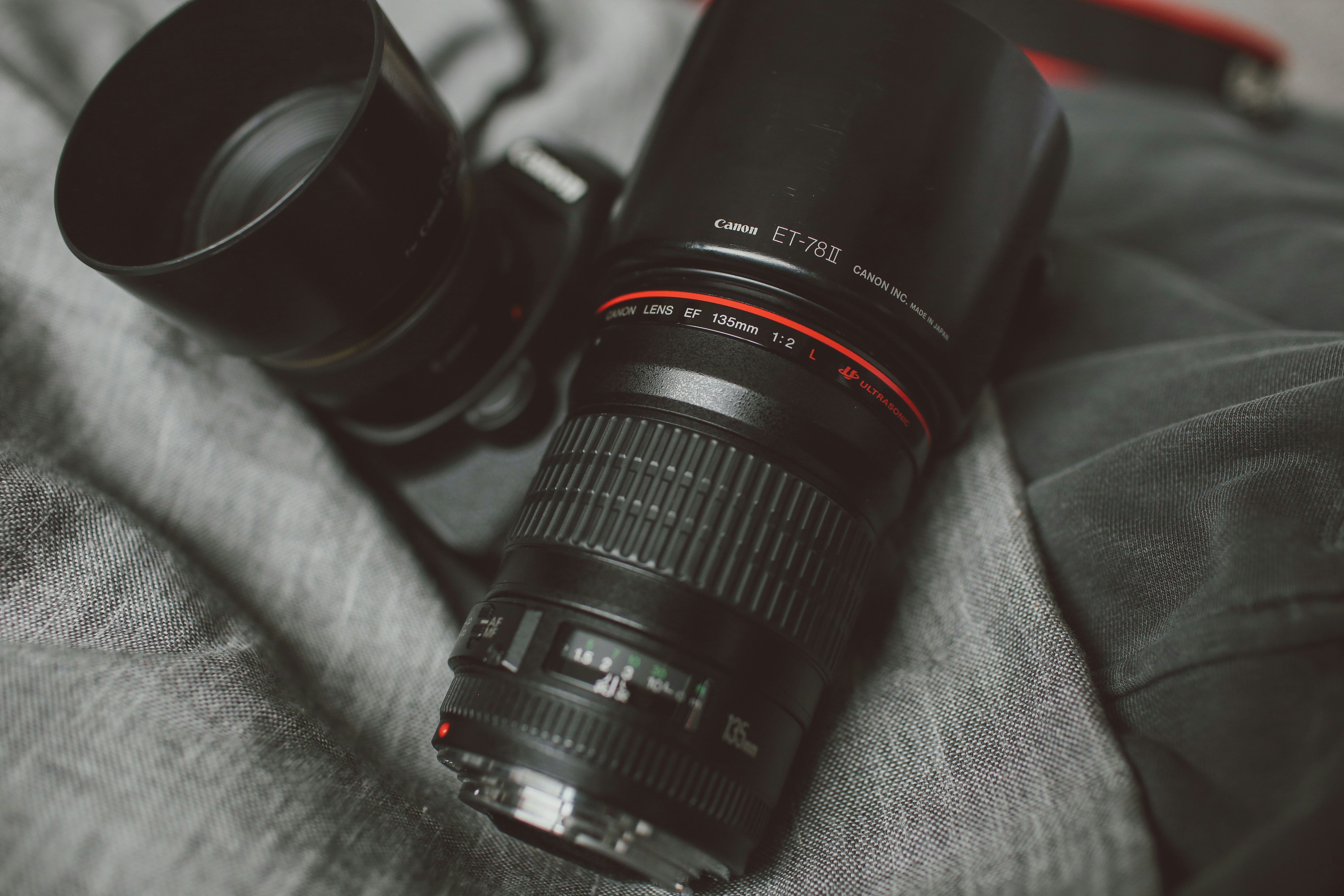
- Broader Perils (Including “Mysterious Disappearance”): Standard policies cover “named perils” like fire or theft. But what if you’re hiking in Bucks County and your wedding band slips off into the leaves? Or you accidentally drop your professional camera into a lake? Standard policies won’t pay for “accidental loss.” Scheduled coverage does.
- Worldwide Protection: Whether you are vacationing in the Poconos or traveling abroad, your scheduled items are protected. This is a vital supplement to Loss of Use Coverage, which handles your living expenses if your home becomes uninhabitable, but doesn’t necessarily track your jewelry across the globe.
Scheduled Personal Property vs. Blanket Coverage
Sometimes, an insurer will offer “blanket coverage.” This is like a “middle ground” option. Instead of listing every single ring, you might buy a $10,000 “blanket” for all your jewelry.
- Blanket Coverage: Good for someone with many items worth $500 to $1,000 each. It raises the total limit without requiring individual appraisals for every piece. However, it still usually has a “per-item” cap (like $2,500) and may still require a deductible.
- Scheduled Coverage: Best for “hero” items. If you have one ring worth $8,000, blanket coverage might not be enough. Scheduling ensures that specific item is covered for its exact value with no deductible.
While Guest Medical Coverage protects people who visit your home, scheduling protects the precious things inside it from the unexpected.
How to Add and Maintain Your Coverage

Adding scheduled personal property to your policy is a straightforward process, but it does require some homework. Because the insurance company is taking on a higher risk, they need proof of what the item is and what it is worth.
To get started, follow these steps:
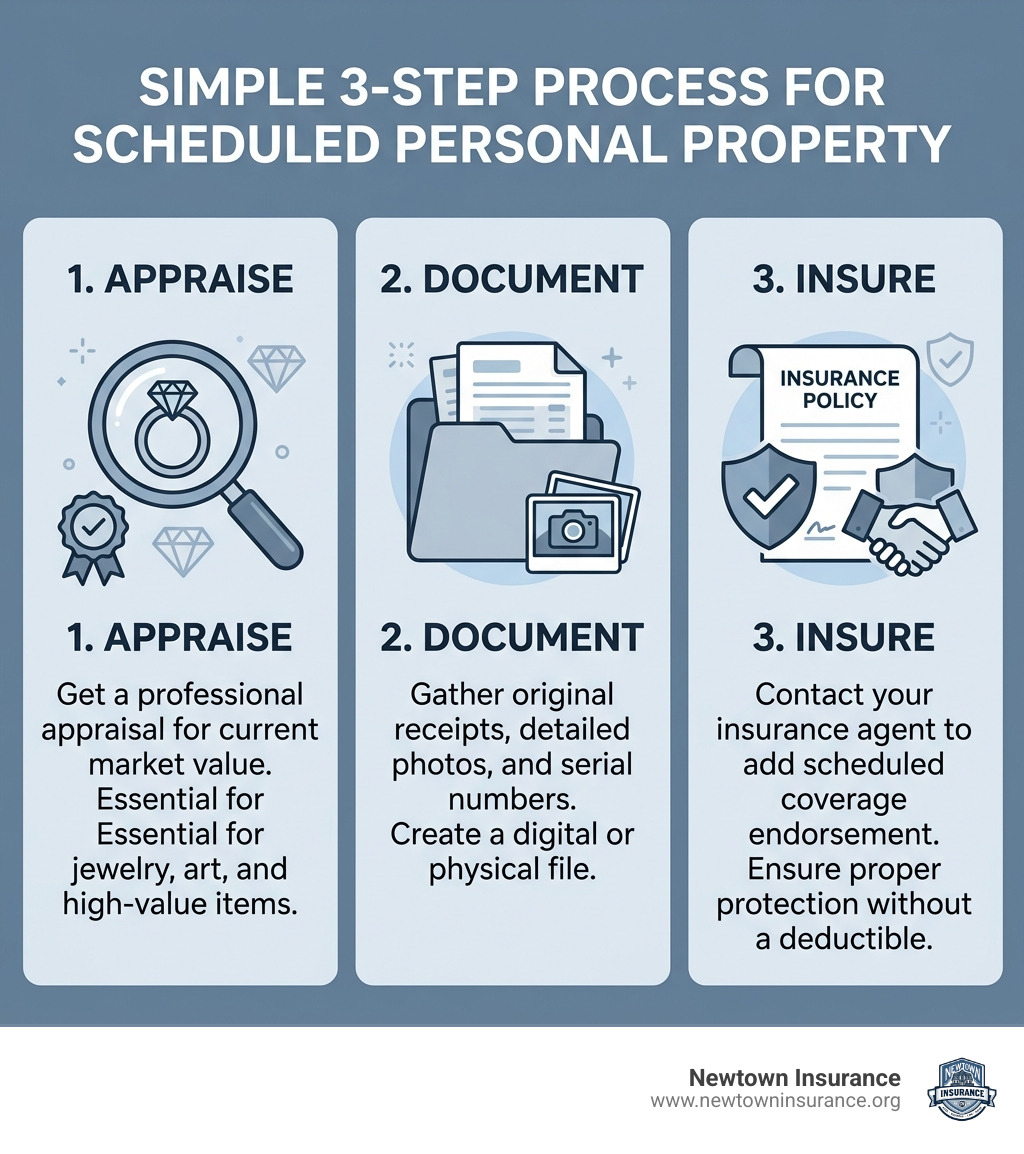
- Get a Professional Appraisal: For items like jewelry or art, a receipt from five years ago isn’t enough. You need a certified appraiser to document the item’s characteristics (cut, color, clarity, etc.) and its current market value.
- Gather Documentation: Keep original receipts, serial numbers (for electronics or instruments), and high-resolution photos.
- Contact Your Agent: We can help you add the endorsement to your existing Pennsylvania policy. This is often more cost-effective than people realize and is a key factor in the overall Homeowners Insurance PA Cost.
Maintaining your coverage is just as important as getting it. Values change—especially for gold and diamonds. We recommend an appraisal update every three to five years to ensure you aren’t underinsured.
Determining if Your Valuables Exceed Standard Limits
The best way to know if you need this coverage is to perform a “Home Inventory.” Walk through your house with your smartphone and record a video of your belongings. Open drawers and closets.
Once you have your list, compare the high-value items to your policy’s “Special Limits of Liability” section. If you see that your silverware is worth $10,000 but your policy limit is $2,500, you have a gap. Just as Life Insurance for Homeowners protects your family’s future, scheduling property protects the assets you’ve worked hard to acquire.
Frequently Asked Questions about Scheduled Property
How much does scheduled personal property coverage typically cost?
The cost is generally very affordable. On average, you can expect to pay about 1% to 2% of the item’s value annually. For example, a $5,000 engagement ring might cost between $50 and $100 per year to insure. Factors that affect your premium include:
- The type of item: Jewelry is often slightly more expensive to insure than silverware because it is more likely to be lost or stolen.
- Your location: Areas with higher crime rates may see slightly higher premiums.
- Your claims history: Like any insurance, a history of frequent claims can impact your rate.
What are the common exclusions in these policies?
While scheduled personal property coverage is very broad, it isn’t “bulletproof.” Common exclusions include:
- Wear and Tear: If your watch stops working because it’s 40 years old and needs a cleaning, insurance won’t pay for the repair.
- Gradual Deterioration: Damage from rust, corrosion, or “inherent vice” (a quality within the item that causes it to destroy itself over time).
- Intentional Damage: If you break the item on purpose, it’s not covered.
- Pest Infestation: Damage from moths in a fur coat or rodents in a piano is typically excluded.
How does the claims process work for scheduled items?
Because the item is already “scheduled” (listed) on your policy with a set value, the claims process is usually much faster than a standard claim.
- Report the Loss: Contact us or your carrier immediately.
- Provide Proof of Loss: This might be a police report (for theft) or a statement of how the item was lost.
- Claim Reimbursement: Since the value was pre-agreed upon based on your appraisal, the insurer will typically issue a check for the scheduled amount or pay for the repair/replacement directly, often without a deductible.
Conclusion
Your home is filled with more than just “stuff”—it’s filled with memories, heirlooms, and investments. Standard homeowners insurance is a great safety net, but it has holes when it comes to your most precious treasures. By using scheduled personal property coverage, you can close those gaps and ensure that your $10,000 investment doesn’t turn into a $1,500 heartbreak.
At Newtown Insurance, we pride ourselves on providing tailored protection and transparent pricing to our neighbors in Pennsylvania. We believe in smart savings—which means making sure you have the right coverage so you don’t overpay out-of-pocket when disaster strikes.
Ready to make sure your treasures are truly protected? Protect your valuables with expert coverage and get a personalized quote from our team in Newtown today.