What Pennsylvania Drivers Pay for Car Insurance (And Why It Matters)
The average cost of car insurance in PA varies more than most drivers expect. Here’s a quick snapshot of what you’re likely to pay in 2026:
| Coverage Type | Average Annual Cost | Average Monthly Cost |
|---|---|---|
| Full Coverage | ~$2,472 | ~$206 |
| Minimum Coverage | ~$539 | ~$45 |
| National Full Coverage Average | ~$2,523 | ~$210 |
Pennsylvania rates sit close to the national average — but your personal rate can swing significantly higher or lower depending on where you live, your driving record, and the insurer you choose. For example, a 40-year-old driver in a rural Pennsylvania town might pay around $1,200 per year, while the same driver in Philadelphia could pay over $6,300.
That gap is exactly why it pays to understand what’s driving your premium before you sign anything.
I’m Shawn Beihl from Newtown Insurance, and with over 15 years of experience advising clients on property and casualty insurance across Pennsylvania, I’ve helped countless drivers navigate the average cost of car insurance in PA and find coverage that actually fits their life. In this guide, I’ll break down exactly what shapes your rate and how to make sure you’re not overpaying.
What is the Average Cost of Car Insurance in PA?
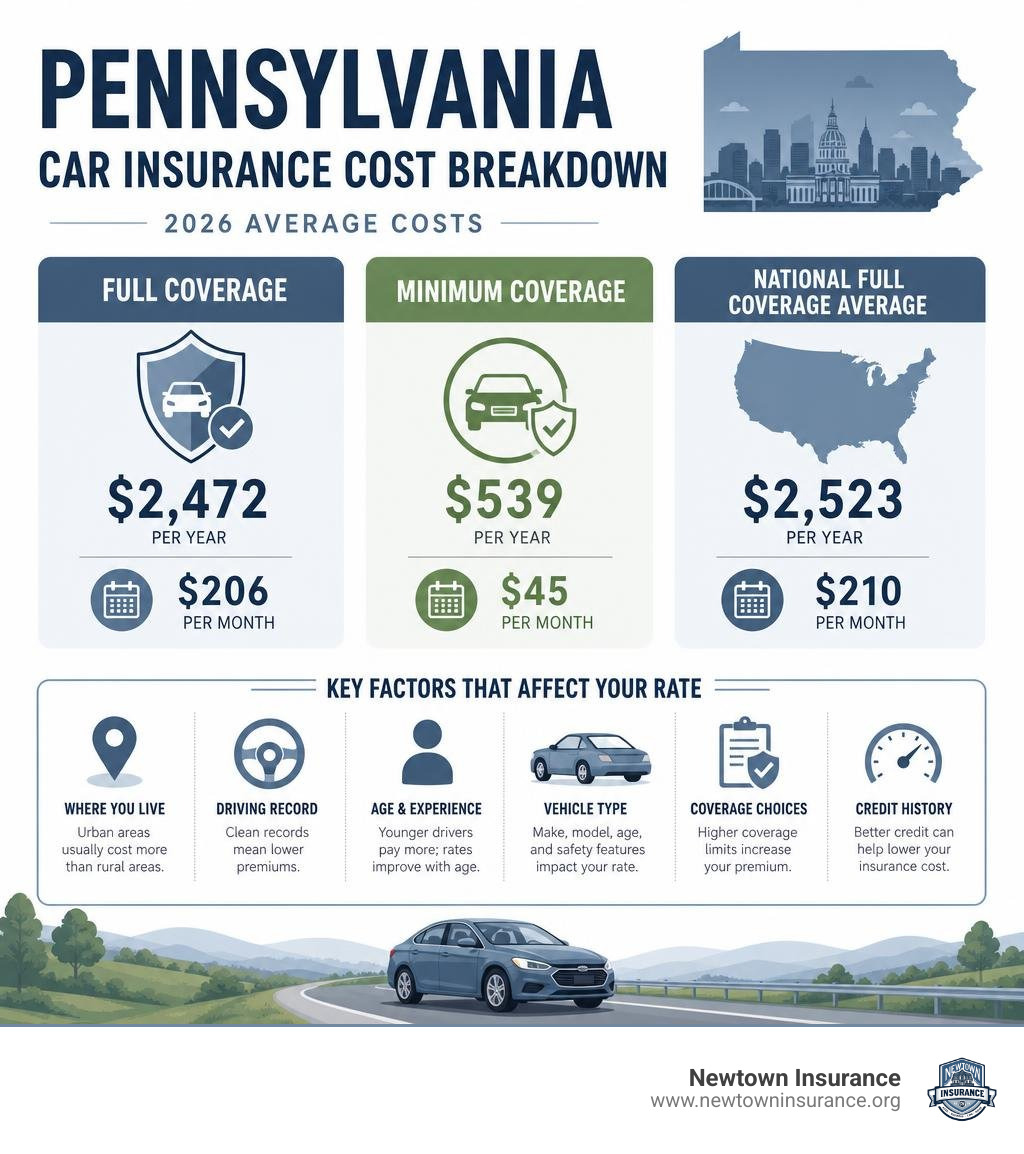
When exploring options across the state, it helps to understand how Pennsylvania’s rates stack up against broader trends. Across the state, the average cost of car insurance in PA is approximately $2,472 per year for full coverage, which translates to about $206 per month. If you choose to carry only the state-mandated minimum coverage, the average annual premium drops to $539, or roughly $45 per month.
According to data compiled by Average Cost of Car Insurance in Pennsylvania in 2026 | Bankrate, Pennsylvania’s average rates are highly competitive. In fact, full coverage in the Keystone State sits slightly below the national average of $2,523 per year, making it the 23rd most expensive state for auto coverage.
However, relying entirely on statewide averages can be misleading. Car insurance is highly personalized. While a baseline rate provides a helpful starting point, your final price is determined by a unique blend of personal factors, coverage selections, and geographical variables. To see how these numbers are calculated on a broader scale, you can read more about national trends in the resource How Much Is Car Insurance? – Progressive. For a closer look at Pennsylvania-specific data, check out the Average Cost of Car Insurance in Pennsylvania – AutoInsurance.com guide.
Understanding the Average Cost of Car Insurance in PA for Full Coverage
Full coverage is not a single, specific policy you buy off a shelf. Instead, it is a combination of coverages designed to protect both your financial assets and your vehicle. A standard full-coverage policy in Pennsylvania includes:
- Bodily Injury Liability: Pays for medical bills and rehabilitation for other people if you cause an accident.
- Property Damage Liability: Covers repairs to other vehicles, structures, or objects damaged in a collision you caused.
- Collision Coverage: Pays to repair or replace your own vehicle if it is damaged in an accident with another car or an object, regardless of fault.
- Comprehensive Coverage: Protects your vehicle against non-collision incidents, such as animal strikes (extremely common in Pennsylvania’s deer-heavy regions), theft, vandalism, fire, hail, and falling tree branches.
While the state does not legally require collision and comprehensive coverages, lenders and leasing companies almost always mandate them to protect their financial interest in the vehicle. To understand how these coverages interact and how to choose the right deductibles for your budget, refer to our Ultimate Auto Insurance Guide.
Understanding the Average Cost of Car Insurance in PA for Minimum Coverage
If you are looking to keep your monthly expenses as low as possible, minimum coverage is the bare legal baseline required to drive on Pennsylvania roads. A minimum coverage policy consists of liability limits and medical benefits designed to cover basic third-party damages and immediate medical expenses.
In Pennsylvania, the minimum monthly cost averages just $45. However, while minimum coverage keeps your immediate premium low, it leaves you entirely responsible for any damage to your own vehicle. If you are involved in a fender bender or hit a deer on a dark country road, you will have to pay for your car’s repairs out of pocket. To explore whether this level of risk makes sense for your financial situation, take a look at our guide on Low Cost Auto Insurance PA.
Key Factors That Affect Your Pennsylvania Auto Insurance Rates
No two drivers pay the exact same amount for car insurance. When underwriting a policy, insurance companies assess a variety of risk factors to determine how likely you are to file a claim.
Understanding these factors can help you take proactive steps to lower your premium. For a deeper dive into how insurers evaluate risk, you can read the Average Cost of Car Insurance in Pennsylvania for 2026 – Experian analysis.
How Location and ZIP Code Impact Rates
Where you park your car at night plays an enormous role in what you pay. Urban areas with high population density, heavy traffic congestion, and elevated rates of vehicle theft or vandalism naturally command higher premiums.
For example, drivers in Philadelphia pay some of the highest premiums in the state, with full coverage averages often exceeding $2,900 annually due to congested roads and frequent litigation. Conversely, drivers in smaller towns or rural areas enjoy much lower rates.
To see how rates shift across different regions in Pennsylvania, explore our localized guides:
- If you are located in the northeast, check out our guide on Auto Insurance Scranton PA or read about Car Insurance in Honesdale PA.
- For southeastern communities outside of Philly, browse our Car Insurance Lansdale Guide 2026 or Car Insurance Companies in Aston PA.
- If you live in Berks County, see our detailed Car Insurance Reading PA guide.
The Role of Age and Gender in Pennsylvania
Age is one of the most significant demographic factors in auto insurance. Statistically, young and inexperienced drivers are involved in more accidents, which is why teenagers face the highest premiums in the state. A 16-year-old driver can add thousands of dollars to a family policy, with individual teen policies averaging over $3,200 annually. Rates typically begin to decline around age 25 and remain stable until drivers reach their late 70s, at which point premium costs may rise slightly due to age-related risk factors.
However, Pennsylvania has a major regulatory distinction when it comes to demographics: Pennsylvania state law strictly prohibits insurance companies from using gender as a rating factor. While male teenagers in other states often pay significantly more than female teenagers, Pennsylvania drivers of the same age and driving profile receive equal baseline pricing regardless of gender.
Driving Record and Credit Score Impacts
Your personal choices and financial habits have a massive impact on your premium. Insurers look at both your driving history and your credit-based insurance score to determine your risk profile.
- Driving Record: A clean driving record is your ticket to the lowest possible rates. Minor violations like a speeding ticket can increase your rates by an average of 13% to 16%. Major violations, however, carry severe consequences. An at-fault accident can bump your rates by 41%, while a DUI conviction in Pennsylvania can increase your premium by an astounding 103% to 105%.
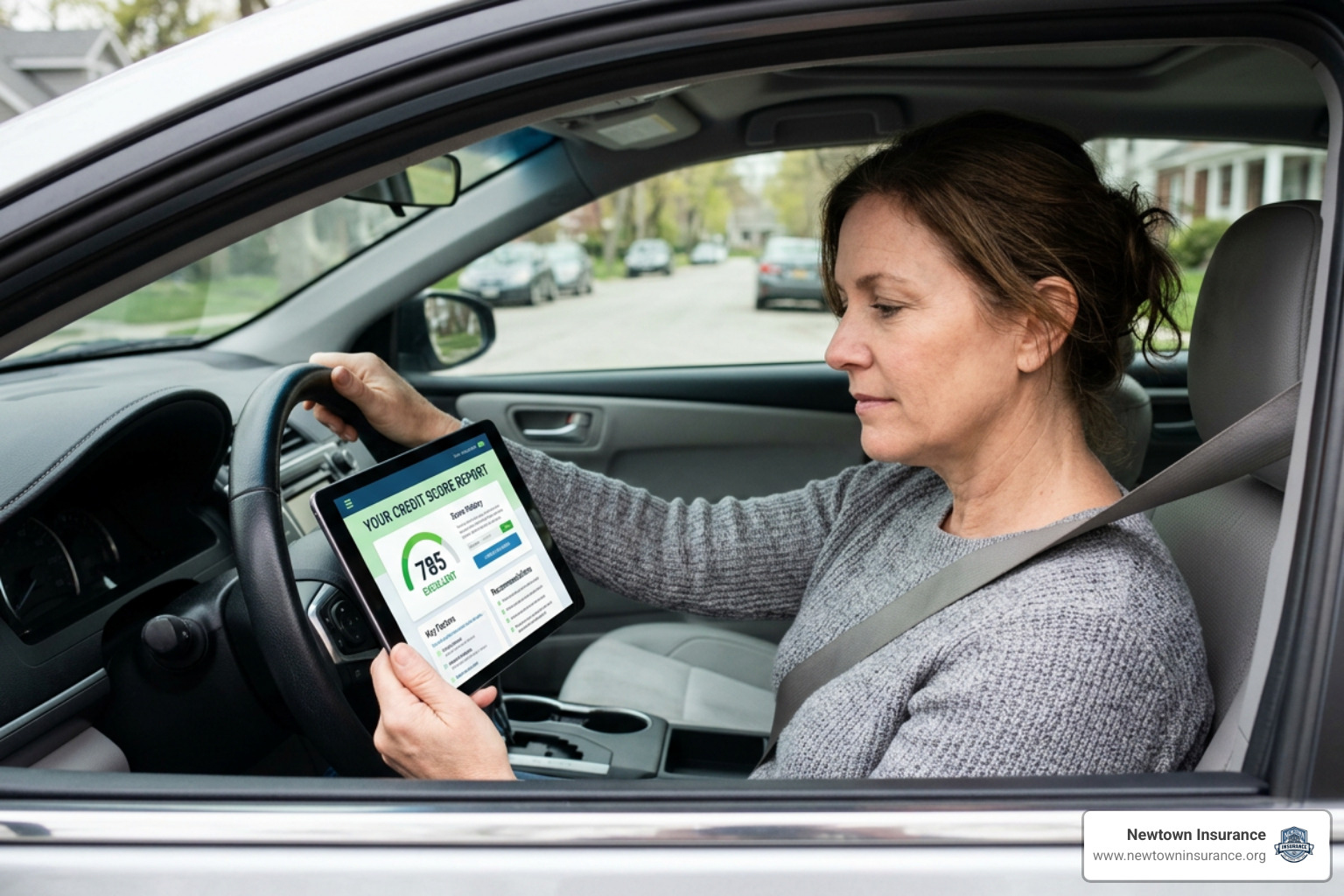
- Credit Score: Pennsylvania allows insurance companies to use your credit history to help calculate your premium. Drivers with poor credit are statistically shown to file more claims, which is why a poor credit score can nearly double your full coverage cost (an average increase of 84% to 95%). Conversely, maintaining excellent credit can earn you a savings of roughly 18% to 19% off the average rate.
To learn more about how your driving profile and credit history influence the quoting process, read our Compare Insurance Quotes Complete Guide.
Pennsylvania Minimum Car Insurance Requirements
Every driver in Pennsylvania must carry a minimum amount of auto insurance to maintain active vehicle registration and drive legally.

The minimum coverage requirements in Pennsylvania are often referred to as 15/30/5 limits, plus mandatory medical benefits:
- $15,000 Bodily Injury Liability per person: The maximum amount your insurer will pay for injuries to a single person in an accident you cause.
- $30,000 Bodily Injury Liability per accident: The total cap your insurer will pay for all injuries sustained by multiple people in a single accident you cause.
- $5,000 Property Damage Liability: The maximum amount paid to repair damage to another person’s car or property.
- $5,000 First-Party Medical Benefits: Often referred to as Personal Injury Protection (PIP), this mandatory coverage pays for medical bills for you or your passengers after an accident, regardless of who was at fault.
Because Pennsylvania is a “choice no-fault” state, your own medical benefits coverage is always the first line of defense for your medical bills, which helps speed up treatment and reduces immediate litigation. For an in-depth breakdown of these state laws, read our Insurance Pennsylvania Complete Guide.
Limited Tort vs. Full Tort Options
When you purchase car insurance in Pennsylvania, you must make a crucial legal decision: choosing between Limited Tort and Full Tort coverage.
- Limited Tort: Choosing this option typically saves you about 15% on your bodily injury liability premium. In exchange for this discount, you agree to limit your right to sue an at-fault driver for non-monetary damages, such as “pain and suffering,” unless your injuries are deemed exceptionally severe (such as permanent impairment or disfigurement).
- Full Tort: This option costs more, but it preserves your unrestricted legal rights. With Full Tort, you retain the right to sue an at-fault driver for all damages, including pain and suffering, regardless of the severity of your injuries.
Deciding between these options depends on your personal risk tolerance and budget. If you want maximum legal protection, Full Tort is the way to go; if you want to keep your monthly payments as low as possible, Limited Tort offers an easy way to save.
How to Save Money on Your Pennsylvania Car Insurance
While the average cost of car insurance in PA is a helpful benchmark, you do not have to settle for paying average prices.
There are several highly effective, actionable strategies you can use to lower your premium without sacrificing essential protection. To get started, you can explore personalized pricing options by requesting Auto Insurance Quotes directly through our team.
Here are the most reliable ways to save:
- Raise Your Deductibles: If you carry comprehensive and collision coverage, raising your deductible from $500 to $1,000 can reduce your monthly premium by up to 15% to 20%. Just make sure you keep that deductible amount set aside in an emergency savings account in case you ever need to file a claim.
- Bundle Your Policies: One of the easiest and most substantial discounts comes from bundling. Combining your auto insurance with a homeowners, renters, or life insurance policy can save you up to 15% across both policies.
- Inquire About Low-Mileage Discounts: If you work from home, commute via public transit, or drive fewer than 12,000 miles per year, ask about low-mileage discounts or telematics programs that track your safe driving habits for additional savings.
- Keep a Clean Driving Record: Avoiding tickets and accidents is the single best long-term strategy for keeping your insurance affordable.
Seeking Out Discounts and Comparing Quotes
Beyond the standard strategies, there are numerous specific discounts that drivers often overlook. For example, Pennsylvania law requires insurance companies to provide at least a 5% discount for drivers aged 55 and older who voluntarily complete an approved mature driver improvement course.
Other common discounts include:
- Good Student Discounts: For high school or college students maintaining a “B” average or higher.
- Safety Features: Discounts for vehicles equipped with anti-lock brakes, anti-theft devices, or passive restraint systems.
- Paperless and Autopay: Small, immediate discounts for signing up for electronic policy delivery and automatic monthly payments.
The most effective way to secure competitive pricing is to shop around and compare options. At Newtown Insurance, we specialize in shopping multiple highly-rated carriers to find the best fit for your budget. To find out more about how we help you compare options safely, read our Insurance Quotes No Personal Info Guide or request your own Personalized Insurance Quotes today.
Frequently Asked Questions About PA Car Insurance
Why is car insurance in Pennsylvania so expensive?
Pennsylvania car insurance can feel expensive due to a combination of factors: its choice no-fault system (which mandates first-party medical benefits), high traffic density in urban corridors, unpredictable winter weather that leads to frequent seasonal accidents, and a steady rate of uninsured drivers (about 7.6% to 8.9% statewide).
Does gender affect car insurance rates in Pennsylvania?
No. Pennsylvania is one of the few states in the country that strictly bans insurance companies from using gender as a factor when calculating auto insurance premiums. Men and women with identical driving records, credit scores, and locations will pay the exact same baseline rate.
What is the penalty for driving without insurance in PA?
Driving without insurance in Pennsylvania carries severe penalties. If you let your coverage lapse for more than 30 days, PennDOT can suspend your vehicle registration and driver’s license for three months. You could also face a $300 fine and vehicle impoundment fees. However, under Act 3 of 2026, Pennsylvania drivers can pay a $500 civil penalty once every 12 months in lieu of the registration suspension to keep their plates active while they restore their coverage.
Conclusion
Understanding the average cost of car insurance in PA is the first step toward taking control of your financial future. While statewide averages hover around $2,472 per year for full coverage and $539 for minimum coverage, your actual rate depends entirely on your unique driving profile, location, and coverage choices.
At Newtown Insurance, we believe you shouldn’t have to choose between robust protection and an affordable monthly payment. Located right here in Newtown, Pennsylvania, we are dedicated to providing our community with tailored protection, smart savings, and transparent pricing. Our customer-first support is designed to help you navigate Pennsylvania’s complex insurance laws, avoid costly coverage gaps, and stop overpaying for your auto policy.
Ready to see how much you could save? Get a customized quote today and let us do the heavy lifting for you.