

How to Avoid Highway Robbery on Commercial Truck Insurance PA
Why Commercial Truck Insurance PA Costs More Than You Think (And What You Can Do About It)

Commercial truck insurance in PA is not a one-size-fits-all purchase — and if you've ever felt like you were paying too much without fully understanding why, you're not alone.
Here's a quick snapshot of what Pennsylvania truckers need to know:
| What You Need to Know | Key Facts |
|---|---|
| Average annual premium in PA | ~$14,055 |
| Minimum liability (intrastate, over 10,000 lbs) | $750,000 |
| Standard market norm | $1,000,000 |
| Hazardous materials minimum | Up to $5,000,000 |
| State cargo insurance minimum | $5,000 per vehicle |
| Time to get filings completed | 24–48 hours after policy purchase |
| Who regulates PA truckers | PennDOT, PAPUC, and FMCSA |
Pennsylvania is a major trucking corridor. Highways like I-76, I-80, and I-81 move billions of dollars in freight every year. But that also means real risk. In 2022 alone, 8,223 heavy truck crashes occurred in Pennsylvania, resulting in 164 fatalities. The average cost of a single fatal truck crash? $3.6 million. Even a non-fatal crash with injuries averages nearly $200,000.
The wrong policy — one with the wrong radius classification, missing filings, or gaps in cargo coverage — can leave you personally exposed to costs like those.
That's exactly the kind of situation this guide is designed to help you avoid.
I'm Shawn Beihl from Newtown Insurance, and with over 15 years in specialty commercial insurance — including commercial truck insurance in PA — I've seen how the wrong policy can cost operators far more than they saved on premiums. My goal here is to help you understand exactly what you're buying, what you're required to carry, and where the real savings are hiding.
Pennsylvania Trucking Regulations and Required Filings
Operating a commercial vehicle in the Keystone State requires navigating a multi-layered regulatory environment. Whether you are hauling steel out of Pittsburgh or delivering consumer goods in Philadelphia, your operations must align with three key regulatory bodies: the Pennsylvania Department of Transportation (PennDOT), the Pennsylvania Public Utility Commission (PAPUC), and the Federal Motor Carrier Safety Administration (FMCSA).
PAPUC alone regulates nearly 7,500 motor carriers operating within Pennsylvania. If you fail to submit your regulatory proof of insurance correctly, PAPUC can dismiss your operating application entirely. This is why understanding state-specific filings is just as critical as choosing the right Liability Insurance PA policy.
When you establish coverage, your insurance provider must submit specific forms to verify your financial responsibility. If you are operating solely within state lines (intrastate), PAPUC requires state-specific filings. If your wheels cross state lines (interstate), you will need federal filings managed through the FMCSA.
Keeping track of these filings can feel like trying to read a map in a blinding snowstorm on the Pennsylvania Turnpike, but we are here to help you make sense of the paperwork. For a broader look at how these rules fit into the statewide landscape, you can consult our Insurance Pennsylvania Complete Guide.
Intrastate vs. Interstate Liability Limits
The first step in securing your authority is determining whether your operations are intrastate or interstate. This distinction dictates your minimum liability limits:
- Intrastate Operations (Within PA Only): For commercial vehicles with a gross vehicle weight rating (GVWR) over 10,000 pounds operating strictly within Pennsylvania, the state-mandated minimum liability limit is $750,000.
- Interstate Operations (Crossing State Lines): The federal government also mandates a minimum liability limit of $750,000 for non-hazardous freight. However, if you plan to haul hazardous materials, federal law requires limits of either $1,000,000 or $5,000,000, depending on the specific class of hazardous cargo.
While $750,000 is the legal minimum for general freight, operating with only the bare minimum is often a business dead-end. The vast majority of shipping brokers and freight forwarders establish a strict market standard of $1,000,000 in primary liability coverage before they will load your trailer.
Understanding State and Federal Insurance Filings
To prove to the government that you carry the required liability limits, your insurance carrier must submit official filings. These filings act as a guarantee that your policy is active and compliant.
Here are the primary filings you need to know:
- Form E: This state filing is submitted to PAPUC to prove your intrastate commercial auto liability coverage meets Pennsylvania requirements.
- Form H: A state filing submitted to PAPUC proving you carry the required cargo insurance.
- MCS-90: A federal endorsement attached to your policy ensuring that the public is protected if an accident occurs involving your commercial vehicle, regardless of policy exclusions.
- BMC-91X: A federal filing submitted directly to the FMCSA proving you hold sufficient public liability coverage for interstate operations.
- BMC-34: A federal filing submitted to the FMCSA certifying your cargo liability coverage.
In Pennsylvania, timing is everything. Insurance proof must be filed with both PennDOT and PAPUC within a strict 60-day window of submitting your motor carrier application. If your insurer misses this window, your application will be dismissed, and you will have to start the registration process over from scratch.
Additionally, starting in early 2026, the FMCSA began transitioning brokers and freight forwarders to the new Motus system for compliance filings. Keeping up with these shifting requirements is much easier when working with experienced Insurance Companies Pennsylvania that understand the local regulatory pipeline. For more details on state-specific compliance, you can read about Pennsylvania Truck Insurance.
Navigating the Cost of Commercial Truck Insurance PA
Let's address the elephant in the cab: commercial truck insurance is a major operational expense. In Pennsylvania, the average annual premium for commercial truck insurance sits around $14,055.
However, this average is highly variable. A new venture operating out of Philadelphia will face vastly different premium rates than an established owner-operator based in a rural area like Newtown.
Understanding how these costs are calculated is key to keeping your overhead low. If you want to see how trucking coverage fits into a broader commercial risk portfolio, check out our comprehensive Business Insurance Pennsylvania Guide 2026 as well as our overview on Business Insurance Coverage.
To give you a realistic idea of what to expect, we have broken down the typical cost structures across Pennsylvania for 2026:
| Operation Type | Average Annual Premium Range (PA) | Primary Cost Drivers |
|---|---|---|
| Leased Owner-Operator | $3,000 – $6,000 | Non-trucking liability, physical damage, and bobtail coverage. |
| Owner-Operator (Own Authority) | $9,000 – $18,000 | Full primary liability ($1M), motor truck cargo, and physical damage. |
| New Authority (0-12 Months) | $15,000 – $25,000+ | Lack of operating history, initial safety profile, and high broker compliance demands. |
| Small Fleet (2-10 Trucks) | $8,500 – $15,000 (per unit) | Fleet safety management, driver MVRs, and regional lane exposure. |
Essential Coverages for Commercial Truck Insurance PA
To protect your business from catastrophic financial loss, your policy should be built around a core set of essential coverages:
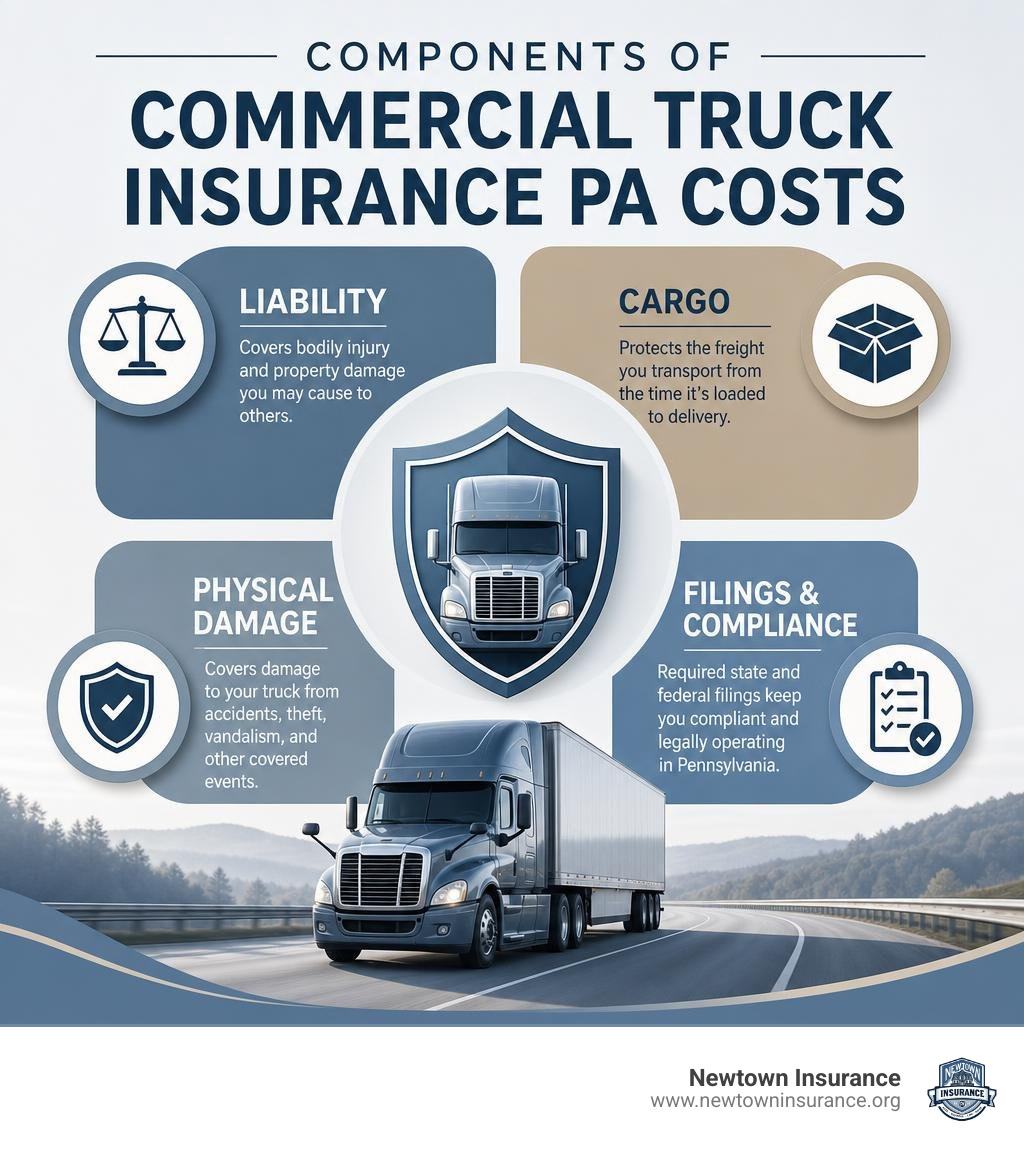
- Primary Auto Liability: This is the foundation of your policy. It covers bodily injury and property damage to third parties if your truck is involved in an at-fault accident.
- Physical Damage Coverage: This protects your personal investment in your equipment. It includes Collision coverage (for accidents on the road) and Comprehensive coverage (for non-collision events like fire, theft, vandalism, or hitting a deer on a dark Pennsylvania highway).
- Motor Truck Cargo Insurance: This covers the freight you are hauling. While PAPUC mandates a bare minimum of $5,000 in cargo coverage per vehicle for intrastate haulers, the industry standard demanded by most brokers is $100,000 to $250,000 to cover the actual value of modern shipments. For more details on structuring commercial vehicle policies, you can read about Commercial Auto Insurance PA.
Optional and Specialized Trucking Endorsements
Depending on how your trucking business is structured, you may need specialized endorsements to fill critical coverage gaps:
- Non-Trucking Liability (NTL): If you are a leased-on owner-operator, NTL provides liability coverage when you are using your truck for personal, non-economic purposes (such as driving to the grocery store on your day off).
- Bobtail Insurance: This covers your tractor when you are driving without a trailer attached (deadheading), regardless of whether you are under dispatch.
- Trailer Interchange Coverage: If you haul trailers owned by other companies under a trailer interchange agreement, this physical damage coverage protects you if the borrowed trailer is damaged while in your possession.
- Reefer Breakdown Coverage: If you haul refrigerated goods, this endorsement covers cargo losses resulting from the mechanical failure of your refrigeration unit.
- Hired & Non-Owned Auto Liability: This covers liability risks when your business uses rented vehicles or employees drive their personal vehicles for business purposes.
Key Factors Driving Your Premium Rates
When underwriters evaluate your application for commercial truck insurance in PA, they look at several key risk levers:
- Driver Motor Vehicle Records (MVRs): Your drivers' safety records are the single most influential factor in your premium costs. Clean records mean lower rates; speeding tickets and accidents mean steep increases.
- Operating Radius: Local operations (within a 100-mile radius) generally enjoy lower premiums than regional or long-haul routes. Long-haul routes involve more time on the road, higher driver fatigue, and greater exposure to unpredictable weather and traffic conditions.
- Cargo Type: Hauling low-risk commodities like dry paper goods is significantly cheaper to insure than hauling high-value electronics, heavy machinery, or hazardous chemicals.
- ELD Compliance and Telematics: Utilizing Electronic Logging Devices (ELDs) and sharing telematics data with your insurer can unlock substantial discounts. Program partnerships like Smart Haul allow carriers to analyze your real-time driving data to reward safe operations with lower premiums.
Insurance Requirements for Different Trucking Operations
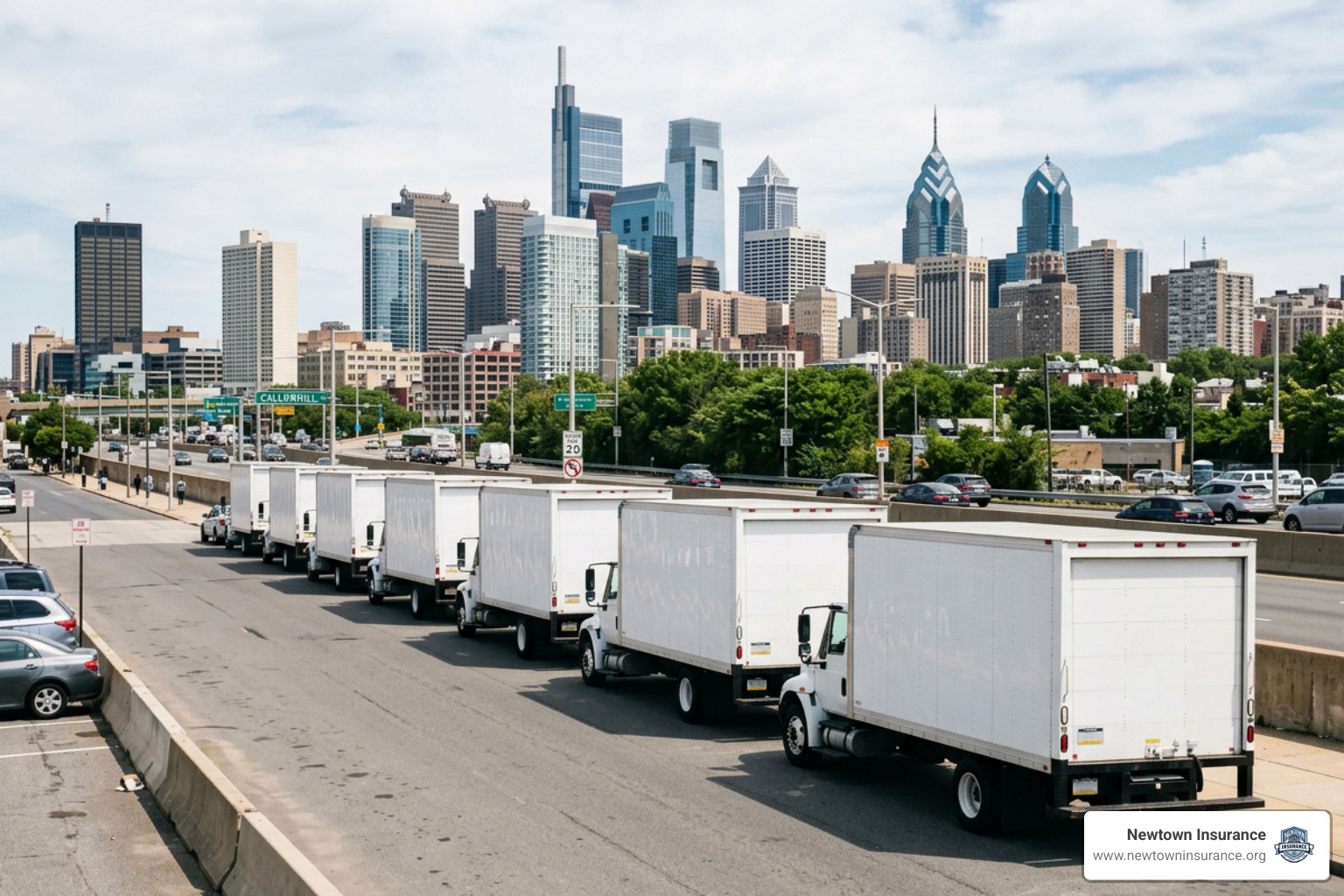
The way you structure your trucking business directly impacts your insurance requirements. A single owner-operator running under their own authority faces a completely different risk profile than an enterprise operating a fleet of box trucks in Philadelphia.
If you use subcontractors or hire employees, you must also account for Pennsylvania's strict workers' compensation laws. To understand how these laws protect your business, take a look at our guide on Workers Compensation Insurance PA.
Coverage Needs by Carrier Type
Understanding where you fit in the transportation ecosystem helps you avoid paying for unnecessary coverage while ensuring you aren't left exposed:
- Owner-Operators with Own Authority: You are fully responsible for your business risk. You must carry primary liability, cargo insurance, physical damage, and any required filings to maintain your active authority.
- Leased-On Operators: If you lease your truck to a larger motor carrier, they typically provide your primary liability coverage while you are under dispatch. Your primary insurance needs will focus on physical damage, bobtail coverage, and non-trucking liability.
- Private Carriers: If you operate trucks to transport your own company's goods (such as a contractor hauling construction equipment), your insurance needs can often be integrated with your general business liability. If you are also managing a physical business location or office in PA, you may want to review our Contractor Insurance Pennsylvania Guide and our resources on Pennsylvania Small Business Health Insurance to ensure your entire team is protected.
How to Get Fast Quotes for Commercial Truck Insurance PA
In the trucking industry, if your wheels aren't turning, you aren't earning. Waiting weeks for an insurance quote is simply not an option. To secure fast, accurate quotes and ensure your state and federal filings are completed within 24 to 48 hours, you should prepare a complete underwriting packet before speaking with an agent.
Your underwriting packet should include:
- Your USDOT and MC numbers (if applicable).
- Your garaging ZIP code (where your trucks are parked when not in use).
- A complete list of drivers with their CDL numbers and MVR history.
- Your target operating radius and a list of primary commodities hauled.
- Prior loss runs (claims history) for the past 3 to 5 years.
Having this information ready allows us to shop your coverage across multiple A-rated carriers to find the best balance of price and protection. To learn more about how to navigate this process, read our Compare Insurance Quotes Complete Guide.
For local insights and specialized regional coverage, you can also explore how commercial auto needs are met in major metro areas by checking out Commercial Auto Insurance in Philadelphia, reviewing regional resources for PA Truck Insurance | Philadelphia, Reading, Allentown, Harrisburg ..., or looking into national carrier options via Pennsylvania Commercial Truck Insurance.
Frequently Asked Questions About PA Truck Insurance
What are the minimum liability limits for commercial trucks in Pennsylvania?
For intrastate commercial vehicles over 10,000 pounds, Pennsylvania requires a minimum of $750,000 in public liability insurance. For interstate carriers, the federal minimum is also $750,000 for general freight, but this increases to $1,000,000 or $5,000,000 for hazardous materials. Additionally, PAPUC requires a minimum of $5,000 in cargo insurance for intrastate motor carriers.
How does the Pennsylvania workers' compensation law affect trucking companies?
Pennsylvania has exceptionally strict workers' compensation laws. If your business has even one employee — whether full-time, part-time, or seasonal — you are legally required to carry workers' compensation insurance.
Misclassifying employees as independent contractors to avoid this requirement is illegal and carries severe financial and criminal penalties. If you hire independent owner-operators, you must ensure they are properly classified under Pennsylvania's legal guidelines to avoid costly audits and back-premium assessments.
How can Pennsylvania truckers lower their insurance premiums?
The fastest way to lower your premiums is to maintain a pristine safety record. Here are a few actionable strategies to reduce your costs:
- Implement Telematics: Use dash cams and ELDs to track driver behavior and share this data with your insurer for safety discounts.
- Select Higher Deductibles: If your business has sufficient cash reserves to cover minor out-of-pocket losses, opting for a higher deductible will lower your monthly premium.
- Pay in Full: Many insurance companies offer discounts if you pay your annual premium upfront rather than in monthly installments, which also helps you avoid monthly financing fees.
- Manage Your Routes: Limit your operations to a smaller radius or avoid high-congestion metro areas like Philadelphia if your business model allows, as regional routes generally carry lower premium rates.
Conclusion
Navigating the complexities of commercial truck insurance in PA doesn't have to feel like driving a rig down a steep mountain road with no brakes. By understanding your required filings, structuring your coverage around your actual business operations, and maintaining a strong safety culture, you can protect your business without overpaying.
At Newtown Insurance, we are committed to helping Pennsylvania truckers secure tailored protection, smart savings, and transparent pricing. We believe in providing customer-first support to ensure you never pay for coverage you don't need, while making sure you are fully protected against the real risks of the road.
Ready to secure your business and keep your trucks moving with confidence? Get a customized quote today and let us do the heavy lifting for your insurance needs.