

Steer Clear of High Rates with These Personal Auto Insurance Quotes
Why Comparing Personal Auto Insurance Quotes Can Save You Hundreds

Personal auto insurance quotes can vary by hundreds of dollars per year — even for the exact same driver and vehicle. That means the first quote you get is rarely the best one.
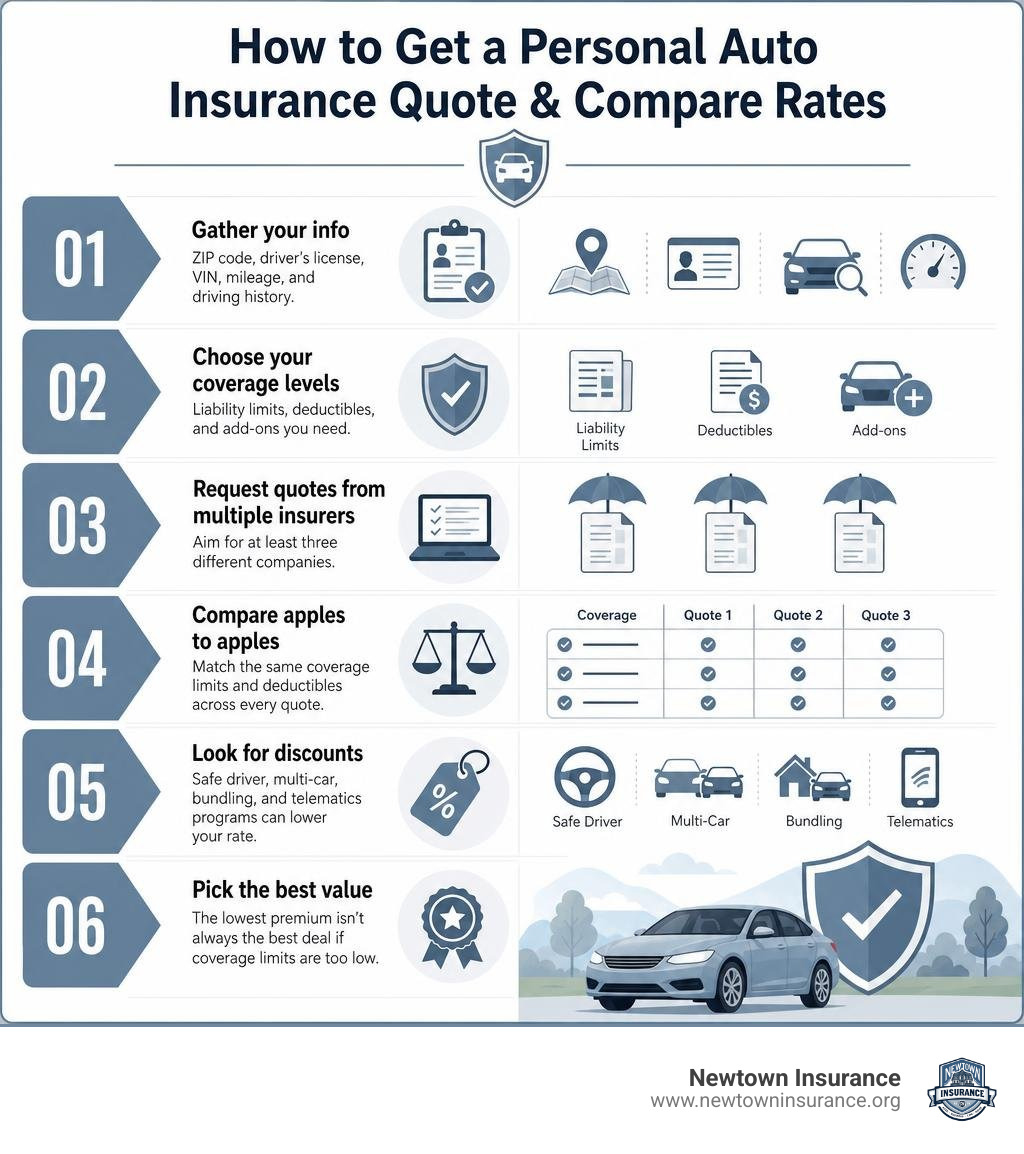
Here's how to get a quote and what to compare:
- Gather your info — ZIP code, driver's license number, vehicle VIN, annual mileage, and driving history
- Choose your coverage levels — liability limits, deductible amounts, and any add-ons you need
- Request quotes from multiple insurers — aim for at least three different companies
- Compare apples to apples — match the same coverage limits and deductibles across every quote
- Look for discounts — safe driver, multi-car, bundling, and telematics programs can all lower your rate
- Pick the best value — the lowest premium isn't always the best deal if coverage limits are too low
Many drivers overpay simply because they never shop around. Comparing quotes is free, takes minutes, and can save you significantly — some drivers save up to $867 per year just by switching.
I'm Shawn Beihl of Newtown Insurance, and with over 15 years of experience advising clients across personal and commercial insurance lines, I've helped countless Pennsylvania residents navigate personal auto insurance quotes to find real savings without sacrificing the coverage they actually need. In this guide, I'll walk you through exactly what to look for — and what to watch out for.
Understanding Personal Auto Insurance Quotes
Before we jump into the deep end of comparing rates, let's establish exactly what we mean when we talk about personal auto insurance quotes.
An insurance quote is an estimate of how much you will pay for a policy based on the specific details you provide to an insurance carrier or agency. It is not a final contract, but rather a personalized projection. Every driver has a unique risk profile, which is why generic rate tables rarely match what you actually end up paying. To secure the most accurate pricing, you need personalized insurance quotes that reflect your household, your driving history, and your specific vehicle.
When you review a quote, you will see two primary numbers that dictate your financial responsibility: the premium and the deductible.
- The Premium: This is the ongoing cost of your insurance policy. It is the amount you pay (monthly, quarterly, or annually) to keep your coverage active.
- The Deductible: This is the out-of-pocket amount you must pay toward repairs before your insurance coverage kicks in after a claim. For instance, if you have a $500 deductible and sustain $2,000 in damage, you pay the first $500, and your insurer covers the remaining $1,500.
There is an inverse relationship between these two figures. Opting for a higher deductible lowers your premium because you are taking on more of the immediate financial risk. Conversely, a lower deductible means a higher premium. Finding the sweet spot between a manageable monthly payment and an affordable out-of-pocket cost during an emergency is key when reviewing Pennsylvania car insurance quotes.
Key Factors That Influence Your Premium
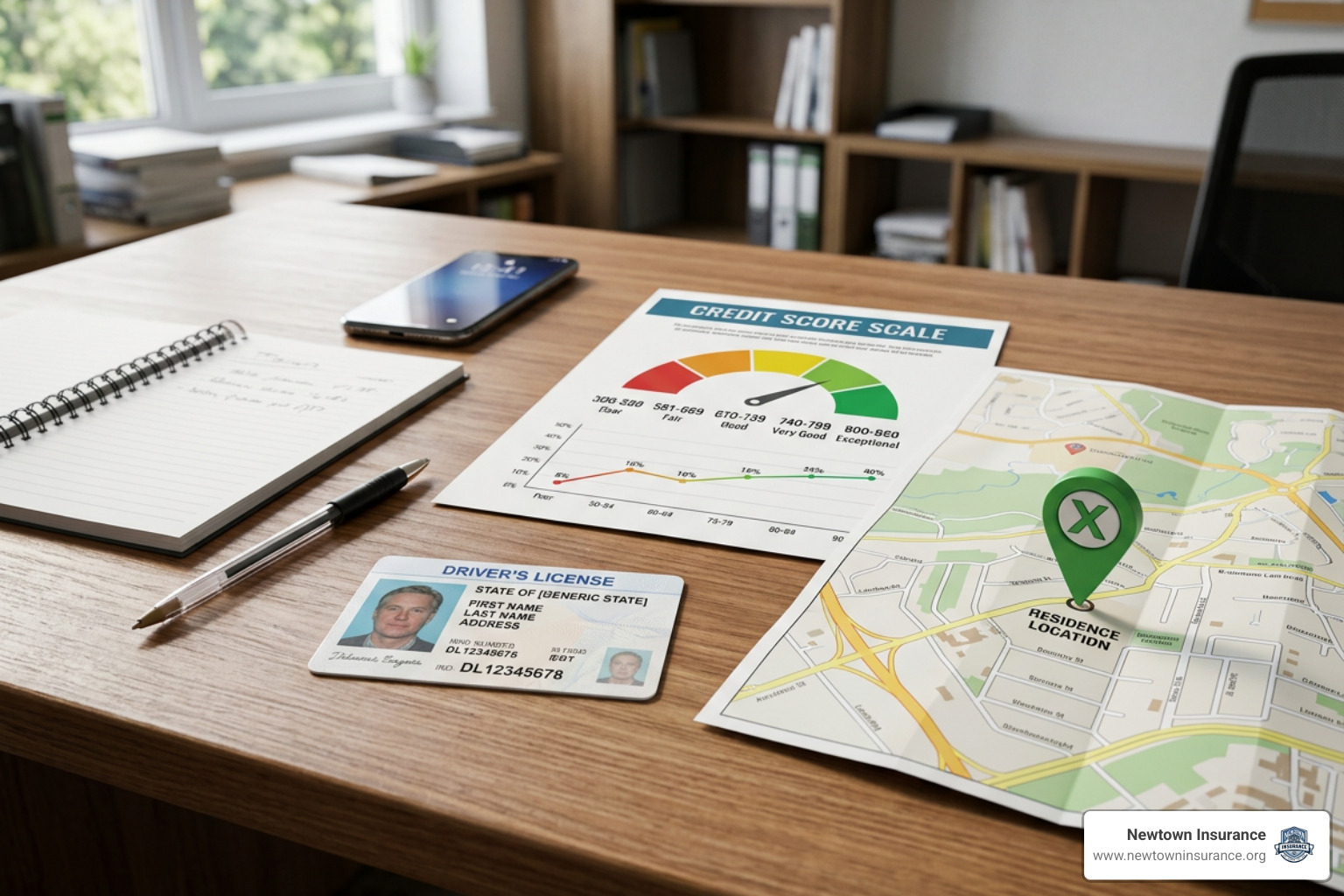
Insurance companies don't pull premium numbers out of thin air. They use complex actuarial algorithms to assess how likely you are to file a claim. In Newtown, Pennsylvania, several localized and individual factors will directly shape your personal auto insurance quotes.
- Driving Record: Your history on the road is the single most critical factor. A clean record with no violations translates to the lowest rates, while recent accidents or tickets signal higher risk.
- Credit Score: In Pennsylvania, insurance companies are legally permitted to use credit-based insurance scores to help determine auto premiums. Statistically, drivers with higher credit scores tend to file fewer claims, which leads to lower rates.
- Location and Garaging Address: Where you park your car matters. Living in a quieter suburb like Newtown generally yields more favorable rates than parking in high-congestion urban centers, where vandalism and accidents are more frequent.
- Vehicle Make and Model: The actual car you drive plays a massive role in the average cost of car insurance in PA. Vehicles with high safety ratings and lower repair costs are much cheaper to protect than high-performance sports cars or luxury imports packed with expensive technology.
To illustrate how much the vehicle itself impacts your bottom line, consider the average annual premium differences between these popular models:
| Vehicle Model | Average Annual Insurance Rate |
|---|---|
| Subaru Forester | $1,200 |
| Subaru Outback | $1,280 |
| Honda CR-V | $1,350 |
| Ford F-150 | $1,550 |
| Infiniti Q50 | $2,736 |
As you can see, choosing a vehicle with outstanding safety and reasonable repair costs, like the Subaru Forester, can keep your baseline premium highly affordable.
How Driving History Impacts Personal Auto Insurance Quotes
Your driving history acts as your insurance resume. If your resume is spotless, carriers will compete for your business. If it contains a few blemishes, your rates will inevitably reflect that added risk.
A single speeding ticket can raise your premium by 20% to 30% for up to three years. At-fault accidents can have an even more dramatic impact, often raising rates by 40% or more. For major infractions like a DUI, the financial consequences are severe. Drivers with a DUI on their record will see their premiums skyrocket, and they may be classified as high-risk drivers, requiring specialized non-standard insurance policies.
If you have a major violation, the state of Pennsylvania may require your insurance carrier to file an SR-22 on your behalf. An SR-22 is not an insurance policy itself; rather, it is a state-mandated certificate of financial responsibility that proves you carry the minimum required liability insurance.
If you are dealing with a challenging driving history, don't lose hope. There are still ways to find competitive pricing. By utilizing cheap auto insurance Pennsylvania tips, such as taking state-approved defensive driving courses, raising your deductibles, or enrolling in telematics programs, you can actively work to bring your rates back down.
Essential Coverage Types to Consider
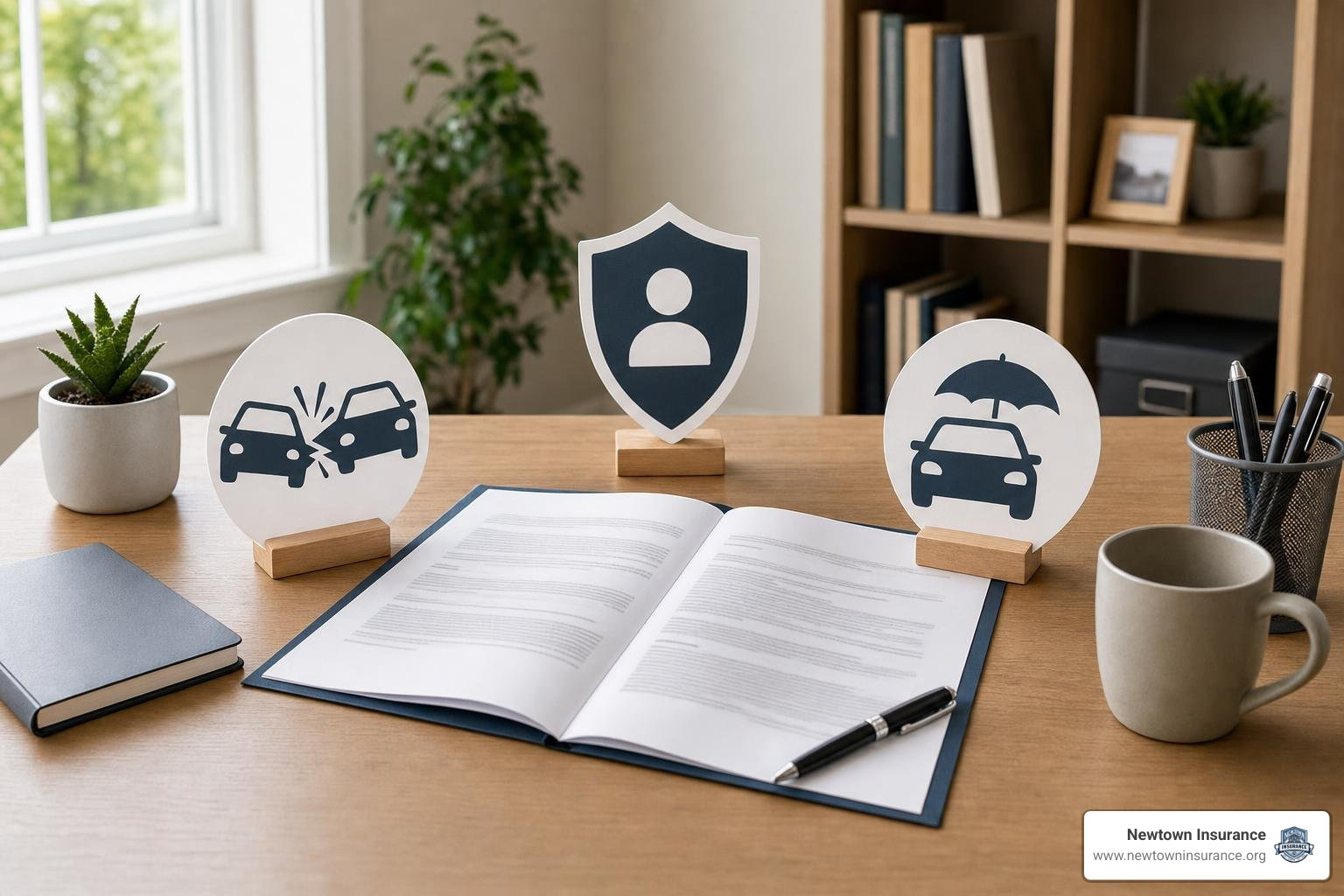
When shopping for personal auto insurance quotes, it is easy to focus entirely on the price tag. However, a cheap policy that fails to protect your assets in a major accident is no bargain. Understanding the core coverage types is essential to building a policy that truly protects you.
- Bodily Injury Liability: This coverage pays for medical expenses, rehabilitation, and lost wages for other drivers and passengers when you are at fault for an accident. It also covers your legal defense if you are sued.
- Property Damage Liability: If you accidentally run into a neighbor's fence in Newtown, or damage another vehicle in a collision, this coverage pays for the repairs to their property.
- Collision Coverage: This pays to repair or replace your own vehicle after an accident, regardless of who was at fault. It applies if you hit another car, a tree, or a guardrail.
- Comprehensive Coverage: This covers damage to your vehicle caused by events outside of your control. This includes weather events (such as hail or fallen tree limbs), animal collisions (very common in Pennsylvania's wooded areas), theft, and vandalism.
- Gap Insurance: If you lease or finance your vehicle, it depreciates the moment you drive it off the lot. If your car is totaled, standard physical damage coverage only pays the actual cash value of the vehicle. Gap insurance covers the difference between that cash value and what you still owe on your loan or lease.
When building your policy, you must ensure you meet the legal auto insurance requirements in Pennsylvania. You can also review consumer information directly from the Pennsylvania Insurance Department. To get a legal policy, you can start by requesting a personalized quote to see the baseline state requirements in action.
Selecting the Right Coverage for Your Personal Auto Insurance Quotes
Pennsylvania law requires all drivers to carry a minimum of 15/30/5 liability limits:
- $15,000 for bodily injury to a single person.
- $30,000 for bodily injury per accident (multiple people).
- $5,000 for property damage.
While these minimums keep you legal, they are incredibly low. If you cause a multi-car accident on the bypass, a $5,000 property damage limit will be exhausted almost instantly, leaving you personally liable for the remaining balance. We strongly advise carrying limits of at least 100/300/100 to protect your personal assets and home from devastating lawsuits.
Furthermore, Pennsylvania is unique because it requires drivers to make a choice between Full Tort and Limited Tort coverage:
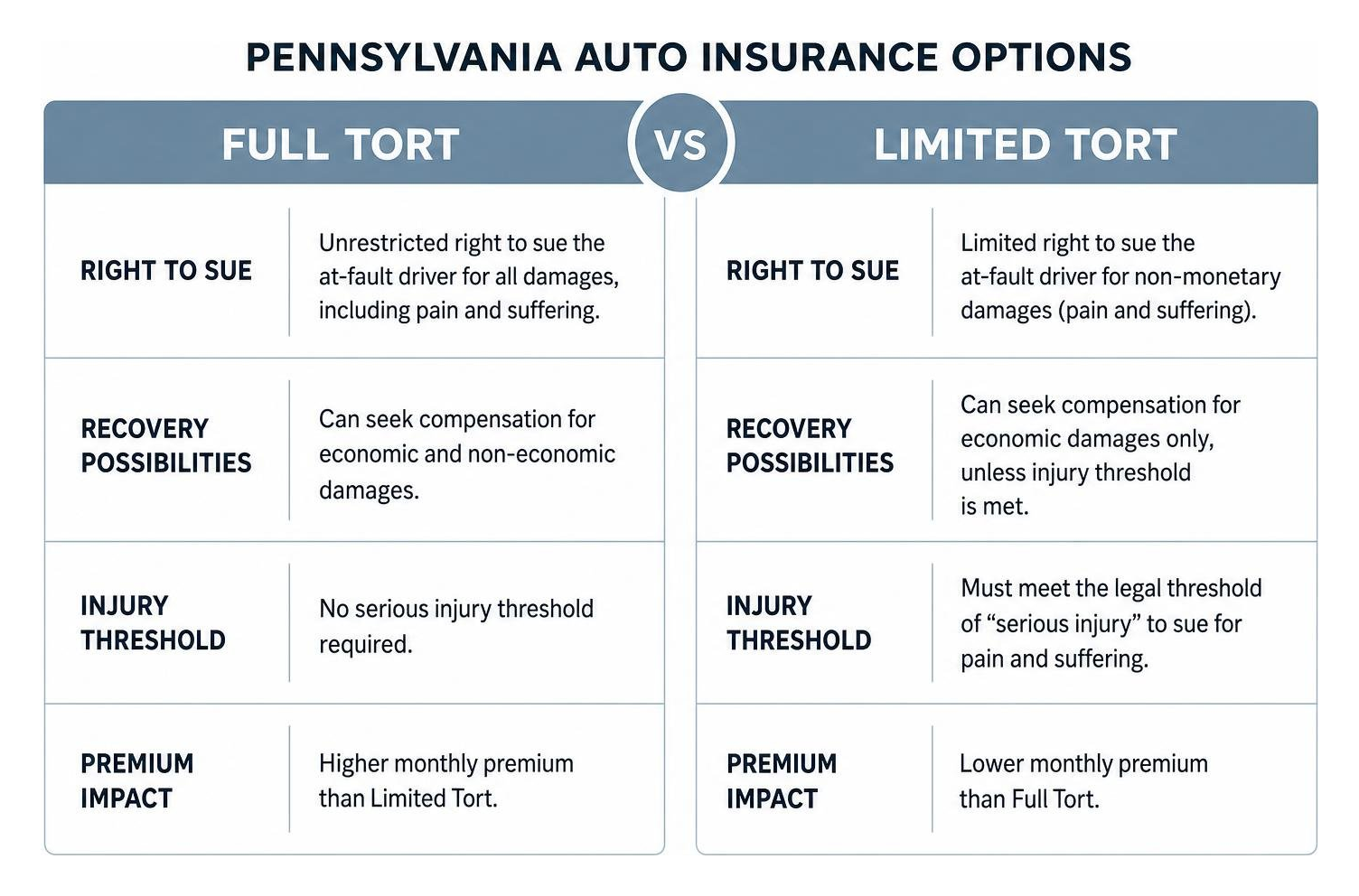
- Limited Tort: Choosing this option lowers your monthly premium. However, it limits your right to sue an at-fault driver for non-monetary damages (like pain and suffering) unless your injuries meet a high legal threshold defined as "serious injury."
- Full Tort: This option costs slightly more in premium, but it preserves your unrestricted right to seek financial compensation for pain, suffering, and physical recovery after an accident caused by another driver.
To learn more about tailoring these critical options to your family's needs, check out our ultimate auto insurance guide.
Smart Strategies to Lower Your Insurance Costs
You do not have to settle for sky-high premiums. There are highly effective, proactive strategies you can use to secure moneysaving car insurance without cutting cornerstones of your protection.
One of the most modern and effective ways to save is through usage-based insurance (UBI) or telematics programs. Instead of pricing your policy purely on demographic averages, carriers use a small plug-in device or a mobile app to track your actual driving habits.
These programs look at positive driving behaviors, such as gentle braking, gradual acceleration, and driving during safer hours of the day. For example, enrolling in a telematics program can secure an instant 10% discount just for signing up, with safe drivers eventually qualifying for discounts of up to 40% off their premium. If you work from home or have a very short commute, you can also look into mileage-based telematics, which prices your policy based on how few miles you actually drive each month.
Maximizing Discounts and Bundles
Another highly effective strategy is taking advantage of policy discounts. By working closely with an independent agent, you can stack multiple discounts to dramatically lower your rate.
One of the easiest ways to save is by setting up an auto and home bundle. When you place your home, renters, or condo insurance with the same carrier that insures your vehicles, companies will reward you with massive multi-policy discounts. For instance, bundling your home and auto policies can save you up to $950 to $1,032 annually depending on your specific risk profile.
Here is a list of the top auto insurance discounts you should always ask your agent about:
- Multi-Car Discount: Save up to 7.5% when you insure more than one vehicle on the same household policy.
- AAA Member Discount: Enjoy up to a 5% discount simply for maintaining an active auto club membership.
- Good Student Discount: High school or full-time college students with a verifiable GPA of 3.0 or higher can save up to 14.5% on their premium.
- New Driver Safety Course: Qualified teen drivers who complete an approved program (like teenSMART) can save up to 24% on their coverage.
- Paperless and Auto-Pay Discounts: Signing up for electronic policy delivery and automatic monthly bank transfers often removes administrative fees and provides a small discount.
Frequently Asked Questions about Auto Insurance
Navigating insurance can be confusing. Here are detailed answers to some of the most common questions we hear from local drivers.
Does car insurance cover the car or the driver?
In most cases, auto insurance covers the vehicle itself rather than the specific person driving it. This falls under the concept of "permissive use." If you lend your car to a friend or relative who does not live in your household, and they have an accident, your policy acts as the primary coverage to pay for the damages.
However, there is an important caveat: any regular drivers living in your household (such as roommates, spouses, or teenagers who have reached driving age) must be explicitly listed on your policy. If a household resident who is not listed on your policy regularly drives your car and gets into an accident, your carrier may deny the claim.
How Often Should I Shop Around and Compare Quotes?
We recommend reviewing your personal auto insurance quotes at least once a year, or whenever your current policy is up for renewal. It is also critical to shop around after major life changes, such as getting married, buying a home, moving to a new ZIP code, or adding a teen driver to your policy.
Carriers frequently adjust their pricing models and target demographics. An insurance company that offered you the best rate three years ago might no longer be the most competitive option for your current situation. To understand the best way to evaluate these options, take a look at our compare insurance quotes complete guide.
What should I do immediately after a car accident?
If you are involved in an accident, safety is your absolute priority. Follow these steps to protect yourself and streamline the claims process:
- Check for Injuries and Move to Safety: If possible, move your vehicle out of active traffic to a safe spot on the shoulder.
- Call the Police: Always file a police report, even for minor fender benders. A formal report provides an objective, legal record of the event.
- Document the Scene: Take photos of the damage to all vehicles involved, the license plates, the road conditions, and any relevant street signs.
- Exchange Information: Swap names, phone numbers, insurance policy numbers, and driver's license details with the other driver.
- Contact Your Agent or Carrier: Report the accident as soon as possible to start the claims process. You can easily access your proof of insurance (ID cards) through your carrier's mobile app or online portal to provide to the police and the other driver.
Conclusion
Finding the right auto insurance policy is a balancing act. While it is tempting to chase the lowest possible rate, true financial security comes from tailored protection, smart savings, and transparent pricing.
At Newtown Insurance, we are dedicated to helping our neighbors in Newtown, Pennsylvania, navigate the complex world of personal auto insurance quotes to find real savings without leaving their assets exposed. We take a customer-first approach to ensure you never overpay for the coverage you depend on.
Ready to see how much you can save? Let us do the shopping for you. Visit our Newtown Insurance Services page today to request your personalized quote, or stop by our Newtown office to speak with a local expert who truly understands your needs.