

No More Guesswork: How to Get Personalized Home Insurance Quotes Easily
Why Getting Personalized Home Insurance Quotes Can Save You Thousands

Knowing how to get personalized home insurance quotes is the fastest way to stop overpaying for coverage that may not even fit your home.
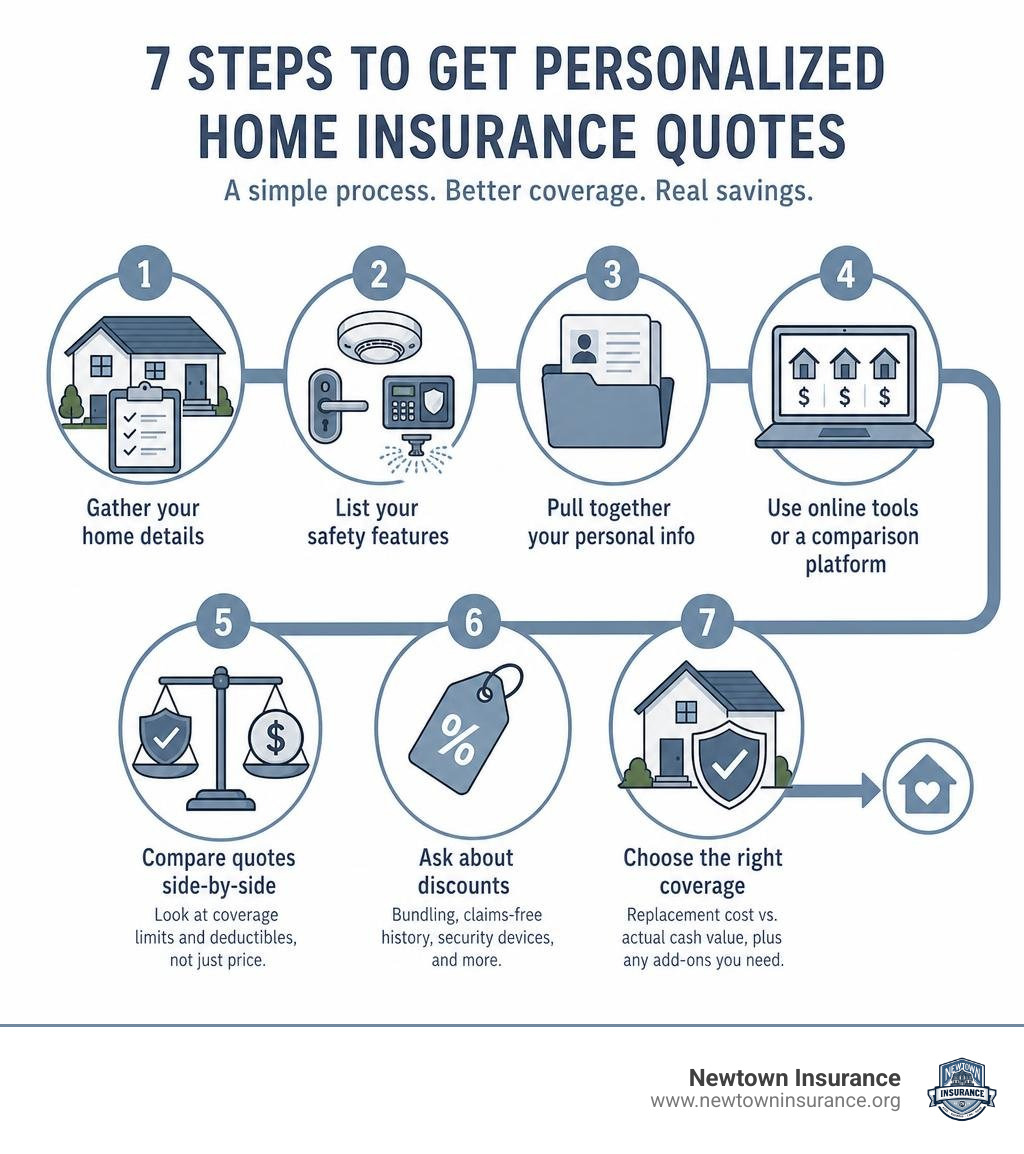
Here's a quick overview of the process:
- Gather your home details — address, year built, square footage, roof age, and construction type
- List your safety features — smoke detectors, deadbolts, security alarms, sprinkler systems
- Pull together your personal info — date of birth, claims history, current or prior insurer
- Use online tools or a comparison platform to generate quotes from multiple insurers
- Compare quotes side-by-side — look at coverage limits and deductibles, not just price
- Ask about discounts — bundling, claims-free history, security devices, and more
- Choose the right coverage — replacement cost vs. actual cash value, plus any add-ons you need
Most homeowners pick a policy and forget about it. But that "set it and forget it" approach comes at a cost. According to industry data, more than half of U.S. homes are underinsured — meaning many families would face a serious financial gap if disaster struck tomorrow.
And the price differences are significant. Average rates from the largest home insurers can vary by more than $1,000 a year for the same coverage, according to NerdWallet's rate analysis. Yet only about 1 in 5 Americans (19%) shopped around for a new insurance company in the past 12 months, according to a 2026 NerdWallet survey.
That's a lot of money left on the table.
Whether you're buying your first home or rethinking a policy you've had for years, getting a quote that's actually built around your home and situation doesn't have to be complicated.
I'm Shawn Beihl of Newtown Insurance, and with over 15 years of experience across property, casualty, and specialty insurance, I've helped countless Pennsylvania homeowners navigate how to get personalized home insurance quotes that reflect their real risks — not just a generic formula. In this guide, I'll walk you through every step so you can find the right coverage at a price that makes sense for you.
How to Get Personalized Home Insurance Quotes: The Step-by-Step Process
Getting a generic price estimate online is easy, but a generic quote won't protect your actual assets when a pipe bursts in the middle of a freezing Pennsylvania winter. To secure personalized insurance quotes that truly fit your life, you need a systematic approach.
The secret to a stress-free experience is knowing what to prepare, which tools to trust, and how to evaluate the offers that land in your inbox.
What to Prepare Before Learning How to Get Personalized Home Insurance Quotes
Before you sit down at your computer or call an agent, you need to collect a few key details. Having this home insurance information ready prevents you from guessing on important questions, which could lead to an inaccurate quote or a voided policy down the road.
Make sure you have the following on hand:
- Property details: The year your home was built, total square footage, number of stories, and construction materials (e.g., wood frame vs. masonry).
- The age of your roof: This is a major pricing factor. A roof under 5 years old can earn significant discounts, while a roof over 20 years old might trigger coverage restrictions.
- Safety and security features: Note if you have deadbolts, smoke detectors, fire extinguishers, or a centrally monitored security system.
- Your claims history: Be prepared to disclose any home insurance claims you've filed over the last 3 to 5 years.
- Your current policy dec page: If you already have insurance, this document shows your current coverages and deductibles, making it easy to compare your current rate against new offers.
Step 2: Use Online Tools and Calculators
Once your information is organized, you can use digital tools to establish a baseline. Estimating your rebuilding cost is the first step in avoiding the underinsurance trap.
To get an instant, data-driven estimate of your potential premium based on your specific location and dwelling needs, try using the Home Insurance Quote Calculator — 2026 Annual Homeowners Premium by Dwelling Coverage & ZIP | UseCalcPro .
Using a calculator helps you understand how much dwelling coverage you actually need before you start formal applications. That dwelling coverage must reflect local reconstruction costs (materials and labor), which have run 7% to 12% higher annually in recent years, rather than the market value of your home.
Step 3: Compare Multiple Offers Side-by-Side
Once you begin requesting quotes, do not simply sign with the first company that replies. We highly recommend gathering at least three distinct quotes to compare.
When you evaluate these offers, refer to a compare insurance quotes complete guide to ensure you are comparing "apples to apples." This means verifying that the dwelling limits, personal property limits, liability limits, and deductibles are identical across all quotes.
If you are unsure where to start your search, finding the best website to compare home insurance quotes will help you view multiple regional rates simultaneously, saving you from entering your data on dozens of different websites.
Key Factors That Influence Your Personalized Premium

Every home has a unique risk profile, which is why two identical houses on opposite sides of Pennsylvania can have wildly different insurance rates. Understanding the primary "premium drivers" allows you to see exactly where your money is going.
How Your Home's Characteristics Affect Your Quote
Your home itself is the biggest factor in your premium calculation. Insurers look closely at how your home was constructed and how well it can withstand damage:
- Construction Type: Masonry (brick or stone) homes generally cost less to insure against fire than wood-frame homes, though local regional factors can shift these numbers.
- Roof Material and Condition: Impact-resistant shingles or metal roofs can lower your premium. Conversely, older roofs are viewed as high-risk, as they are more prone to wind and water leaks.
- Safety Devices: Installing smart-home water leak detectors, active burglar alarms, and deadbolts reduces risk, lowering the homeowners insurance pa cost for proactive homeowners.
How Your Personal Profile and Location Impact Rates
Beyond the physical structure, insurers evaluate you and where you choose to live.
Your credit history plays a major role in premium calculations in Pennsylvania. In most states, including PA, a higher credit score correlates with lower insurance rates, while a lower score can raise your premiums.
Your personal claims history also matters; if you have filed multiple claims recently, insurers may view you as higher risk.
Location is equally critical. If your home is close to a local fire hydrant or a highly rated fire station, your rates will reflect that safety.
Furthermore, Pennsylvania's unique regional weather risks—such as heavy winter snow loads, freezing pipes, and spring flooding—influence local rates.
Understanding Your Coverage: Standard Policies vs. Essential Add-Ons
When reviewing your personalized quotes, you will likely encounter different policy forms. The two most common options for traditional single-family homes are the HO-3 and HO-5 policies.
| Feature | HO-3 Policy (Standard) | HO-5 Policy (Comprehensive) |
|---|---|---|
| Dwelling Coverage | Open Perils (All risks covered unless excluded) | Open Perils (All risks covered unless excluded) |
| Personal Property Coverage | Named Perils (Only covered for specific listed events) | Open Perils (All risks covered unless excluded) |
| Settlement Type (Belongings) | Often Actual Cash Value (ACV) unless upgraded | Typically Replacement Cost Value (RCV) |
| Relative Cost | Baseline | 5% to 20% higher than HO-3 |
The Core Components of Dwelling and Personal Property Protection
To ensure you are fully protected, your policy should be divided into several distinct coverage areas. You can read our home insurance quotes guide 2026 for a deeper dive, but the core pillars include:
- Dwelling (Coverage A): Covers the physical structure of your house.
- Other Structures (Coverage B): Covers unattached structures like fences, detached garages, or tool sheds.
- Personal Property (Coverage C): Protects your furniture, clothes, electronics, and other personal items.
- Loss of Use (Coverage D): Pays for temporary living expenses if a covered loss makes your home uninhabitable.
- Personal Liability (Coverage E): Protects your financial assets if someone sues you for bodily injury or property damage occurring on your property.
Replacement Cost vs. Actual Cash Value: Which Should You Choose?
This is one of the most important decisions you will make when personalizing your quote.
Actual Cash Value (ACV) covers the cost to replace your damaged property minus depreciation for age and wear. For example, if a 10-year-old television is stolen, an ACV policy will only pay what a 10-year-old TV is worth today (perhaps $150), leaving you to pay the difference for a brand-new one.
Replacement Cost Value (RCV) pays to replace your items with brand-new equivalents at today's retail prices, without deducting for depreciation. While RCV coverage costs slightly more in premium, it prevents catastrophic out-of-pocket expenses after a major loss.
Additionally, pay close attention to the 80% rule. Most insurance contracts require you to insure your dwelling for at least 80% of its total replacement cost. If your coverage falls below this threshold, your insurer may penalize you by paying only a pro-rata portion of any partial claims you file.
Common Exclusions and How to Fill the Gaps
A standard homeowners policy does not cover every disaster. Standard HO-3 and HO-5 policies explicitly exclude damage from earth movement (earthquakes), surface water flooding, neglect, and normal wear and tear.
To protect your home against these common gaps, you should consider specialized add-ons. For instance, water backup coverage is a highly recommended endorsement in Pennsylvania that covers damage caused by backed-up sewers or failed sump pumps.
To learn more about tailoring your policy to the unique climate of the Keystone State, read our home insurance pennsylvania complete guide.
Smart Strategies to Save Money on Your Homeowners Insurance

You do not have to sacrifice great coverage to get an affordable rate. By utilizing a few proven insurance savings tips, you can lower your premium while keeping your protection fully intact.
The Power of Bundling and Policy Discounts
One of the easiest ways to secure immediate savings is through multi-policy bundling. By placing your auto and home insurance with the same provider, you can save significantly on your annual premiums.
Beyond bundling, always ask your agent about other available discounts, such as:
- New home or recent renovation discounts
- Claims-free history discounts
- Paperless billing and automatic payment discounts
- Security system and smart-home device discounts
For more actionable ideas on keeping your bills low, read through our tips for saving money on insurance.
Adjusting Your Deductible for Immediate Savings
Your deductible is the amount you agree to pay out of pocket before your insurance coverage kicks in. Choosing a higher home insurance deductible is a highly reliable way to lower your monthly or annual premium.
According to rate analyses, raising your deductible from $1,000 to $2,500 can lower your premium by an average of 9%. If you have a healthy emergency fund and can comfortably afford a higher out-of-pocket cost in the event of a claim, this adjustment is an excellent way to secure immediate, ongoing savings.
Frequently Asked Questions About Home Insurance
How to get personalized home insurance quotes without affecting credit?
When you request home insurance quotes, insurance companies perform what is known as a soft credit inquiry (or soft pull) to review your credit-based insurance score. Unlike a hard credit check used for credit card or mortgage applications, a soft inquiry has zero impact on your credit score. You can shop around and request as many personalized quotes as you like without worrying about damaging your credit.
How often should I review or update my homeowners insurance policy?
We recommend reviewing your homeowners insurance policy at least once a year, or whenever you make significant changes to your property. If you complete a home renovation, build a new deck, finish your basement, or purchase high-value items like jewelry or fine art, your rebuilding costs and personal property values will change. An annual review ensures your policy remains perfectly personalized to your current lifestyle.
What is the difference between market value and rebuild cost?
Market value is the amount a buyer is willing to pay for your home, including the land it sits on, in the current real estate market.
Rebuild cost (or replacement cost) is the actual amount of money required to purchase materials and hire local labor to rebuild your physical house from the ground up after a total loss.
Your dwelling coverage should always be based on the rebuild cost, not the market value, to protect you from being underinsured.
Conclusion
Finding the right homeowners insurance policy does not have to involve guesswork. By gathering your property details, understanding your coverage options, and shopping around, you can secure a policy that protects your home without draining your bank account.
At Newtown Insurance, we believe in providing our Pennsylvania neighbors with tailored protection, smart savings, and completely transparent pricing. Our customer-first support is designed to help you understand your coverage options clearly, ensuring you never overpay for protection you do not need.
Ready to protect your home with a policy built just for you? Get a Personalized Quote Today and experience the peace of mind that comes with truly customized coverage.